What Is a USDA Hardiness Zone?
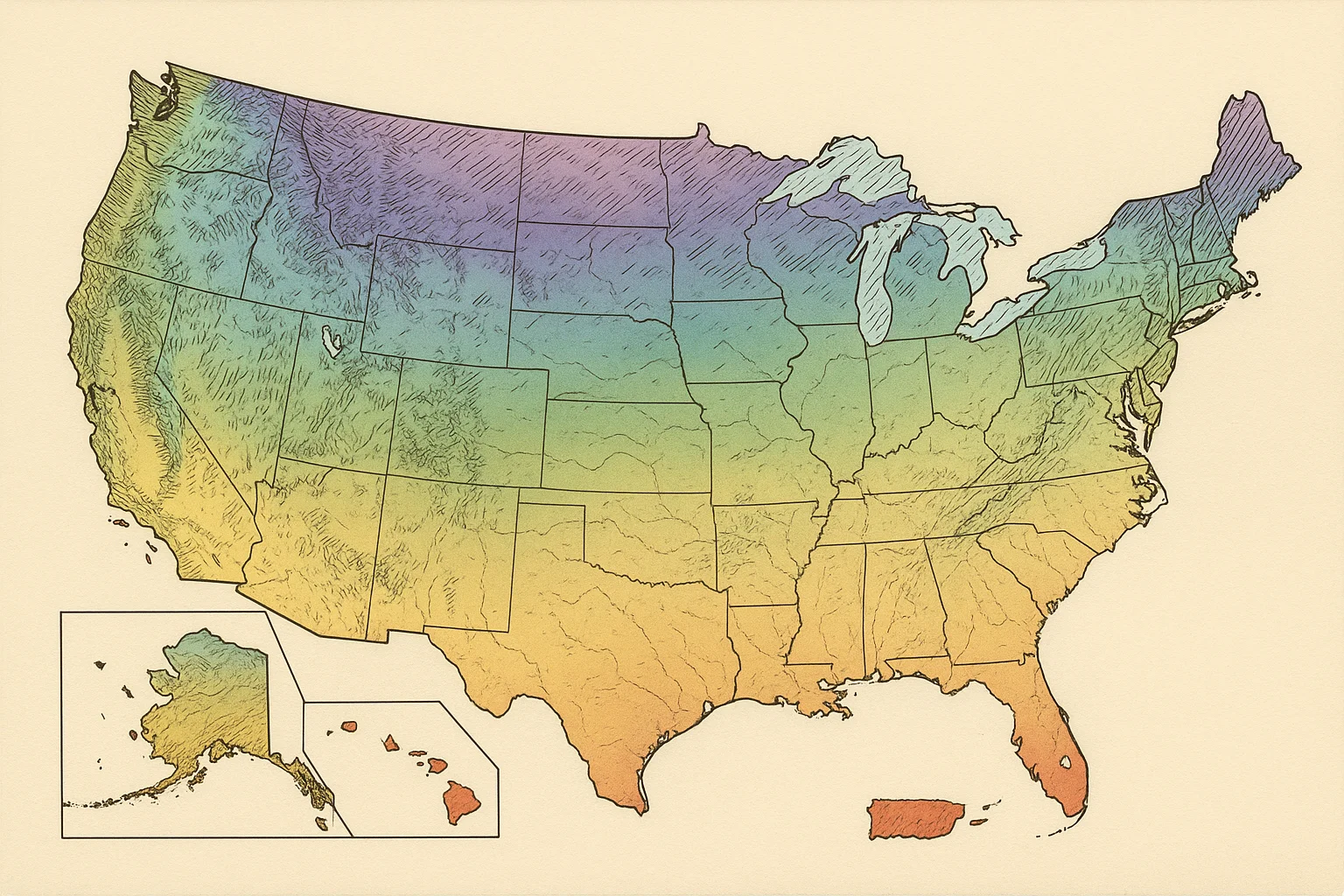
A USDA Plant Hardiness Zone is the single most important number a gardener can know. Published by the U.S. Department of Agriculture's Agricultural Research Service, the zone map divides the country into 13 zones based on one thing: the average annual extreme minimum winter temperature — the coldest night your area typically sees each year.
That number matters because it determines which perennial plants, trees, and shrubs will survive your winter. A plant rated “hardy to Zone 6” can handle winter lows down to -10°F. Plant it in Zone 5 (where lows hit -20°F), and you're gambling. Plant it in Zone 7, and it will coast through winter without complaint.
Each zone spans a 10°F range and is further divided into two sub-zones: “a” (the colder half) and “b” (the warmer half), each covering 5°F. Zone 6a (-10 to -5°F) is meaningfully different from Zone 6b (-5 to 0°F) when you're choosing a marginally hardy fig tree or a borderline-tough crepe myrtle.
The map was first published in 1960 and has been updated periodically as climate data accumulates. The most recent version, released in November 2023, uses 30 years of weather data (1991-2020) and shifted roughly half the country into a warmer half-zone compared to the 2012 edition.
Zones tell you what will survive your winter. They don't tell you what will thrivein your summer, how much rain you'll get, or what your soil is like. A plant that's hardy in your zone can still fail if it needs full sun and you plant it in shade, or if it demands acidic soil and yours is alkaline.
That said, zones are the essential starting filter. Below, we link to dedicated guides for each zone — with specific plant recommendations, growing tips, and frost dates for zones 3 through 10.
Sub-zones: When the Half-Zone Actually Matters
The USDA divides each zone into two halves: “a” (the colder 5°F) and “b” (the warmer 5°F). Zone 6 splits into Zone 6a (-10 to -5°F) and Zone 6b (-5 to 0°F). Most casual gardeners ignore this distinction. Sometimes that's fine. Sometimes it costs them a $300 tree.
Here's when sub-zones actually matter:
- Marginally hardy plants. A plant rated “hardy to Zone 7” usually means Zone 7b. Plant it in Zone 7a, and you'll lose it in a hard winter. Crepe myrtles, gardenias, hardy figs, and Mediterranean herbs like rosemary all sit on these edges.
- Fruit trees and shrubs. Peach, fig, and citrus varieties are bred for specific zones. A “Hardy 6-9” peach might mean 6b-9, not 6a-9. The catalog details matter more than the headline range.
- First-winter perennials. Cold-edge losses happen most often in the first winter, before roots are fully established. If your plant is rated for your exact zone with no buffer, give it winter protection year one.
And when you can ignore sub-zones entirely:
- Plants rated for zones colder than yours. A Zone 4-hardy hosta will sail through Zone 6a or 6b without issue.
- Annuals. They're not surviving winter regardless.
- Plants you bring inside in winter. Same logic.
The rule of thumb: if a plant is rated for your zone exactly with no buffer in either direction, pay attention to whether you're in the “a” or “b” half. If there's a full zone of safety either way, you're fine.
Walk into any nursery and you'll see plant tags with cryptic codes: “USDA 5-9”, “Hardy to -10°F”, “Zone 6”, “Zones 4-7”. They mean roughly the same thing — but the differences matter when you're standing at the garden center deciding whether to take something home.
- “Zones 5-9” — The plant survives in zones 5 through 9. Below Zone 5, winters are too cold. Above Zone 9, summers may be too hot, or the plant isn't getting enough winter chill (more on that in the heat zones section below).
- “Hardy to Zone 5” — Cold tolerance only. The plant might also struggle in hot zones, but the tag isn't telling you. Check the description for heat tolerance.
- “Hardy to -20°F” — Equivalent to Zone 5 (Zone 5 is -20 to -10°F). Some growers prefer temperature directly because it's more precise than the zone number.
- “USDA 6” vs “USDA 6a” vs “USDA 6b” — The more specific the rating, the more confidence the grower has. If a tag specifies “6b”, the breeder is telling you this plant won't reliably survive Zone 6a winters.
Things tags often hide: whether the rating assumes winter protection (mulching, wrapping); whether the plant will survive but not thrive at the edges of the rated range; heat tolerance (almost never on tags); and soil requirements that may make the plant fail even in the “right” zone.
The honest truth: zone ratings on tags are conservative. Most plants survive a half-zone colder than rated if conditions are otherwise good. But “most” isn't “all,” so don't bet a $300 specimen tree on it without backup plans.
Zone-by-Zone Overview
Below is a closer look at each USDA zone from 3 through 10. For each one you'll find an overview of the climate, what kinds of plants thrive, the main challenges, and a link to the dedicated zone page with the full plant list and growing tips.
Beyond Zones: Microclimates in Your Yard
Your USDA zone is a regional average, but your yard isn't average. Every property has microclimates— small pockets that behave differently from the zone number on the map. Understanding them lets you push boundaries and grow plants that technically shouldn't work in your zone.
South-facing walls absorb heat during the day and radiate it at night, creating a pocket that can be a full zone warmer than the rest of your yard. A Zone 6 gardener with a south-facing brick wall might successfully grow a Zone 7 fig tree right against it. North-facing exposures, by contrast, stay cooler and shadier.
Urban heat islands make cities measurably warmer than surrounding suburbs and rural areas — often by 2-5°F on winter nights. If you garden in a dense urban area, your effective zone may be half a step warmer than the map shows.
Cold air drainage is the reverse problem. Cold air is denser than warm air, so it flows downhill and pools in low spots like valley floors and the base of slopes. A hilltop garden and a valley-bottom garden in the same zip code can be in different effective zones. If you notice frost lingering in the low spots of your yard while the slope stays clear, that's cold air drainage at work.
Elevation matters too. Temperature drops about 3.5°F for every 1,000 feet of elevation gain. A mountain property at 5,000 feet will be roughly one full zone colder than a nearby town at 3,000 feet, even if they share the same zip code.
The takeaway: use your zone as a starting point, but analyze your specific yard to understand where the warm pockets, cold traps, and microclimates actually fall. That's what separates gardeners who successfully push zone boundaries from those who lose plants every winter.
AHS Heat Zones: The Other Half of Hardiness
Here's a question that exposes the biggest gap in how most people think about plant hardiness: why does the same plant thrive in zones 5-9 in some places but die in others within that range?
The answer is heat. The American Horticultural Society publishes the AHS Plant Heat Zone Map, a counterpart to the USDA cold map. Where USDA zones measure annual winter cold, heat zones measure the average number of days per year above 86°F — the temperature at which heat stress starts damaging plant cells.
Heat zones run from 1 to 12. Zone 1 has fewer than 1 day above 86°F per year (think: Alaska). Zone 12 has more than 210 days (think: Florida, southern Texas, Phoenix). Most gardeners have never heard of these zones, but they explain failures that don't make sense by USDA cold zones alone.
Why this matters: A plant rated “USDA 5-9” might actually need AHS heat zones 1-7. Plant it in Houston (USDA 9, AHS 9) and the cold rating is technically right, but the heat will cook it. This is why northern transplants — rhododendrons, lilacs, peonies — struggle in hot southern zones even when the cold rating “matches.”
The reverse problem also happens: a plant from a hot climate (bougainvillea, some hibiscus, certain citrus) might survive cold zones if sheltered, but it will perform poorly because it's not getting the heat it expects to flower and fruit properly.
The catch: AHS heat zones are barely on plant tags. Most garden centers don't carry the dual rating. The American Horticultural Society publishes the map, and a small number of breeders use both ratings (e.g., “USDA 5-9, AHS 9-2”), but it's rare. Until that changes, you have to do the heat-zone math yourself.
Practical takeaway: If you live in a hot zone (USDA 8 or warmer) and a plant is failing despite being “in your zone,” it's probably a heat problem, not a cold problem. Look for varieties bred specifically for hot climates, or check the AHS map directly. For most cold-zone gardeners (3-7), heat isn't usually the limiting factor — but as climate shifts, more of us will need to think about it.
Zone Shifts & Climate Change
When the USDA released its updated zone map in November 2023, roughly half the country had shifted into a warmer half-zone compared to the previous 2012 map. This wasn't a surprise — winter minimum temperatures have been trending warmer for decades — but it officially changed the zone designation for millions of gardeners.
What does this mean practically? If you were Zone 6b and are now Zone 7a, you can probably grow plants that were previously risky for you. Crepe myrtles, gardenias, and certain fig varieties that needed winter protection may now sail through unscathed. But proceed cautiously: zone averages smooth out the occasional brutal winter, and one polar vortex can still kill a plant that's only marginally hardy in your new zone.
The practical advice: plant for the zone you're in now, but choose cultivars that tolerate one zone colder as insurance. If you're Zone 7a, pick plants rated hardy to at least Zone 6. That way, a once-in-a-decade cold snap won't wipe out your investment.
Common Mistakes When Using Zones
Knowing your zone is the easy part. Using it correctly is where most gardeners trip up. After years of helping people plant trees and shrubs that should outlive their mortgages, here are the mistakes I see most often.
1. Treating zones as guarantees, not ranges. A plant rated “Zone 6” doesn't survive every Zone 6 winter — it survives an average Zone 6 winter. One polar vortex can wipe out a plant that's been thriving for years. For high-value purchases, choose plants rated at least one zone colder than yours as a buffer.
2. Buying plants from a different climate. Nursery stock grown in California or Florida and shipped to Minnesota is hardened to mild winters. Even if the variety is rated for Zone 4, the individual plant hasn't been through a real winter yet. First-winter losses are common with mail-order stock from distant nurseries. Buy local when you can.
3. Forgetting that “cold hardy” isn't “cold tolerant when planted in November.” A plant rated for your zone needs time to establish before winter. Plant most perennials and shrubs at least 6 weeks before your average first frost so the roots can grow in. Late-fall plantings of marginal plants often die not because the variety is wrong but because the timing is.
4. Trusting the zone above all else. Cold hardiness is one variable. Sun exposure, soil drainage, summer heat, water, and wind all matter. A plant rated for your zone will still die if you put it in soggy clay when it needs sandy loam — the zone label can't override basic site requirements.
5. Not protecting marginal plants. If you're growing a Zone 7 plant in Zone 6, don't just trust the label — mulch heavily, wrap the trunk, or plant against a south-facing wall. These small interventions are the difference between losing the plant and having it thrive.
6. Ignoring sub-zones on borderline plants. Already covered above, but worth repeating. The difference between Zone 7a and 7b is the difference between losing a crepe myrtle and watching it bloom for thirty years.
7. Assuming the 2023 update means you can ignore the old rules. Yes, many zones shifted warmer. But one warm decade doesn't erase the possibility of a cold one. Plant for resilience, not optimism.
Frequently Asked Questions
What is a USDA hardiness zone?
A USDA Plant Hardiness Zone is a geographic area defined by its average annual extreme minimum winter temperature. The USDA divides the United States into 13 zones (1 through 13), each representing a 10°F range. Zone 1 is the coldest (-60°F) and Zone 13 is the warmest (60-70°F). Gardeners use zones to determine which perennial plants will survive winter in their area.
How do I find my USDA hardiness zone?
Enter your zip code in the zone finder above and we'll tell you instantly. You can also check the official USDA Plant Hardiness Zone Map at planthardiness.ars.usda.gov. Your zone is based on the average coldest temperature your area experiences each winter, calculated from weather data over a 30-year period.
What is the difference between zone 6a and 6b?
Each USDA zone is divided into two sub-zones: 'a' (the colder half) and 'b' (the warmer half), each spanning a 5°F range. For example, Zone 6a has average minimums of -10 to -5°F, while Zone 6b ranges from -5 to 0°F. This distinction matters most for marginally hardy plants that sit right on the edge of survival in your zone.
Do USDA zones change over time?
Yes. The USDA updates the map every 10-15 years based on new climate data. The most recent update in November 2023 shifted roughly half of the country into a warmer half-zone compared to the 2012 map, reflecting rising winter minimum temperatures. If you haven't checked your zone recently, it may have changed.
Does my zone tell me when to plant?
Not directly. Your zone tells you what will survive winter, not when to plant. Planting timing depends on your frost dates — the last spring frost and first fall frost. However, zones correlate strongly with frost dates: Zone 3 is typically frost-free from May to September, while Zone 9 is frost-free from February to December. Check our individual plant guides for zone-specific planting calendars.
What if a plant is rated for a different zone than mine?
If a plant is rated for a warmer zone, you may still grow it with protection: mulching, cold frames, south-facing microclimates, or growing it as an annual. If it's rated for a cooler zone, the plant may struggle with summer heat rather than winter cold — afternoon shade and extra watering can help. Our plant guides include zone-specific tips for pushing boundaries.
What is an AHS heat zone, and how is it different from a USDA zone?
USDA hardiness zones measure the average annual minimum winter temperature — in other words, how cold your winters get. AHS heat zones, published by the American Horticultural Society, measure the average number of days per year above 86°F. Together they describe both ends of a plant's temperature tolerance. A plant rated 'USDA 5-9, AHS 9-2' tolerates winter cold typical of zones 5-9 and summer heat typical of heat zones 2-9.
Why does my plant tag only list a single zone like 'Zone 6'?
When a plant tag lists only a single zone (e.g., 'Zone 6' or 'Hardy to Zone 6'), it's specifying the coldest zone the plant can survive. The plant will also grow in any warmer zone, unless it has heat tolerance issues that the tag doesn't mention. For more confidence, look for tags that specify a range like 'Zones 6-9' — those tell you both the cold and heat boundaries.
 Where to Plant