Fruits

Growing Avocado Trees: Everything You Need to Know Before You Plant

Sarah Whitfield

Sarah Whitfield

Fruit & Berry Specialist · Updated April 2026

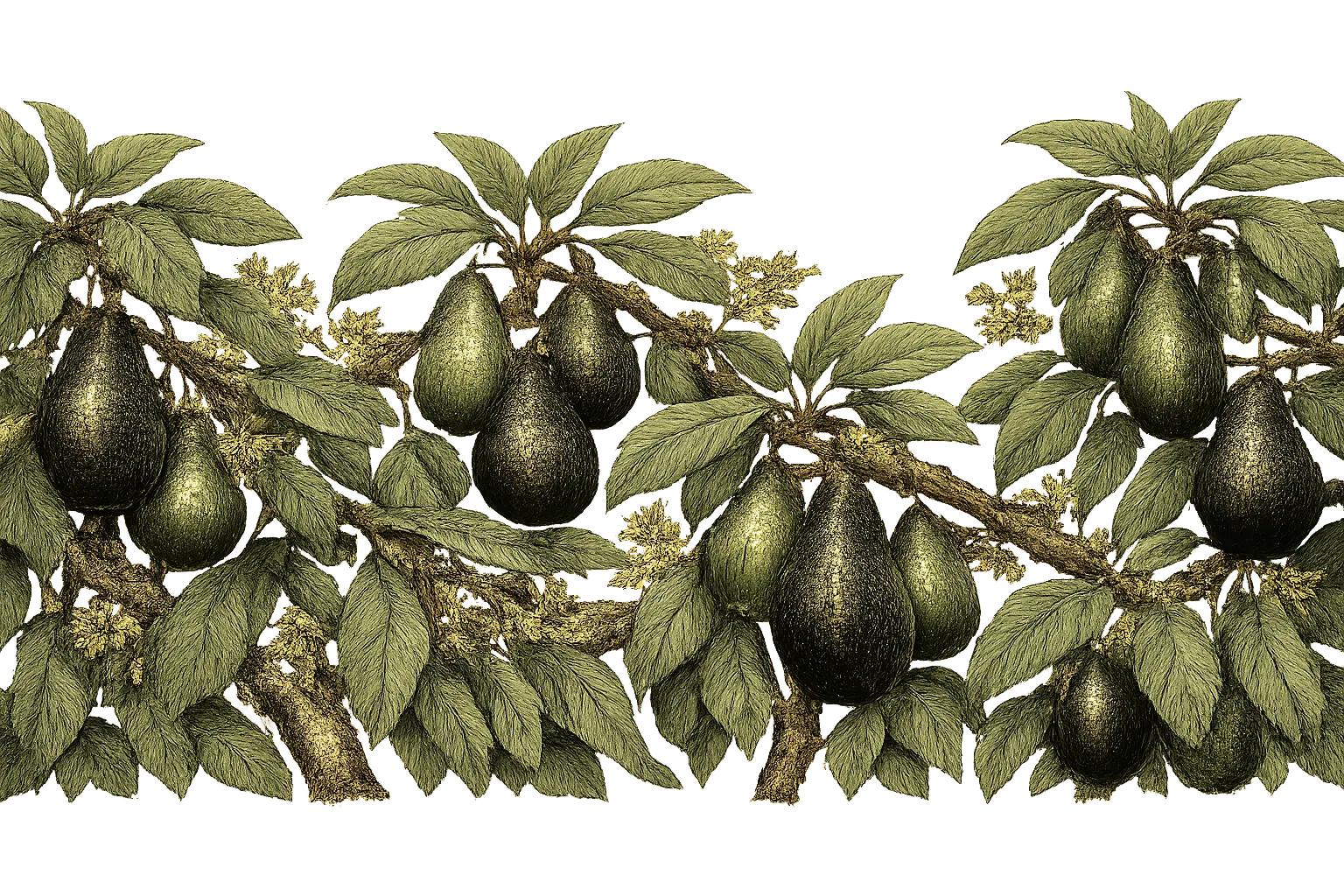
How to grow avocado trees — vintage botanical illustration showing the plant in detail

Avocado Trees at a Glance

Sun

Sun

6-10 hours direct sun

Soil pH

Soil pH

6.0-6.5

Water

Water

Deep, infrequent watering

Spacing

Spacing

20-30 ft

Days to harvest

Days to Harvest

Grafted trees fruit in 3-4 years; fruit hangs on tree months after maturity

Height

Height

20-40+ feet in-ground

Soil type

Soil

Well-drained soil

Lifespan

Lifespan

perennial

Get your personalized growing data

Enter your zip code for frost dates, growing season, and soil type.

Here is something the nursery tag does not tell you: avocado trees are sold in every zone where they cannot survive winter. Walk into a garden center in zone 7, zone 8, sometimes zone 9, and you will find Hass trees sitting in black nursery pots, looking perfectly healthy, waiting for someone to bring them home and plant them in the wrong spot. A year later, after the first real freeze, that tree is dead — not because the grower did anything wrong in the traditional sense, but because they started with the wrong variety in the wrong zone without a plan.

We have seen this play out over and over. And it frustrates us, because avocados are not mysterious plants. Get the zone right, get the drainage right, and you will be picking fruit from a tree that produces for decades. A mature avocado in the right situation does not just feed your family — it feeds your neighbors. A single tree in its prime can produce hundreds of avocados per season. No grocery run. No $2-per-fruit markup. Just fruit, hanging there, waiting for you.

The challenge is that avocados demand more from you upfront than most fruit trees. The site selection is permanent. The drainage is non-negotiable. The variety choice determines everything from cold survival to harvest season to whether your tree fruits at all without a companion nearby. Get those three things right before you plant a single root, and the rest of the journey is manageable.

That is what this guide is built to do: get you to the right starting point, then walk you through the rest. We have synthesized research from UC Davis, UC Cooperative Extension, UC IPM, UC Riverside, and extension programs from Florida, Texas, and the Gulf Coast. Every recommendation here traces back to documented growing data — not folklore, not forum opinions, not the advice of whoever happened to be working the nursery counter.

Let's give your avocado tree the best possible start.


Quick Answer: Avocado Tree Growing at a Glance

USDA Zones: 8-11 in-ground (container growing extends to zones 4-7 with indoor overwintering)

Sun: 6 hours minimum; 8-10 hours daily for optimal fruiting

Soil pH: 6.0-6.5 (test before planting; micronutrient lockout begins above 7.0)

Drainage: Non-negotiable; water must drain within 1-2 hours of filling a 12-inch hole

Watering: Deep and infrequent for mature trees; 2-3x per week for newly planted trees

Fertilizer: Balanced fertilizer in March, June, and September; zinc is the #1 micronutrient deficiency

Pollination: Plant at least one Type A and one Type B variety within 20-30 feet; cross-pollination increases fruit set by more than 50%

Grafted vs. seed: Always buy grafted; seed-grown trees take 7-15 years and produce unpredictable fruit quality

First harvest: Year 3-4 for grafted trees (precocious varieties can fruit within 2 years)

Cold hardiness by race: Mexican race survives 15-18°F; Guatemalan (Hass) tolerates ~25°F; West Indian types fail below 28-30°F


The Drainage Problem (Why Most Avocado Trees Die)

Before we get to zones, varieties, or any of the satisfying details of fruit production, we need to talk about the thing that kills more avocado trees than anything else: waterlogged soil.

Avocado roots require oxygen as much as they require water. When the root zone stays saturated — from heavy clay, a low-lying planting site, overwatering, or just poor soil structure — the feeder roots suffocate. And in that oxygen-depleted soil, Phytophthora cinnamomi, a water mold present in virtually every avocado-growing region worldwide, produces swimming zoospores that travel directly to the dying root tissue and finish the job. This disease is called Phytophthora root rot, and it is the most serious avocado disease in the world.

Here is what makes it so dangerous: the above-ground symptoms look exactly like drought stress. The leaves pale and wilt. The canopy thins. The tree looks thirsty. And so the grower waters more. That additional water accelerates the infection, and the tree enters a death spiral that is usually fatal by the time anyone recognizes the pattern.

UC IPM documents this trap precisely: if your tree looks drought-stressed but the soil is moist, suspect Phytophthora root rot, not underwatering.

Test your drainage before you plant. Dig a 12-inch hole and fill it with water. In well-draining soil, that water should disappear within one to two hours. If it is still standing after three or four hours, you have a problem that must be solved before the tree goes in the ground.

The solution is not to amend the hole. In clay soil, a richly amended planting hole actually makes things worse — it creates what growers call a bathtub effect, where water enters the amended pocket and cannot drain into the surrounding clay. Instead, build a raised mound: 12-18 inches above surrounding grade, at least 4-6 feet wide at the base, built from native soil mixed with coarse organic matter or imported sandy loam. This is not optional in heavy clay or low-lying sites. UC IPM and Gulf Coast extension services both recommend mounding as the primary structural solution for challenging soil conditions.

Alongside mounding, use two additional tools at every planting:

Gypsum. Broadcast approximately 25 pounds beneath a medium-sized tree at planting and every year thereafter. Calcium suppresses Phytophthora spore formation and, as a bonus, gradually improves clay soil structure. It is not a cure for active infection — it is a preventative that works best before the disease establishes.

Mulch. Apply 4-6 inches of coarse organic mulch — wood chips, composted green waste, hardwood bark — across the entire canopy area. Keep it several inches away from the trunk itself. Mulch promotes beneficial soil microorganisms that are naturally antagonistic to Phytophthora, moderates soil temperature, reduces evaporation, and creates the biological conditions that suppress disease over time. Think of mulch as your first line of biological defense, not just a weed-suppression measure.

Get the drainage right and you have solved the number one avocado killer before it ever becomes a threat.


Best Avocado Varieties by Zone

Variety selection is the single most consequential planting decision you will make. The wrong race in the wrong zone means a dead tree after the first hard freeze. The right pairing means decades of fruit. Three factors must align: cold hardiness, pollination type, and any regional disease pressure.

Every avocado variety traces back to one of three botanical races, and those races have very different cold tolerances. Mexican-race varieties — the ones whose leaves smell faintly of anise when crushed — survive down to 15-18°F, making them the only option for zone 8 and the coldest parts of zone 9. Guatemalan types (Hass and most commercial California varieties) tolerate around 25°F. West Indian types fail below 28-30°F and belong only in zone 10-11.

Beyond cold hardiness, every variety is classified as either Type A or Type B based on its flowering schedule. Avocado flowers alternate between female and male function over two days, and A and B varieties are offset from each other — when one is female, the other is male. Plant at least one of each within 20-30 feet, and cross-pollination happens all day. Studies show more than 50% greater fruit development in Hass when a Type B cross-pollinator is present. A single tree can still produce through limited self-pollination, but the yield difference is dramatic.

What zone are you in?

Enter your zip code for frost dates, growing season, and soil type.

Cold-Hardy Frontier (Zone 8): Only Mexican-Race Varieties

Zone 8 is where avocado growing becomes genuinely high-risk. Temperatures can drop to 10-20°F in a bad winter, and only Mexican-race varieties with documented cold hardiness belong in the ground here. Everything else belongs in a container that can be moved indoors.

Fantastic is the frontrunner — reportedly the most cold-hardy avocado variety overall, with documented survival at 10°F near San Antonio in zone 8b. This is the tree to reach for in zone 8a, where conditions are genuinely extreme. Mexican race.

Del Rio (also sold as Pryor) handles freezes to approximately 15°F with minimal damage and is widely considered to have the richest flavor of any avocado variety. Small-to-medium fruit with green skin, July through October season, and an upright growth habit that keeps it manageable in tight spaces. Mexican race.

Joey is another highly cold-tolerant Mexican-race option with documented survival to 15°F — less widely available than the others but worth seeking out in zone 8.

Mexicola and Mexicola Grande are the most accessible cold-hardy varieties at most nurseries. Mexicola handles temperatures in the low-to-mid 20s reliably; mature trees may manage slightly colder with protection. The fruit is small (3-6 oz), black-skinned at maturity with thin edible skin, and extremely rich in flavor — Mexican-race oil content is notably higher than commercial Guatemalan types, which is exactly why these command premium prices at farmers markets. Type A, so it needs a Type B companion. Mexicola Grande produces the same quality in a larger fruit.

For zone 8, pair Mexicola with Bacon as your Type B — Bacon is the cold-hardiest reliable Type B available and a better choice in cold-marginal situations than Fuerte. Plant both against a south-facing wall, which can provide 4-8°F of additional warmth over open ground and is, according to extension research, the single most effective cold-protection tool available to home growers.

Zone 8a (10-15°F minimum) is honestly at the edge of what is viable. Only Fantastic has documented survival there. Zone 8b (15-20°F) gives you more options: Fantastic, Joey, Del Rio, and Mexicola with committed annual protection for young trees.

Transitional Zone (Zone 9): Where Your Options Open Up

Zone 9 is wide territory — Southern California's inland valleys, South Texas, the Gulf Coast, and North and Central Florida all fall here. Mexican varieties perform across all of it; Guatemalan commercial types become viable in protected microclimates.

For the coldest zone 9 sites and colder parts of zone 9a, the Mexican-race recommendations from zone 8 all apply: Mexicola Grande, Del Rio, and Bacon as a Type B companion. These are your anchors when hard freezes are still possible.

Hass (Type A, Guatemalan) becomes viable throughout zone 9 in protected microclimates. It is the dominant commercial avocado with excellent flavor, black pebbly skin at maturity, and cold tolerance down to approximately 25-29°F depending on duration. It is the most self-fruitful commercial variety if you can only plant one tree, but it performs substantially better with a Fuerte companion. The Hass + Fuerte pair is the classic Southern California combination and still one of the best.

Fuerte (Type B) is smooth-skinned, green at maturity, with excellent mild flavor and a winter-to-spring ripening season (November through June) that complements Hass's spring-through-summer window. Together, a Hass + Fuerte planting can cover a remarkably long harvest season.

Brogdon is the variety worth knowing about for zone 9b where hard freezes are rare. A Mexican-by-West Indian hybrid, it has smooth-as-silk flesh, higher oil content than pure West Indian types, and phenomenal flavor. Less cold-hardy than the pure Mexican varieties but excellent in warmer zone 9 situations.

For Southern California specifically, GEM (Type A) paired with Bacon (Type B) gives you a compact-growing combination suited for smaller yards and patios. GEM produces Hass-quality fruit in a more manageable tree. Reed (Type A) paired with Sharwil (Type B) is the choice for flavor-focused growers — both are outstanding in taste and texture.

For Texas Gulf Coast and Central Texas, lean toward the pure Mexican types: Lila, Mexicola, Fantastic, and Joey for coldest areas; Brogdon where winters are mild. The limestone-derived soils in much of central and south Texas run pH 7.5-8.0, making iron management through chelated iron or elemental sulfur acidification a routine part of the growing program — plan for it from the start.

For North and Central Florida (zone 9), the high disease pressure from anthracnose in humid conditions shapes variety selection: Mexicola Grande, Del Rio, May, Opal/Lila, and Brogdon all perform well here. Avoid Wilma/Brazos Belle in humid climates — it is highly susceptible to anthracnose and is better suited to dry Texas conditions.

The Sweet Spot (Zone 10): Where Avocados Truly Thrive

Zone 10 — coastal California, South Florida, Hawaii — is where avocado trees come into their own. Nearly all varieties grow here without winter protection, and the focus shifts from survival to production optimization and season extension.

Hass remains the gold standard: flavor, yield, market recognition, and a spring-through-summer harvest season (April through October in California). Self-fruitful but measurably more productive with a Type B companion planted nearby.

GEM (Type A) is the most compelling newer option for home growers — Hass-quality fruit from a more compact tree with excellent container compatibility. Highly productive with a May-through-September season.

Reed (Type A) stands out for its large, round fruit with exceptionally creamy texture and a summer-to-fall harvest window (July through October) that complements Hass's earlier season. Reed is also notable for containers — compact enough to manage in a large pot and precocious in its fruit set. Pair it with Sharwil (Type B) for a flavor-forward zone 10 combination.

Pinkerton (Type A) deserves special mention for impatient growers: it is documented to fruit within two years of planting from large nursery stock. Long pear-shaped fruit, very small seed, and a high flesh-to-pit ratio make it one of the most efficient varieties by usable weight. Pair with Fuerte for classic results.

Fuerte (Type B) earns its classic status by filling in the harvest window that Hass leaves empty: it ripens November through June, meaning a Hass + Fuerte planting in zone 10 can provide avocados across nearly the entire calendar year. Smooth green skin, excellent mild flavor, and reliable production.

Lamb Hass (Type A) offers larger fruit than standard Hass with good wind tolerance and strong container performance — a practical alternative where the standard Hass grows too large to manage.

Tropical Growing (Zone 11): Disease Management Over Cold

Zone 11 — southern Florida, Hawaii, Puerto Rico — supports all three races including frost-sensitive West Indian types, and cold hardiness drops off the checklist entirely. The management priorities here are humidity-driven diseases (anthracnose, scab) and ensuring open canopy airflow.

Choquette (Type A) is the Florida favorite: large, round, smooth green fruit up to two pounds, salt tolerant, and a West Indian hybrid well-suited to the subtropical conditions. Simmonds and Pollock are the classic West Indian commercial varieties for the region — large-fruited, smooth-skinned, high salt tolerance, with lower oil content than Guatemalan or Mexican types.

Guatemalan and Mexican types also grow well in zone 11. Maintain open canopy structure, prune out dead wood where anthracnose sporulates, and apply copper fungicides preventatively during flowering and early fruit development.

Quick Reference: Top Picks by Zone

Zone GroupTop Type ATop Type BNotes
Zone 8Fantastic, MexicolaBaconMexican race only; south-facing wall required
Zone 9 coldMexicola Grande, Del RioBaconBest cold-hardy pair
Zone 9 SoCalHass, GEMFuerte, BaconClassic commercial + compact options
Zone 9 compactGEMBaconBest small-yard/patio combination
Zone 10Hass, Reed, PinkertonFuerte, SharwilFull selection; pair for season extension
Zone 11ChoquetteFuerteWest Indian types viable; manage humidity diseases

When and How to Plant

Timing

In zones 9-11, plant any time of year but avoid the hottest summer months. Spring and fall are ideal — roots establish in moderate temperatures without facing immediate heat stress or frost risk. In zone 8, plant in spring after the last frost risk passes. This maximizes the establishment window before the first winter and gives the tree time to harden off before cold arrives. Container trees can be planted year-round in climate-controlled environments.

Choosing Your Tree

Buy grafted. This bears repeating because the alternative — seed-grown trees — is such a persistent temptation. The iconic pit-in-a-glass-of-water project is genuinely fun. But a seed-grown avocado requires 7-15 years to reach fruiting age, and when it finally does fruit, quality is entirely unpredictable. Every avocado seed is a unique genetic combination. A Hass pit does not produce a Hass tree. UC Extension states this plainly: growing from seed is an educational experience, not a fruit production strategy.

A 15-gallon grafted nursery tree costs $40-80 and will fruit in 3-4 years. Precocious varieties like Pinkerton, GEM, Lamb Hass, and Carmen are documented to fruit within two years of planting from large nursery stock. Start with 15-gallon stock rather than 5-gallon wherever possible — the size difference accelerates your timeline meaningfully.

If you are interested in rootstock: Dusa is the leading recommendation for its excellent Phytophthora resistance. Mexican rootstocks offer better frost tolerance for the root system in cold-marginal zones.

The Planting Process

Step 1: Choose the site. Six hours of direct sun minimum; 8-10 for optimal fruiting. South or west-facing exposure preferred. Avoid wind exposure — it desiccates flowers, reduces fruit set, and accelerates cold damage. In zones 8-9, position against a south-facing wall or sheltered slope. Check your drainage (the 12-inch hole test) before committing to the site.

Step 2: Prepare the planting area. In well-draining soil, dig a hole twice as wide as the root ball but no deeper than the container. In clay or slow-draining soil, build a raised mound instead of amending a hole.

Step 3: Position the tree correctly. The graft union — the slight scar or bend near the base of the trunk, typically 6-12 inches up — must remain above the soil surface. Burying the graft union leads to trunk rot. This is a common and irreversible mistake.

Step 4: Backfill carefully. Use native soil or a mix no richer than 50% compost. Firm gently to eliminate air pockets. Do not over-enrich the planting hole.

Step 5: Apply gypsum. Broadcast approximately 25 pounds around the planting area and water in.

Step 6: Mulch immediately. Four to six inches of coarse organic material under the entire canopy spread, keeping mulch several inches clear of the trunk. This is not optional — it is the foundation of your Phytophthora prevention program.

Step 7: Water deeply immediately after planting.

Step 8: Build a shallow watering basin at the drip line to direct water to the root zone.


Watering: The Deep-and-Infrequent Rule

Avocados evolved in seasonally dry climates with well-drained soils. Their root system performs best when soil partially dries between waterings, allowing roots to breathe. The correct rhythm is a deep, thorough soaking followed by a waiting period until the top 2-4 inches of soil dry out. Then soak again.

What "deep" means in practice: water until moisture penetrates the entire root zone — the top 18-24 inches of soil. This encourages roots to grow downward rather than remaining shallow and perpetually stressed. What "infrequent" means: in summer heat, this may be every five to seven days for established in-ground trees. In winter, once a month or less.

Watering by Tree Age

Newly planted trees (year one) cannot yet absorb deep water from the wider soil — their roots have not spread beyond the original root ball. Water them 2-3 times per week in warm weather with moderate volumes, focused on the root ball zone. Keep it consistently moist but never waterlogged. This is the one moment in an avocado tree's life when frequency matters more than depth.

Brown leaf tips on year-one trees are almost always underwatering, not salt damage — the root zone is too small to have accumulated significant chloride yet. Increase frequency, not volume.

As the tree establishes through years two and three, gradually transition toward deeper, less frequent watering as roots spread outward. By year four and beyond: deep weekly soaking in summer heat, every 10-14 days in mild weather, and monthly or less through winter when rainfall often provides sufficient moisture.

The Salt Problem Southern California Growers Face

Here is a structural challenge specific to Southern California that affects every tree in the region: UC researchers have established that avocados begin to suffer when irrigation water contains more than 75 ppm chloride. Southern California's municipal water — largely Colorado River water — typically contains 80-100 ppm. Virtually every tree in the region experiences some chloride stress.

The mechanism is slow and cumulative. Roots absorb chloride-laden water throughout spring and summer. Leaves transpire water vapor, but chloride cannot escape with vapor — it stays in the leaf tissue and builds up over months until it begins killing tissue at the tips and margins. The south and west sides of the canopy show it worst because higher transpiration rates accelerate the accumulation.

The fix is a leaching fraction: apply 10-20% more water than the tree needs at each irrigation event, consistently pushing chloride below the root zone. Commercial California growers also run sprinklers for up to 24 consecutive hours once monthly during July, August, and September to flush accumulated salts in bulk. Check your water district's annual quality report for chloride and sodium levels. If you have a choice between Hass and Reed or Fuerte in a high-salinity-water situation, note that Reed and Fuerte show notably more salt tolerance than Hass under identical irrigation conditions.

Container trees accumulate salt far faster than in-ground — flush containers monthly with extra water until it runs freely from drainage holes.


Feeding Your Avocado Tree

Nitrogen is the only nutrient avocados routinely need in meaningful quantities. Everything else is either managed through maintaining the correct soil pH (6.0-6.5) or addressed when a specific problem appears. The most common mistake we see with avocado fertilization is adding nutrients to solve a problem that is actually caused by alkaline soil locking out micronutrients that are already present — not actual nutrient deficiency. More fertilizer in that situation just adds salt stress without helping.

Nitrogen Rates by Tree Age

For young trees under four years, the goal is rapid vegetative growth. In year one, apply approximately 1/4 pound of actual nitrogen per year in small, frequent doses, scattered under the entire canopy area — never concentrated near the trunk, where root burn risk is high. In years two and three, increase to approximately 0.5 pounds actual nitrogen per year.

For mature trees (year four and beyond), the UC Davis commercial schedule provides a proven framework: 6 lbs of 15-15-15 in late February or March, followed by 3 lbs of calcium nitrate in June, and another 3 lbs in September. This totals approximately 1.84 lbs of actual nitrogen per mature tree per year across three applications.

For home growers not tracking actual nitrogen percentages, a simpler approach works: apply a balanced citrus and avocado fertilizer (look for one with zinc included) in March, June, and a light third application in September if the tree shows active growth and good color. Stop all fertilization in fall and winter. Never fertilize stressed trees, newly planted trees in their first weeks, or trees in active decline.

Zinc: The Deficiency You Are Most Likely to See

Zinc deficiency is far more common in avocados than any other micronutrient problem. It shows up as interveinal chlorosis on mature leaves — yellowing between the veins while the veins themselves stay green — plus small, narrow, pointed leaves and shortened internodes. It is particularly prevalent in alkaline soils (where pH above 7.0 locks zinc out of plant availability), sandy soils where zinc leaches easily, and soils high in phosphorus.

Chelated zinc sprayed on new growth in spring produces a faster response than soil application for correcting existing deficiency. Application rates from soil: 0.7 lbs zinc sulfate per tree in year two, 1.0 lb in year three, adding 0.5 lbs each subsequent year until maturity.

Critical warning: Do not apply zinc routinely without testing first. Zinc accumulates in soil and becomes toxic over time with repeated excess application. Test leaf tissue before adding zinc — if levels are sufficient, more zinc will make things worse, not better.

Iron: A pH Problem, Not a Soil Problem

Iron deficiency symptoms appear on new growth, not older leaves — the newest, youngest leaves emerge pale yellow or nearly white between the veins. In most soils, this is not an iron scarcity problem. It is a soil pH problem: alkaline conditions lock out iron that is already present in the soil in adequate quantities. Lower the pH to 6.0-6.5 through elemental sulfur rather than just adding more iron. For severe cases where immediate correction is needed, chelated iron in EDDHA form is effective at higher soil pH levels than other chelated iron formulations.
What zone are you in?

Enter your zip code for frost dates, growing season, and soil type.


Pests and Diseases Worth Knowing About

Avocados grown in the right site with correct drainage and consistent care are reasonably resilient. The pest and disease list gets much shorter when the fundamentals are right. But a few problems are worth knowing about before they appear.

Phytophthora Root Rot

We covered this in the drainage section, but a few additions on disease management specifically: Dusa rootstock provides the best documented resistance and is the first choice for any site with a history of drainage problems or previous avocado death. Potassium phosphite (phosphonate fungistats) can improve a tree's ability to tolerate or recover from Phytophthora infection — most effective when injected directly into the trunk for severely diseased trees, also applied as a foliar spray or soil injection. It is not a cure and must be combined with the cultural practices described above.

Feeder roots on an infected tree are black, brittle, and dead rather than cream or white and pliable. If you suspect root rot, excavate carefully at the drip line and examine the roots before concluding the problem is anything else.

Persea Mite

In California, persea mite is the most economically damaging arthropod pest of avocados. It is tiny — a 10x hand lens is required to see it — and builds protective silken nests on leaf undersides, concentrated along the veins. Heavy feeding creates circular dead spots on leaves; when 7.5-10% of leaf surface is damaged, leaves begin dropping, exposing fruit and branches to sunburn.

The key management principle: protect natural enemies. Predatory mites and beneficial insects provide significant natural control when broad-spectrum pesticides are not disrupting them. Horticultural oils, insecticidal soap, or neem oil handle moderate infestations without damaging beneficials. Peak populations occur midsummer through fall; heavy winter rains and high wind naturally suppress populations.

Avocado Thrips

Ninety-nine percent of California avocado acreage is infested with avocado thrips to some degree. The damage is entirely cosmetic — scarred fruit skin — and internal quality is not affected. The treatment window is extremely narrow: effective treatment is only possible when fruit is 5-15mm long (marble size). Abamectin is the primary foliar option; spinosad (Entrust SC) is the effective organic alternative. For home growers, cosmetic scarring does not affect eating quality, and treatment is often optional.

Anthracnose

Primarily a concern in Florida, the Gulf Coast, and humid subtropical regions. Black circular spots on fruit, dark patches on leaves, and flower damage in severe cases. The fungus sporulates on dead wood, then splash-disperses during rain. Management priorities: prune out dead limbs and twigs, maintain open canopy for airflow and faster drying, and apply copper fungicides preventatively during flowering and early fruit development. Wilma/Brazos Belle is highly susceptible and should not be planted in humid climates.

Avocado Sunblotch Viroid

This one warrants particular attention because infected trees can show no symptoms while silently spreading the disease through contaminated pruning tools. Sunblotch viroid reduces yields up to 33% and has no cure — once infected, a tree cannot be cleared. Buy only certified disease-free nursery stock from reputable sources. Sanitize pruning tools between trees with a 10% bleach solution or 70% alcohol. This is not a routine concern with reputable grafted nursery stock, but it is worth the 30 seconds of tool sanitation.


Pruning: The Case for Restraint

Avocados flower at branch tips on the outer canopy. Every pruning cut removes potential flowering wood. Heavy pruning in spring eliminates the majority of a tree's flowering capacity for that season — and the following season, while the tree regenerates the removed growth.

The correct approach is minimal and selective. Remove crossing branches, dead wood, and growth that meaningfully impairs canopy airflow. That is the entire pruning program for most trees. Never remove more than 10-20% of canopy in a single season. If size control is a priority, choose compact varieties — GEM, Gwen, Reed — or grow in containers rather than fighting a large tree's natural growth through ongoing heavy pruning.

Time any necessary pruning for spring after frost risk passes, before summer heat. After freeze damage, resist the urge to prune immediately — the full extent of cold damage is not visible for weeks or months. Wait until late spring or early summer when new growth clearly reveals where the tree is recovering, then make decisions. Paint any exposed wood with diluted white latex paint (50:50 with water) to prevent sunburn on defoliated trees — they are extremely vulnerable to UV damage with reduced canopy cover.


Harvesting: The Tree Is Your Refrigerator

Avocados do not ripen on the tree. They remain firm and unripe while attached to the branch and only begin softening after being picked. This is not a limitation — it is one of the most practical qualities of the fruit. A mature avocado can hang on the tree for weeks or months, allowing you to harvest exactly when you need it rather than racing to process an entire crop at once.

Fuerte, for example, reaches full maturity in November but can remain on the tree in good condition through February or longer — a three to four month harvest window with zero refrigeration required. Hass and Guatemalan varieties hold for a shorter window (weeks rather than months) before quality begins to decline. Plan your variety mix with this in mind: a Hass + Fuerte pairing in zone 10 can extend fresh avocado season across most of the calendar year.

Knowing When to Pick

For black-skinned varieties (Hass, GEM, Mexicola, Lamb Hass): skin darkens from green to purple-black as fruit matures. Pick when skin has partially darkened and let ripening complete off the tree.

For green-skinned varieties (Fuerte, Reed, Bacon, Del Rio): skin color does not change at maturity. Use the stem button test instead — flick off the small stem nub at the top of the fruit. If the flesh underneath is green, the fruit is not ready. If it is yellow-green, the fruit is approaching maturity. Or simply pick one fruit, bring it inside, and let it ripen. If it softens with good flavor in three to five days, the rest of the crop is ready.

Harvest and Ripening

Twist and pull for accessible fruit; use a pole picker with a cushioned basket for higher branches. Leave a short stub of stem attached — about 1/4 inch — to slow pathogen entry through the harvest wound. Handle carefully: avocados bruise internally even when the skin looks undamaged, and bruised areas turn black during ripening.

Freshly picked avocados take three to seven days to soften at room temperature (65-75°F). To accelerate ripening, place in a paper bag with a banana or apple — ethylene gas speeds the process. To slow ripening, refrigerate hard fruit at 40-45°F; this pauses ripening for two to three weeks. Once ripe, whole avocados keep two to four days refrigerated. For cut fruit, press plastic wrap directly against the exposed flesh and use within one to two days.


The Mistakes That Cost You the Most

We have worked through the details of drainage, variety, watering, and feeding. Let us name the specific errors that cause the most real-world losses.

Planting the wrong variety for your zone. A Hass tree planted in zone 8 without cold protection will survive its first summer and die in its first winter, usually at the graft union. The rootstock may send up new growth in spring, but the fruiting variety is gone. Match variety cold tolerance to your zone before you buy, not after.

Responding to drought-stress symptoms with more water. The symptoms of Phytophthora root rot — pale, wilting leaves despite moist soil — look identical to underwatering. The response instinct is to water more. That accelerates the infection. If your tree looks thirsty but the soil is moist, stop watering and diagnose before adding more water.

Growing from a seed expecting fruit. Seven to fifteen years of juvenile growth, followed by fruit of completely unpredictable quality. Buy a grafted tree. This mistake costs growers years of their garden's productive life.

Planting a single tree and expecting full production. One study showed over 50% more fruit development in Hass when a Type B cross-pollinator was present. Rabbiteye blueberries cannot self-pollinate; avocados are not that extreme, but the yield difference with a companion planting is dramatic. Plant at least one Type A and one Type B variety within 20-30 feet.

Heavy pruning. Avocados flower at outer branch tips. A substantial spring pruning eliminates most of the tree's flowering wood for that season. Prune minimally and selectively. If size control is a recurring need, the tree is probably the wrong variety for the space.

Pruning freeze-damaged trees too soon. The instinct after a freeze is to cut away the dead-looking wood immediately. Wait until late spring or early summer. Wood that appears dead may still have viable cambium, and new growth will reveal where the tree is actually recovering. Removing live wood that looks dead is an irreversible mistake.

Fertilizing without testing. Yellow leaves trigger the fertilizer reflex. But most avocado leaf yellowing is a soil pH problem, not a nutrient deficiency. Adding fertilizer to a pH-driven chlorosis problem adds salt stress without addressing the actual cause. Get a soil test first.

Ignoring container root zone freezing in cold zones. In zone 8-9, container trees left outdoors during a hard freeze often survive the canopy-level cold under frost cloth while their root zone — which cools far faster than in-ground soil — freezes solid. The canopy looks protected but the roots are dead. Bring containers indoors when nighttime temperatures will consistently drop below 40°F, or insulate the pot itself (not just the canopy) with burlap or bubble wrap.

What zone are you in?

Enter your zip code for frost dates, growing season, and soil type.


Frequently Asked Questions

Can I grow an avocado tree in a container?

Yes, and in zones 4-8 it is the only realistic option. Use a container at least 18-24 inches in diameter with generous drainage holes — drainage matters even more in containers than in the ground. Fill with a fast-draining mix: the UC Riverside formula (1/2 coarse sand, 1/4 peat moss, 1/4 nitrogenated redwood compost) has decades of proven results; a simpler alternative is equal parts quality potting soil, perlite, and coarse sand. Never use native garden soil in a container.

GEM, Reed, Lamb Hass, and Bacon are the best container varieties — compact, precocious, and productive. Container trees need more frequent fertilization (at half the labeled rate but twice as often) and require monthly deep flushing to prevent salt accumulation. Bring containers indoors when temperatures consistently drop below 40°F.

How long until my avocado tree produces fruit?

A grafted tree from 15-gallon nursery stock will typically flower in year three and produce meaningfully in year four — one documented example shows 73+ avocados per tree in year four. Precocious varieties (Pinkerton, GEM, Lamb Hass, Carmen) can fruit within two years of planting from large stock. Seed-grown trees: 7-15 years, with unpredictable quality.

Factors that accelerate fruiting: starting with 15-gallon nursery stock, planting multiple varieties for cross-pollination, choosing precocious varieties, and avoiding heavy pruning. Factors that delay fruiting: cold damage, drought, poor drainage, planting a single tree, and starting from seed.

Why are my avocado tree's leaves turning yellow?

There are several possibilities, and diagnosing which one you have matters because the fixes are different. Interveinal chlorosis on older leaves (yellowing between veins while veins stay green) with small, narrow leaf growth suggests zinc deficiency — common in alkaline soils. Interveinal chlorosis on new growth specifically suggests iron unavailability caused by high soil pH. Uniform overall yellowing suggests nitrogen deficiency. Pale leaves and wilting despite moist soil is the Phytophthora warning sign — do not add more water before investigating drainage.

In all cases: get a soil test before adding any amendments. The most common avocado fertilization mistake is adding nutrients to solve a problem actually caused by soil pH. Lowering pH to 6.0-6.5 with elemental sulfur often resolves micronutrient issues without any direct nutrient application.

Does my avocado tree need a pollination companion?

Almost always yes, and the yield difference is significant enough that we recommend always planting a companion. Studies show more than 50% greater fruit development in Hass when a Type B cross-pollinator is present. Plant at least one Type A and one Type B within 20-30 feet. A neighbor's tree of the opposite type within 100-300 feet can also provide pollination if bees are present — bees are the essential vector; avocado pollen is too heavy for wind. Indoor and container trees require hand pollination: transfer pollen with a small brush between flowers in their respective female and male phases.

Can I grow an avocado in zone 8 or 9?

In zone 9, yes — with careful variety selection. Mexican-race varieties (Mexicola, Del Rio, Bacon as a companion) perform across all of zone 9. Guatemalan types like Hass are viable in protected microclimates throughout zone 9 with a south-facing wall and commitment to cold protection for young trees. In zone 8, growing avocados in-ground is high-risk. Only Fantastic, Del Rio, Joey, and Mexicola have documented cold tolerance appropriate for zone 8, and zone 8a (10-15°F minimum) is at the absolute edge. Container growing with indoor overwintering is the safer choice for most zone 8 gardeners. In both zones, microclimate selection — south-facing walls, elevated slopes away from frost pockets, proximity to structures — is your most powerful tool.

What is the best low-maintenance avocado variety?

In zone 10, GEM is our pick for home growers who want outstanding fruit from a manageable tree with minimal intervention — compact growth, Hass-quality fruit, high productivity, and good container adaptability. In zone 9 and colder, Mexicola Grande (Type A) paired with Bacon (Type B) gives you the most reliable combination: genuine cold hardiness, excellent flavor, and limited disease susceptibility in most regions.


The Bottom Line

Growing an avocado tree is not complicated. It is specific. Get the drainage right before planting. Match your variety to your zone. Plant a companion for pollination. Water deeply and infrequently. Leave the pruning shears in the shed except for the occasional dead branch. Do those five things consistently and your tree will reward you for decades.

The payoff is real. A mature avocado tree in the right conditions produces hundreds of avocados per season — fruit that ripens on your timeline rather than a shipping schedule, harvested exactly when you need it and left on the tree until you do. Varieties like Del Rio and Brogdon offer flavor profiles that simply do not exist in commercial supply chains. That is the home grower's advantage: not just quantity, but access to fruit that money genuinely cannot buy at the grocery store.

Start with a soil drainage test. Pick a grafted tree in the right variety pair for your zone. Plant it in the best microclimate your yard offers. Then let it grow.

Research for this guide draws on data from UC Cooperative Extension, UC Davis, UC Riverside, UC IPM, Florida Cooperative Extension, Texas A&M AgriLife Extension, Alabama Cooperative Extension, and extension programs across the Gulf Coast. Variety recommendations are based on published cultivar trial data, documented cold hardiness records, and field performance data across California, Florida, and Texas.

Where Avocado Trees Grows Best

Avocado Trees thrives in USDA Zone 10. Explore each zone's complete guide for growing tips, companion plants, and seasonal advice.

Also possible in: Zone 9 (challenging but possible with the right conditions).

Not sure of your zone? Look it up by zip code →