Vegetables

Eggplant Is Not Difficult. You're Just Planting It Too Early.

James Calloway

James Calloway

Vegetable & Edibles Specialist · Updated April 2026

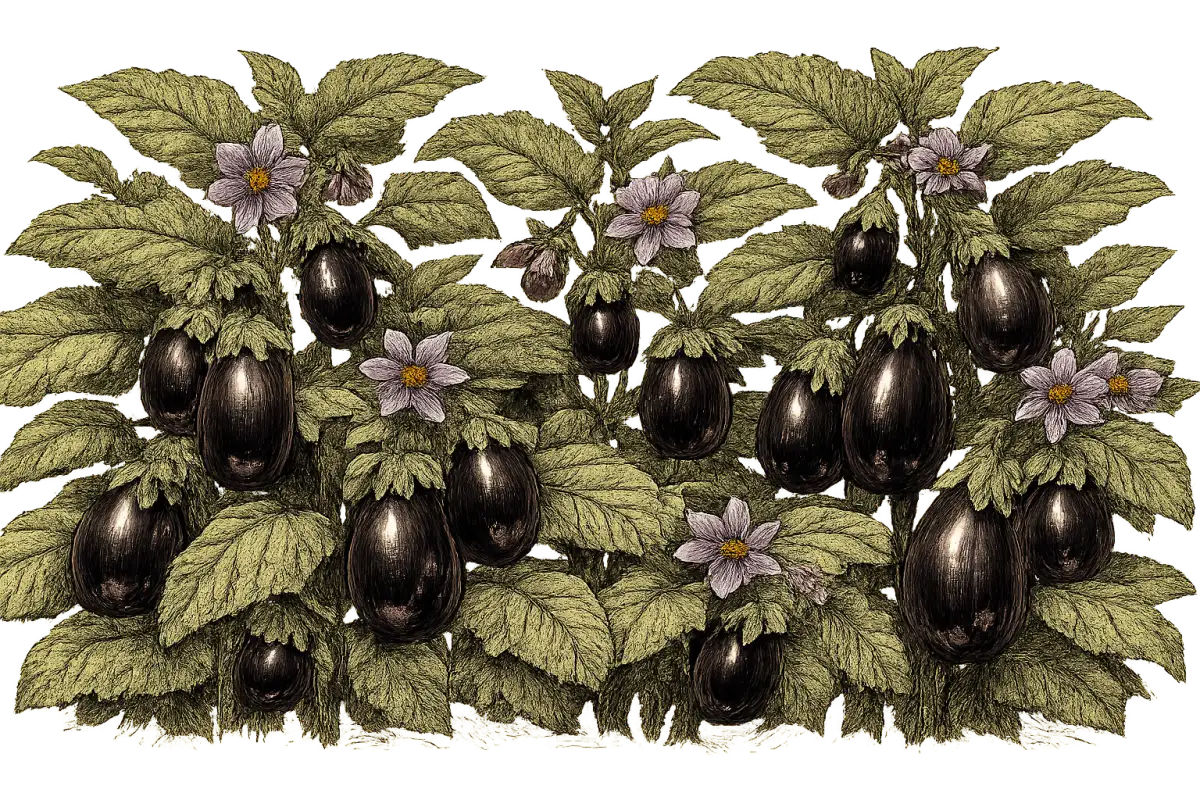
How to grow eggplant — vintage botanical illustration showing the plant in detail

Eggplant at a Glance

Sun

Sun

8-12 hours full sun

Soil pH

Soil pH

5.5-6.8

Water

Water

1-2 inches per week

Spacing

Spacing

18-24"

Days to harvest

Days to Harvest

58-80 days

Height

Height

2-4 feet

Soil type

Soil

Rich

Lifespan

Lifespan

annual

Get your personalized growing data

Enter your zip code for frost dates, growing season, and soil type.

Every gardener who has grown a stunted, flowerless, bug-riddled eggplant blames the crop. The eggplant is "fussy." The eggplant "doesn't like my garden." The eggplant "just doesn't work here."

Here is what actually happened: they transplanted it into cold soil.

That's it. That is the eggplant story for roughly three-quarters of the people who struggle with it. They put it in the ground on the same schedule as their tomatoes and peppers, watched it sit there for three weeks doing nothing, and concluded that eggplant was difficult. It is not difficult. It is just a heat absolutist. It demands warmer soil and air temperatures than any other common vegetable you're likely to grow. Miss that window by two weeks and you lose the whole season.

Get the timing right, pick the correct variety for your zone, and water consistently. Do those three things and eggplant is one of the most productive, lowest-maintenance crops in the summer garden. A single plant in good conditions carries 5-10 pounds of fruit across the season. In zones 8-10, it produces nearly continuously from transplant to frost. Unlike tomatoes, which shut down above 90°F, eggplant keeps setting fruit in the heat that stalls everything else.

This guide covers what actually matters: soil temperature thresholds, the right varieties zone by zone, flea beetle defense (which is non-negotiable), watering consistency, and how to harvest before you ruin the fruit. We will also be direct about the mistakes that waste the most seasons, because most eggplant advice is too timid about naming them.

Let's get this right.


Quick Answer: Eggplant Growing at a Glance

USDA Zones: 4 through 10 (with the right variety and timing)

Sun: Minimum 8 hours of direct sunlight daily; 10-12 hours for best yields

Soil pH: 5.5-6.8 (similar to tomatoes and peppers)

Soil Temperature: 65°F minimum at 4-inch depth before transplanting; 70°F+ ideal

Spacing: 18-24 inches between plants; 30-36 inches between rows

Water: 1-2 inches per week; consistent and deep, not shallow and frequent

Fertilizer: Balanced 10-10-10 at planting; side-dress every 3-4 weeks

Mulch: Black plastic in zones 4-8; organic mulch in zones 8-10

First harvest: 58-85 days from transplant, depending on variety

Yield: 4-10 pounds per plant per season


The Temperature Problem (Why Your Eggplant Isn't Growing)

Before anything else in this guide is useful, you need to understand one thing: eggplant is not stalling because you're doing something wrong to it. It is stalling because the ground is too cold.

Cold soil does not merely slow eggplant -- it severely stunts it. A plant transplanted into 55°F soil barely functions. Roots absorb almost nothing. The plant sits there yellowing, sometimes for weeks, until the ground finally warms. And that lost time doesn't come back. Those stunted weeks translate directly into fewer fruit at the end of the season. A smaller transplant going into warm 70°F soil will outperform a larger transplant that sat in cold ground for three weeks. Every time.

The temperature thresholds are clear. Soil at 4-inch depth must be at least 65°F before you plant. Seventy degrees or warmer is better. Nighttime air temperatures must reliably stay above 60°F -- because below 65°F at night, flowers drop without setting fruit. This is why eggplant goes out after peppers, making it the last warm-season crop into the ground in spring. If you're in zones 4-6 and you're transplanting eggplant at the same time as your tomatoes, you're too early.

The fix is both patient and practical. Wait until the numbers are right. Use a soil thermometer -- insert it 4 inches deep and take the reading in the morning, which gives you the coolest measurement. If the morning reading is at or above 65°F, you're safe to plant.

In the meantime, use black plastic mulch laid over the bed 2-3 weeks before your planned transplant date. Black plastic raises soil temperature 5-10°F above ambient and pre-warms the root zone before the plant ever goes in the ground. In zones 4-6, pair it with Wall-o-Water cloches or row covers over the transplants for the first 2-3 weeks to add another 4-8°F of air temperature above the plant. These techniques can effectively extend your season by two to four productive weeks in short-season climates -- which, for a crop this heat-dependent, is the difference between a real harvest and a science experiment.

This also explains the relationship between eggplant timing and your zone. In zones 9-10, transplanting happens in February or March, while the rest of the country is still starting seeds indoors. In zones 4-5, you might not get plants outside until early June. Both approaches are correct for their climates. The universal rule is soil temperature, not calendar date.


Best Eggplant Varieties by Zone

Variety selection matters more for eggplant than for almost any other vegetable because the range of maturity times is enormous. The fastest Japanese types clock in at 58 days. The slowest Italian heirlooms need 85-90 days. In a zone 5 garden with 130 frost-free days after transplanting, that difference is the entire margin between a harvest and a near-miss.

There are five main eggplant types. American globe varieties like Black Beauty, Epic, and Galine are the large, deep purple supermarket standard -- dense flesh, heavy fruit, excellent for eggplant parmesan, but they need the longest and hottest season. Japanese types like Ichiban, Orient Express, and Millionaire are long and slender with fewer seeds, thin skin, and faster maturity; they are the go-to for northern growers and the best for grilling and stir-fry. Italian heirlooms like Rosa Bianca, Listada de Gandia, and Violetta di Firenze have the most complex flavor of any eggplant but need a full warm season to develop. Thai types like Kermit and Thai Long Green are compact, productive in heat, and ideal for curries. White types like Casper and Clara are mild, slightly less heat-demanding than purple globes, and excellent for gardeners who find conventional eggplant bitter.

What zone are you in?

Enter your zip code for frost dates, growing season, and soil type.

Short-Season Zones (4-5): Work With the Calendar, Not Against It

Zone 4-5 growers do not get to make casual variety choices. Your frost-free window runs roughly 100-150 days, and eggplant cannot go out until nighttime temperatures clear 60°F -- which might not happen until late May in zone 5 or early June in zone 4. That means your effective growing window for eggplant, after all the constraints are applied, may be 90-100 days at best.

The answer is Japanese varieties exclusively. Orient Express at 58 days is the fastest-maturing eggplant worth growing and, critically, it is the most cool-tolerant variety available -- it sets fruit in conditions that would cause other types to drop their flowers. Ichiban at 61 days is the most reliable short-season performer overall: fast, consistently productive, and capable of a meaningful harvest even in a year when summer arrives late. Millionaire at 62 days adds hybrid vigor to the mix and stays productive even in marginal heat.

Fairy Tale at 65 days is worth including even in zone 4. It is a mini Italian-style variety with small, striped fruit and a compact plant that fits container growing -- an AAS winner and genuinely excellent eating quality. Casper, the white globe type at 70 days, is also a viable zone 5 option when you use soil-warming techniques effectively.

The strategy for these zones is layers: start seeds on a heat mat at 80-85°F indoors 8-10 weeks before last frost (mid-February to early March). Lay black plastic mulch 2-3 weeks before transplanting to pre-warm the soil. Transplant through the plastic only after soil temperatures confirm 65°F minimum. Cover immediately with row covers or Wall-o-Water cloches for the first 2-3 weeks. By the time you remove those covers for flowering and pollinator access, the plants have accumulated the heat they needed to build a strong foundation for the season.

Do not attempt globe or Italian varieties in zone 4. In zone 5, they are a gamble in a normal year and a failure in a cool one. Your season is too short and the downside is too expensive.

Standard Zones (6-7): More Options, Same Discipline on Timing

Zones 6-7 offer enough heat and frost-free days -- 150-210 -- for the full range of eggplant types, including globe and Italian varieties. The discipline on timing still applies. Cold soil stunts zone 7 eggplant just as badly as zone 5 eggplant. Wait for the numbers.

Epic at 64 days and Galine at 65 days are the early hybrid globe options for zone 6 -- they give you the classic large-fruit globe eggplant without needing the full season that Black Beauty (74 days) demands. Black Beauty is the traditional open-pollinated standard, a reliable producer of large, classic fruit when the season cooperates.

The Japanese types -- Ichiban, Orient Express, Millionaire -- remain excellent in these zones and give you the earliest first harvests. Mix one Japanese variety with one globe type and you extend your harvest window from mid-July through September.

Zone 7 is where the Italian heirlooms become practical. Rosa Bianca at 80 days is widely considered the finest-flavored eggplant you can grow -- creamy, mild, with a rose-and-white skin that bears no resemblance to the grocery store standard. Listada de Gandia is equally striking: deep purple and white stripes, mild flavor, and a tenderness that makes it exceptional roasted. Both need the full warmth of zone 7 and benefit from black plastic mulch in zone 6 to push them over the finish line before frost.

Stake everything in these zones. Globe fruit gets heavy. More on this in the mistakes section.

Hot-Climate Zones (8-10): Eggplant's Natural Habitat

Here is what most gardening guides won't say plainly: eggplant is a tropical crop that we are forcing into temperate gardens. Zones 8-10 are where it actually belongs. The long season, sustained heat, and warm nights that stress every other summer vegetable are exactly what eggplant is built for.

In zone 8, transplanting happens in late March to mid-April -- two months earlier than zone 5. The full range of varieties works. Take advantage of the season length to grow the Italian heirlooms that zone 5 growers can only dream about. Violetta di Firenze -- large, ribbed, deep violet, and stunning on a plate -- needs 80 days and warm nights. This is where it thrives. Rosa Bianca and Listada de Gandia are equally at home.

Thai varieties are dramatically underused in zones 8-10. Kermit produces golf-ball-sized green fruit at 60 days with a flavor profile completely different from purple eggplant -- excellent in curries and Thai cooking. Thai Long Green is productive in the heat and provides an extended harvest season. If you have not grown these, you are missing one of the easiest harvests of the southern garden.

In zones 9-10, transplant in February to March. In zone 10, eggplant can produce nearly year-round under the right conditions. Even here, watch for cool spring nights -- fruit set stalls below 65°F regardless of zone.

Quick Reference: Top Picks by Zone Group

Zone GroupTop 3 VarietiesTypeWhy
4-5Orient Express, Ichiban, MillionaireJapaneseFastest maturity; best cool-tolerance
6-7Epic, Ichiban, Rosa BiancaGlobe/Japanese/ItalianSpans early to full-season harvest
8-10Galine, Rosa Bianca, KermitGlobe/Italian/ThaiFull season; heat-tolerant; maximum variety

How to Plant Eggplant Right the First Time

Soil Preparation

Eggplant wants rich, well-drained loam with a pH between 5.5 and 6.8. Test your soil before planting -- this is a $10-25 step at your local cooperative extension service that prevents a season of troubleshooting. If pH is below 5.5, apply agricultural lime in fall (it needs 2-3 months to fully react). If above 6.8, apply elemental sulfur.

For drainage, clay soil is your enemy. Work 3-4 inches of finished compost into the top 8-12 inches. If drainage is seriously poor, build raised beds -- a 10-12 inch raised bed warms faster in spring, drains better year-round, and lets you control the soil mix completely. Fill with roughly 60% topsoil, 30% compost, and 10% perlite. Waterlogged roots kill eggplant faster than almost any other common vegetable.

In fall, add compost and any needed pH amendments. In spring 4-6 weeks before transplanting, work in a balanced granular fertilizer at 2-3 pounds per 100 square feet. Rake smooth. Lay black plastic mulch (zones 4-8) and install drip irrigation underneath the plastic before you lay it -- you cannot easily add it afterward.

Seed Starting

Eggplant must be started indoors in zones 4-8. Start seeds 8-10 weeks before your last frost date -- earlier than tomatoes and peppers. The non-negotiable: soil temperature must be 80-85°F for germination. A heat mat is strongly recommended. Without it, you will wait 21+ days for seeds that should germinate in 7-14 days at proper temperature -- if they germinate at all.

Plant seeds 1/4 inch deep in moist seed-starting mix. Germination does not require light, but seedlings need strong light immediately upon emergence -- 14-16 hours per day under grow lights positioned 2-4 inches above the seedlings. Maintain daytime temperatures of 70-80°F and do not let nights drop below 65°F. Pot up to 3-4 inch containers when seedlings have 2-3 true leaves. Stunted eggplant seedlings rarely recover to full productivity, so grow them vigorously from the start.

Hardening Off and Transplanting

Eggplant seedlings are highly sensitive to cold shock. Harden off over 7-10 days: start with 2-3 hours in a sheltered, shaded spot and build gradually to full-day outdoor exposure. The rule is simple -- if nights drop below 55°F during hardening off, bring plants inside. Cold exposure at this stage causes lasting setbacks.

Transplant at 18-24 inch spacing within rows, with 30-36 inches between rows. Plant at the same depth as the nursery pot -- unlike tomatoes, eggplant should not be buried deeper. Water in deeply with a diluted balanced fertilizer solution. Install stakes or cages at transplanting to avoid disturbing roots later. And if you are in flea beetle territory -- which is most of the United States -- install row covers immediately. Do not wait to see damage first. We will cover why in the pest section.


Watering: The Consistency Imperative

The core principle is not complicated: eggplant needs 1-2 inches of water per week, delivered consistently. The most damaging pattern is drought followed by heavy watering. That cycle causes more problems than either underwatering or overwatering consistently would, and the consequences show up in ways that look like disease, nutrient deficiency, or pest damage.

Here is what inconsistent watering actually does. Blossom end rot -- those dark, sunken, leathery patches on the bottom of fruit -- is a calcium transport problem, not a calcium deficiency. Calcium moves through the plant exclusively via water transpiration. Interrupting that flow during dry spells starves developing fruit of calcium regardless of how much is in your soil. Spraying calcium on leaves does nothing. The fix is consistent water delivery.

Flower drop is another consequence. Eggplant drops flowers under water stress. Combined with cool nights, inconsistent watering is a leading cause of poor fruit set. Tough, leathery skin forms when fruit experiences water stress during development. Spider mite populations explode in hot, dry conditions -- consistent watering keeps mite pressure significantly lower than in water-stressed gardens.

Drip irrigation is the correct tool for eggplant. It delivers water directly to the root zone without wetting foliage (which reduces phomopsis blight and other fungal diseases), integrates with black plastic mulch, and can be put on a timer so the schedule holds regardless of your attention. Run drip lines 6 inches from plant stems along both sides of the row. Set the timer for morning delivery.

If drip is not an option, soaker hoses are a reasonable substitute for small plantings. Overhead watering is the worst option -- it wets foliage and invites disease -- but if it's what you have, water in the early morning so leaves dry quickly. Never water in the evening.

Water deeply but less often: 2-3 times per week in loam, 3-4 times in sandy soil, once or twice in clay. The goal is to push water to 6-8 inch depth at each watering. Check depth with a screwdriver or moisture probe after watering -- if you can push it 6 inches easily into moist soil, you're on track.

Mulch is essential. Under black plastic, evaporation drops 50-70%. Without any mulch, you need 20-40% more water just to compensate for surface evaporation, and soil moisture fluctuates sharply between waterings. In zones 4-8, black plastic serves double duty as both moisture retention and soil warming. In zones 8-10, switch to 2-3 inches of organic mulch -- straw, shredded leaves, wood chips -- applied after soil has fully warmed. Do not apply organic mulch early in northern zones; it insulates the ground and keeps cool soil cool.

Container-grown eggplant is a different challenge entirely. Containers dry out 2-5 times faster than in-ground beds. Check moisture daily by inserting a finger 2 inches into the soil. In hot weather above 85°F, check morning and afternoon. Water until it runs from the drainage holes. Use a minimum 5-gallon container for compact varieties, 7-10 gallons for standard types.

What zone are you in?

Enter your zip code for frost dates, growing season, and soil type.


Flea Beetles: Assume They Are Coming

This is not a section for gardeners in some zones. Flea beetles are present throughout most of the United States, they target eggplant preferentially over every other crop in the nightshade family, and they are capable of killing young transplants outright within a few days of planting. This is a universal eggplant problem, and the solution is entirely preventable damage -- provided you act at transplanting time rather than after you see the holes.

Flea beetles are small (1/16 to 1/8 inch), dark, jumping beetles that chew tiny round holes in leaves, creating a distinctive shothole damage pattern. They are most dangerous to young transplants with only a few leaves -- there is not enough leaf area to absorb the feeding damage while continuing to grow. Heavy flea beetle pressure on a small plant kills it or fatally weakens it. The same damage on a large, established plant is cosmetic.

The most effective defense is a floating row cover (Agribon AG-15) installed immediately at transplanting -- hoops first, then fabric draped over and edges secured with soil or landscape staples. Any gap becomes an entry point. Leave the covers in place until flowering begins, typically 3-4 weeks after transplanting, then remove to allow pollinator access. By that point, plants are large enough to tolerate moderate flea beetle pressure without significant yield loss.

Row covers provide a secondary benefit that makes them doubly worthwhile in northern zones: they raise air temperature 4-8°F around plants, accelerating early growth. In zones 4-7, where every accumulated heat unit counts, this is a meaningful advantage.

After row covers come off, shift to neem oil spray every 7-10 days, covering both tops and undersides of all leaves. Apply in the morning or evening -- never in direct midday sun. Reapply after rain. Neem oil reduces flea beetle feeding substantially but does not eliminate it; it is best understood as maintenance suppression once the critical transplant-to-flowering window has passed safely behind row covers.

Companion planting with basil between eggplant and marigolds nearby adds some supplemental deterrence and may draw beneficial insects that prey on flea beetle larvae. This is useful but not sufficient as a primary defense. Do not skip the row covers in favor of basil. That is not a trade that works out well.

Colorado potato beetles are a secondary eggplant pest worth knowing about. Adults are large, striped, easy to spot; larvae are orange-red and humped. Handpicking is the most effective control for home gardens -- check plants daily and drop adults, larvae, and bright orange egg clusters into soapy water. Crop rotation reduces early-season populations since CPB overwinters in soil near previous nightshade plantings.

Spider mites appear mid-to-late summer in hot, dry conditions. Look for fine webbing on leaf undersides and a stippled, bronzed appearance on leaves. A hard water spray at leaf undersides every 2-3 days knocks populations back. Neem oil and insecticidal soap work on contact. The most important prevention is consistent watering -- mite populations build fastest in water-stressed plants.

For diseases: verticillium wilt is soilborne, incurable once present, and persists in soil for years. Crop rotation is the only real defense -- do not plant any member of the nightshade family (eggplant, tomatoes, peppers, potatoes) in the same spot for at least 2-3 years. Phomopsis blight causes circular sunken lesions on fruit and dark spots on leaves; prevent it with drip irrigation (keep foliage dry), adequate plant spacing for air circulation, and mulch to stop soil splash on lower leaves.


Fertilizing Without Wrecking Fruit Set

Eggplant is a moderate to heavy feeder, but the most common fertilizing mistake is using too much nitrogen. Excess nitrogen produces large, lush, dark green plants with lots of foliage and almost no flowers. Classic all-leaf-no-fruit syndrome. If you've ever wondered why your eggplant looks spectacular and produces nothing, this is probably why.

At transplanting, work a balanced fertilizer (10-10-10) or one slightly higher in phosphorus (5-10-10) into the top 2-3 inches of soil. Phosphorus promotes root establishment and flowering -- it is the right emphasis early in the season. Do not use high-nitrogen lawn fertilizer on eggplant. Do not double up on applications. The recommendation on the label is for a reason.

Side-dress every 3-4 weeks through the season with balanced granular fertilizer at 1-2 tablespoons per plant, or use compost tea or fish emulsion for organic production. Keep phosphorus and potassium present throughout -- they support fruit quality and disease resistance. Once plants are heavily loaded with fruit, stop fertilizing to encourage ripening over new vegetative growth.

If plants are already too vegetative with few flowers, stop all fertilizer and maintain water only. As nitrogen in the soil depletes, the plant will shift toward flowering. This takes a few weeks, but it works.


Harvesting: Glossy Means Go

Here is the harvesting rule that changes everything: glossy skin means harvest now. Dull skin means you waited too long.

Eggplant quality peaks before maximum size and declines rapidly after. Waiting for a bigger fruit produces a worse fruit -- seedy, bitter, tough-skinned. The glossy-to-dull transition happens over just a few days in hot weather. In temperatures above 85°F, a fruit that is perfect today may be overripe in 48 hours. Check plants every 2-3 days during peak production season.

Use both indicators together. First, look at the skin: it should have a polished, reflective quality. If the surface appears flat, chalky, or matte, it is past optimal. Second, press the skin gently with your thumb -- it should spring back immediately. If the indentation holds, the flesh has gone soft and spongy. If the skin is rock-hard with no give at all, wait another 2-3 days.

Harvest at the right size for the type. Globe varieties (Black Beauty, Epic, Galine) at 6-8 inches long and 4-5 inches in diameter -- roughly 12-24 ounces. Do not wait for a 10-inch globe. Japanese varieties (Ichiban, Orient Express) at 6-10 inches long and no wider than 2 inches; bulging indicates overripeness. Kermit at golf-ball size -- small is correct for this type. White varieties like Casper while the skin is still pure white; yellowing signals overripeness in the absence of the gloss transition.

Cut the stem with a sharp knife or pruning shears, leaving 1 inch of stem attached. Do not twist or pull -- this damages both fruit and plant. Some globe varieties have small thorns on the calyx; gloves are optional but practical. Handle the fruit carefully -- eggplant bruises easily and bruised areas deteriorate quickly.

Harvest regularly and harvest everything ready. This is critical: eggplant is a continuous-harvest crop. Regular picking signals the plant to keep producing. An un-harvested plant slows and eventually stops setting new fruit. Remove any overripe or damaged fruit immediately, even if you do not want to eat it -- overripe fruit on the plant suppresses new production just as effectively as un-harvested ripe fruit.

Store harvested eggplant at 50-55°F. The typical refrigerator at 35-40°F causes chill injury -- pitting, browning, and texture degradation. Use within 2-3 days if refrigerating. Keep away from bananas, tomatoes, apples, and melons, which produce ethylene gas that accelerates eggplant deterioration.

To freeze: slice or cube, blanch for 4 minutes in boiling water, ice bath, pat dry, freeze in a single layer on a sheet pan, then transfer to freezer bags. Frozen eggplant works well in cooked preparations -- eggplant parmesan, stews, curries -- but will not have fresh texture after thawing.

When frost is forecast, harvest everything of any usable size. Fruit that has begun to develop is worth keeping. Fruit that is still small, green, and rock-hard will not ripen off the plant. Row covers can extend production 1-2 weeks into fall when overnight temperatures threaten to dip below 35°F, but a hard freeze ends the season with no recovery.


The Mistakes That Cost the Most Seasons

We have ranked these by how much production they actually cost, based on what goes wrong repeatedly.

Mistake #1: Transplanting Before the Soil Is Warm

This is the one. Cold soil does not just slow eggplant -- it stunts it in a way that doesn't fully recover. The lost weeks are gone from your season permanently. Soil at 4-inch depth must reach 65°F before the plant goes in the ground. Use a thermometer. If you skip this step and plant on a calendar date instead, you are gambling with your entire season.

The insidious version: you use black plastic mulch, which is good, but you only laid it a few days ago instead of 2-3 weeks ago, and the soil is 60°F instead of 68°F. You plant anyway because the calendar says it's time. The plant sits there for two weeks doing nothing. Wait the extra days. A week of patience in May is worth several pounds of eggplant in August.

Mistake #2: Skipping Row Covers at Transplanting

Flea beetles can shred a young eggplant transplant to bare stems within days. Young plants have almost no tolerance for this -- there is not enough leaf area to sustain photosynthesis and recover from damage simultaneously. Gardeners who wait to see flea beetle damage before protecting their plants are waiting too long. By the time the shothole pattern appears, the plant is already weakened.

Row covers at transplanting is the standard. It is not advanced. Do not skip it.

Mistake #3: Wrong Variety for Your Season Length

Planting an 80-day Italian heirloom in zone 5 with a 120-day frost-free window is not aggressive gardening -- it is arithmetic that doesn't work. Match days-to-maturity against your remaining frost-free days after transplanting and leave at least a two-week buffer. In zones 4-5, this means Japanese varieties. Not globe types. Not Italian heirlooms. If you want to grow Rosa Bianca or Listada de Gandia, move to zone 7.

Mistake #4: Inconsistent Watering

Cycles of drought and heavy watering cause blossom end rot, flower drop, tough fruit skin, and spider mite explosions. Consistent delivery of 1-2 inches per week -- via drip irrigation, on a timer, with mulch retaining moisture between events -- prevents all of these. The investment in a basic drip system pays for itself in the first season.

Mistake #5: Over-Fertilizing with Nitrogen

Lush plants with no flowers. It happens every year. The fix is simple: stop fertilizing and wait for the plant to shift toward fruiting as soil nitrogen depletes. The prevention is simpler: use a balanced 10-10-10 fertilizer, not lawn fertilizer, and apply at the rates specified on the label.

Mistake #6: Harvesting Too Late

Glossy skin springs back under thumb pressure -- that is your harvest signal. Dull skin with a persistent indentation means the fruit is overripe, seedy, and bitter. Check plants every 2-3 days. The transition happens fast. Picking slightly early produces better fruit than picking late. When in doubt, harvest it.

Mistake #7: Skipping Stakes

A productive globe eggplant may carry 5-10 fruit simultaneously, each weighing over a pound. Those branches will snap without support, especially after rain when everything is heavier. Install stakes or cages at transplanting -- not after the plant is loaded, which risks root damage. Tie stems loosely with soft ties; eggplant stems are brittle and crack under tight binding.

Mistake #8: Not Rotating the Crop

Verticillium wilt is soilborne, persists for years, and infects all nightshade crops. If you plant eggplant in the same spot where you grew tomatoes, peppers, or potatoes in the previous two years, you are introducing your new plants to a disease they cannot survive. Rotate nightshade crops to a new location every year and don't return them to any location for at least 2-3 years. Follow eggplant with legumes -- beans or peas fix nitrogen and leave the bed better than they found it.

What zone are you in?

Enter your zip code for frost dates, growing season, and soil type.


Frequently Asked Questions

What Is the Easiest Eggplant to Grow for Beginners?

Ichiban is the most consistently reliable variety across the widest range of zones and conditions. It matures in 61 days, produces prolifically, tolerates more variation in growing conditions than globe or Italian types, and works in everything from zone 4 containers to zone 9 ground beds. If you want one variety that will succeed the first time you try it, plant Ichiban.

Why Is My Eggplant Flowering but Not Setting Fruit?

The most common cause is nighttime temperatures below 65°F. Eggplant drops flowers when nights are too cool. Check your overnight lows. If you are in an early-season cold snap, wait it out -- when nights warm up, fruit set resumes. If nights are warm and flowers are still dropping, check watering consistency. Water stress causes the same symptom. The third possibility is insufficient pollination due to lack of bee activity; flowers that are not visited during their two-to-three day window will drop.

Can I Grow Eggplant in Containers?

Yes, and in zones 9-10, containers give you control over soil mix and drainage that can be genuinely advantageous. Use a minimum 5-gallon container for compact varieties (Fairy Tale, Kermit, Casper) and 7-10 gallons for standard types. Fill with 70% potting mix, 20% compost, and 10% perlite. Containers dry out 2-5 times faster than in-ground beds -- check moisture daily, twice daily in hot weather above 85°F. Fertilize every two weeks with liquid fertilizer rather than monthly, since containers deplete nutrients faster. Dark-colored containers absorb heat, which eggplant appreciates; in zones 9-10, use lighter colors or wrap with reflective material to prevent root overheating.

How Do I Know When Eggplant Is Ready to Pick?

Glossy skin plus spring-back under gentle thumb pressure. Glossy means the flesh is dense and firm; the indentation-free press test confirms it. If the skin is dull and matte, you are already past optimal. If the skin is hard as a rock with zero give, wait 2-3 more days. Check every 2-3 days during summer production -- in hot weather, the window between perfect and overripe can be 48 hours.

Why Does My Eggplant Have Tiny Holes All Over the Leaves?

Flea beetles. The shothole damage pattern -- dozens of tiny round holes spread across the leaves -- is diagnostic. Install row covers immediately if plants are still young and small. If plants are large and established with substantial leaf area, they can tolerate moderate flea beetle feeding without significant yield loss, and neem oil spray every 7-10 days is sufficient management.

Do I Need to Start Eggplant from Seed or Can I Buy Transplants?

Transplants from a nursery work fine and save you the indoor seed-starting setup. The catch: nursery transplants are often available in May, which is earlier than many northern growers should be planting eggplant outdoors. Do not transplant nursery starts just because the store has them -- the soil temperature thresholds apply regardless of where the plant came from. Keep nursery transplants in a warm indoor location until conditions outside are genuinely ready.


The Bottom Line

Eggplant is not a difficult crop. It is a specific one. Give it warm soil before you transplant it, pick varieties whose maturity days actually fit your season, put row covers on at planting to get it through the flea beetle window, water consistently via drip irrigation, and harvest when the skin is glossy. Those five things cover the vast majority of what goes wrong.

The payoff is real. A good plant in a warm zone carries 5-10 pounds across the season, in a climate range -- zones 8-10 -- where summer heat shuts down tomatoes and peppers but barely slows eggplant down. In northern zones, the discipline of variety selection and timing makes the difference between an actual harvest and a very expensive ground ornamental.

Start with a soil thermometer. Know your frost-free days. Pick the right variety. And if you remember nothing else from this guide: wait until the soil is warm. The plant will reward the patience.

Research for this guide draws on cooperative extension resources including University of Minnesota Extension, University of California Cooperative Extension, and regional extension programs covering variety performance, pest management, and soil management for warm-season vegetable crops across USDA zones 4 through 10.

Where Eggplant Grows Best

Eggplant thrives in USDA Zones 7, 8, 9, 10. Explore each zone's complete guide for growing tips, companion plants, and seasonal advice.

Also possible in: Zone 5, Zone 6 (challenging but possible with the right conditions).

Not sure of your zone? Look it up by zip code →