Vegetables

The Honest Guide to Growing Celery: What Nobody Warns You About

James Calloway

James Calloway

Vegetable & Edibles Specialist · Updated April 2026

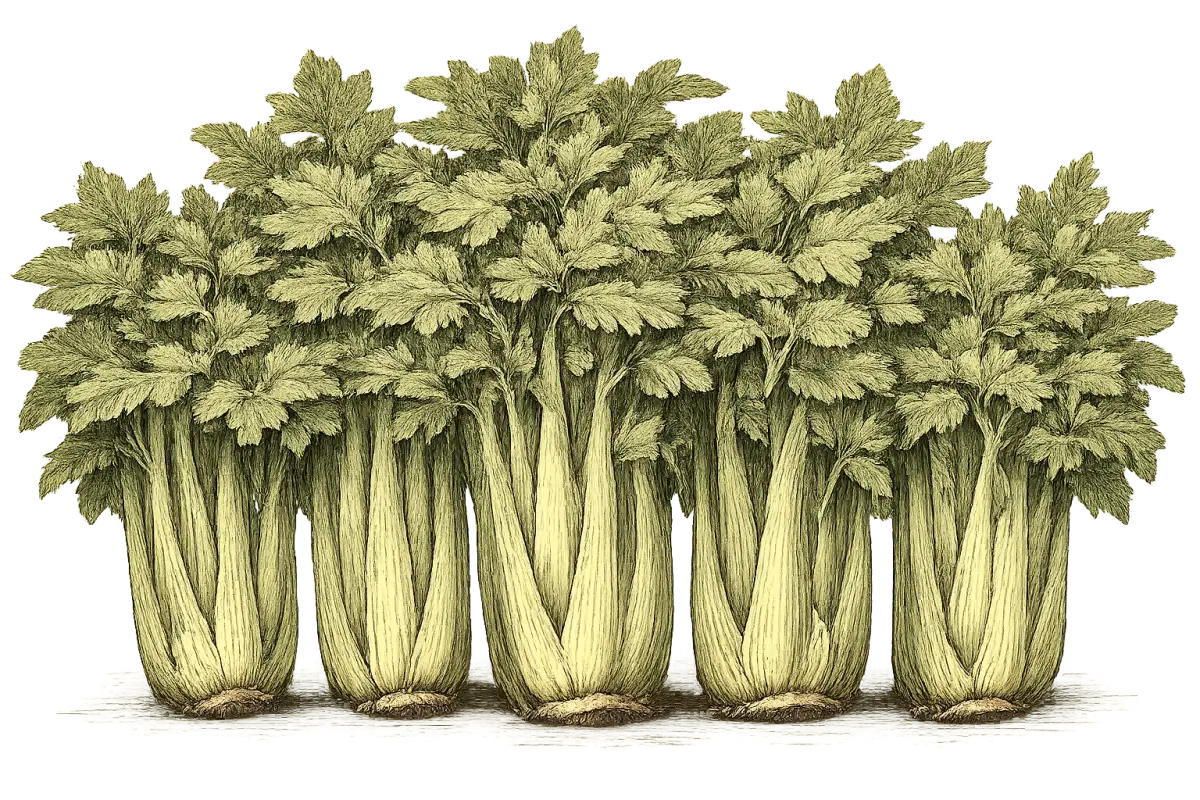
How to grow celery — vintage botanical illustration showing the plant in detail

Celery at a Glance

Sun

Sun

6+ hours full sun

Soil pH

Soil pH

5.8-6.8

Water

Water

1-2 inches per week minimum (2-3 inches in dry or hot climates)

Spacing

Spacing

6-12"

Days to harvest

Days to Harvest

85-140 days from transplant

Height

Height

18-24 inches

Soil type

Soil

Rich

Lifespan

Lifespan

annual

Get your personalized growing data

Enter your zip code for frost dates, growing season, and soil type.


Celery has the highest failure rate of almost any vegetable in the home garden. Not because it is rare or exotic — it is sitting in a grocery bag in your refrigerator right now. Not because the instructions are complicated — they fit on a seed packet. Celery fails because it is absolutely unforgiving of the casual approach that works just fine for tomatoes, squash, and beans. It will punish every oversight. Skip a watering? Stringy stalks. Plant two weeks too late? Bitter disaster. Get a cold snap after transplanting? Your plants bolt and the crop is over. Most gardening advice shrugs and says "celery is tricky." I would rather be direct: celery requires genuine discipline, and most gardeners are not ready for it.

Here is what surprises people most: celery is not a hot-weather vegetable. It is not even a warm-weather vegetable. Celery evolved from wild smallage, a bitter marsh plant native to Mediterranean wetlands. Homer's Iliad has the horses of the Myrmidons grazing on wild celery in the marshes of Troy. This is a plant that literally grew with its roots in saturated soil, in cool, damp conditions. The moment you understand that, you understand why grocery-store growing conditions — warm, dry kitchen, occasional watering — produce the exact opposite of what the plant wants. Celery wants to be cold, wet, and growing in some of the richest soil in your garden.

The good news? If you match what celery actually needs, the payoff is real. Home-grown celery, blanched properly and harvested at peak maturity, makes the grocery-store version taste like wet cardboard. I have been saying that for years and people always think I am exaggerating. I am not. The flavor difference is significant. This guide exists to get you there — with straight talk about what the plant actually demands, ranked by what matters most, without the hand-wringing that makes most celery advice useless.


Quick Answer: Celery Growing at a Glance

What is celery? A cool-season vegetable (Apium graveolens) grown for its crisp, edible stalks and flavorful leaves. Descended from a Mediterranean marsh plant.

Days to harvest: 85-180 days from seed, 85-140 days from transplant depending on variety.

Optimal temperature: 60-70F. Stalks turn hollow and bitter above 80F. Premature bolting occurs below 50F in young plants.

Sun requirement: Full sun (6+ hours). Afternoon shade beneficial in zones 7-10.

Water requirement: 1-2 inches per week minimum; 2-3 inches in hot or dry climates. Daily in containers. The most water-hungry vegetable you will grow.

Feeding requirement: Heavy. One of the hungriest vegetables in the garden. Feed from transplant through harvest.

Soil pH: 5.8-6.8.

Spacing: 6-10 inches apart in rows (trench varieties), 6-12 inches in all directions in blocks (self-blanching).

Indoor start required? Yes. Always. Direct sowing almost never succeeds.

Blanching required? Depends on variety. Self-blanching types need no action. Trench varieties need earthing-up or wrapping 10-14 days before harvest to reduce bitterness.

Biggest mistake: Letting the soil dry out even once. The damage is permanent.


Key Insight: The #1 Thing People Get Wrong

Every gardener who has grown a mediocre celery crop will tell you a version of the same story. They followed the instructions. They gave it sun, they fed it, they watered it like they watered everything else. And they harvested stalks that were stringy, fibrous, bitter, or hollow. They conclude that celery is just hard, that maybe it is not worth the effort.

They are wrong. They got one thing wrong, and it ruined the whole crop.

Celery is a marsh plant, not a garden plant. It does not share a watering schedule with anything else in your garden.

Here is the physiological reality. Celery has an extremely shallow root system — just a few inches deep. Those roots cannot reach down into the soil profile for moisture the way your tomatoes can, the way your squash can, the way almost every other vegetable you grow can. Celery's roots live in the top few inches of soil. That is also the zone that dries out fastest. Every time you let the surface dry out, even briefly, you are stressing roots that have no way to compensate. The plant's cellular structure requires consistent turgor pressure — water pressure inside the cells — to produce the crisp, thick stalks you want. When that pressure drops, cells collapse. The stalks turn stringy and fibrous. That damage is permanent. You cannot water it back to health. The affected stalks are what they are from that point forward.

The numbers make this concrete. Celery needs 1-2 inches of water per week in moderate climates and 2-3 inches per week when it is dry or hot. That is roughly twice what most vegetables require. In containers — which dry out far faster than garden beds — you should be checking moisture once or twice a day in warm weather. The soil should feel like a wrung-out sponge at all times: consistently moist, never standing in puddles, but never even approaching dry. If you squeeze a handful of soil and it crumbles apart, you are already behind. Water immediately.

This has downstream effects on every other decision you make. Site your celery near a water source because you will be out there constantly. Use drip irrigation or soaker hoses rather than overhead sprinklers — not just for convenience, but because wet foliage promotes the two blights (Cercospora and Septoria) that are celery's most destructive diseases. Mulch with 2-3 inches of straw or shredded leaves to slow evaporation from the very zone where celery's roots live. Consider planting celery in the wettest corner of your garden — the spot where puddles linger after rain and other vegetables struggle. That spot is exactly right for celery.

Here is the second part of what people get wrong, which is directly connected: they also underwater and underfeed simultaneously, and they think these are separate problems. They are not. The constant watering celery demands actively flushes nutrients out of the root zone. Soluble nitrogen washes below root depth within days of heavy irrigation. This is why you cannot apply a single dose of fertilizer at planting and consider the job done — because every time you water (which is constantly), you are washing nutrients away. Utah State University Extension research confirms that celery's small, shallow root system makes it a poor nutrient forager, meaning nutrients must be concentrated in exactly the zone that gets flushed repeatedly. The solution is regular, repeated feeding throughout the entire growing season, not a one-time application. Feed every two to three weeks with liquid organic fertilizer. Side-dress with nitrogen at four weeks and eight weeks after transplanting. Continue feeding until harvest. Do not taper off.

The interaction between water and nitrogen also governs celery's most frustrating physiological disorder: blackheart. This is internal browning or blackening of the youngest heart leaves, often invisible until you cut the plant open and discover your harvest is ruined. Blackheart is not caused by a pathogen — it is a calcium deficiency problem triggered by the combination of high nitrogen, inconsistent watering, and high soil salinity. The fix is not less nitrogen; it is more consistent watering and adequate calcium in the soil before you ever plant. Get a soil test. Add lime or gypsum if calcium is low. Then water like it is your job for the entire season.

Get the water right. Everything else falls into place behind it.


Varieties by Zone

Celery comes in three main types. Stalk celery is the grocery-store version, grown for thick edible stalks, and it divides further into trench varieties (planted in trenches and earthed-up for the best possible flavor) and self-blanching varieties (easier, shorter season, no earthing-up required). Leaf celery, also called Chinese celery or cutting celery, is grown for its abundant strongly-flavored leaves rather than thick stalks, matures in about 60 days, and is significantly more heat-tolerant than stalk celery. Celeriac is grown for its bulbous root, requires 110-120 days, and is more cold-hardy than stalk celery. If stalk celery sounds intimidating, leaf celery is a legitimate and useful alternative — same flavor, fraction of the difficulty.

For first-time celery growers regardless of zone: start with Golden Self-Blanching. It is an 1884 heirloom, compact, produces golden-yellow stringless stalks, resists blight, and matures in 85-105 days without requiring any blanching labor. It is the most forgiving variety in the catalog. Graduate to trench varieties like Utah 52-70 once you have a successful crop behind you.
What zone are you in?

Enter your zip code for frost dates, growing season, and soil type.

What zone are you in?

Enter your zip code for frost dates, growing season, and soil type.

Zones 2-4 (Very cold, short seasons)

Your cool-season window runs about 80-100 days. You need short-season varieties. Start seeds indoors in February with a heat mat at 70-75F, transplant in late May to early June after frost danger passes, and target an August-September harvest before the first fall frost. Do not attempt trench varieties with 120-140 day maturities — there is simply not enough cool weather. Golden Self-Blanching (85-105 days) is your primary option. Tango (~85 days) is a good backup with quick maturity and dark green stalks. If stalks prove difficult in your specific microclimate, Afina leaf celery at ~60 days is a reliable fallback that gives you celery flavor from abundant leaves. Row covers and cold frames extend your season on both ends.

Zones 5-6 (Cold, moderate seasons)

You have roughly 100-120 days of suitable temperatures, which opens up mid-range varieties if you start seeds in late January. Golden Self-Blanching remains the reliable choice for both spring and fall crops. Utah 52-70 (120-124 days) is possible with an early start — this is the standard commercial variety for a reason, with tall dark-green thick stalks and wide adaptability. Summer Pascal (~120 days) adds blight resistance and slightly more heat tolerance if your springs warm up fast. Consider planting both a spring crop (started indoors in late January, transplanted in April-May) and a fall crop (started in June, transplanted in July, harvested October-November). Declining autumn temperatures match celery's preferences well.

Zones 7-8 (Moderate, two-season potential)

You have genuine options here. The key strategic insight for zones 7-8: fall crops often outperform spring crops because declining temperatures are exactly what celery wants. For fall crops, start seeds indoors in June-July, transplant in August-September, harvest November-December. For spring crops, start seeds indoors January-February, transplant March-April, and harvest before July heat arrives. Utah 52-70 works for both seasons. Giant Pascal (120-140 days) is worth the extra work if you are doing fall crops — it produces large plants with thick stalks that blanch beautifully and, in zone 7, can overwinter for an extended harvest window. Summer Pascal gives you the best heat tolerance among standard varieties. Golden Self-Blanching handles both seasons reliably with the least risk.

Zone 9 (Warm, winter growing)

Winter is your celery season. Your fall-through-spring cool window provides the 50-70F temperatures that celery evolved for. This is actually ideal growing weather — Mediterranean marshland conditions right there in your backyard. Start seeds indoors in August, transplant September-October, harvest January-March. You have enough cool window for full-season trench varieties that cold-zone gardeners cannot even attempt. Utah 52-70 and Giant Pascal both perform well in mild zone 9 winters. Afina leaf celery at ~60 days is a quick, reliable option during the fall transition period.

Zone 10 (Hot, very short cool window)

Be realistic here. Stalk celery in zone 10 is genuinely difficult. Start seeds in September, transplant October-November, and target a February-April harvest. Golden Self-Blanching (85-105 days) is your best shot at stalk celery. But the honest recommendation for zone 10 is leaf celery — Chinese celery matures in 60-80 days, tolerates more heat than any stalk variety, and provides the celery flavor you want in soups and seasoning with a fraction of the fuss. It is not a consolation prize. It is a legitimate crop.


Quick Reference Table

ZoneSeasonStart SeedsTransplantHarvestTop Varieties
2-4SpringFebruaryLate May-early JuneAug-SeptGolden Self-Blanching, Tango, Afina
5-6SpringLate Jan-FebApril-MayJuly-SeptGolden Self-Blanching, Utah 52-70, Summer Pascal
5-6FallJuneJulyOct-NovGolden Self-Blanching, Tango
7-8SpringJan-FebMarch-AprilJune-JulyUtah 52-70, Summer Pascal, Golden Self-Blanching
7-8FallJune-JulyAug-SeptNov-DecGiant Pascal, Utah 52-70, Fordhook
9WinterAugustSept-OctJan-MarchUtah 52-70, Giant Pascal, Afina
10WinterSeptemberOct-NovFeb-AprilGolden Self-Blanching, Afina (leaf celery)

Planting Guide

Seed Starting: Non-Negotiable

Direct sowing celery is nearly always a failure. The seeds take 14-21 days just to germinate, they are tiny (roughly 72,000 per ounce) and wash away outdoors, weeds outcompete the painfully slow seedlings, and outdoor temperature swings disrupt germination. Start indoors. Every time.

Germination requirements: Celery seeds need light to germinate — do not bury them. Press seeds onto the surface of pre-moistened seed-starting mix, or cover with no more than 1/8 inch of fine vermiculite. Cover the container with a clear plastic dome to hold humidity. Place on a heat mat set to 70-75F. Below 60F, germination is extremely slow or fails entirely. Mist the surface to keep it consistently moist but not waterlogged. Once seedlings emerge, remove the cover and provide 12-16 hours of light daily under fluorescent or LED grow lights. Expect germination in 10-21 days.

Optional but worth doing: Pre-soak seeds in warm water for 24-48 hours before sowing. Some growers use compost tea to speed germination and help prime disease resistance. Whether or not you pre-soak, do not rush the process — these seeds are slow and you cannot force them.

Hardening Off

Celery is extremely sensitive to temperature shock. Do not skip this step. Starting 7-10 days before your transplant date, set seedlings outdoors in a sheltered, shaded spot for 1-2 hours on day one. Gradually increase outdoor time and sun exposure each day. By day 7-10, they should be spending full days outside. Bring indoors immediately if nighttime temperatures drop below 40F.

Transplanting

Seedlings are ready to transplant when they are 4-5 inches tall with 5-6 true leaves — typically 8-12 weeks after sowing. Soil temperature must be at least 50F. Night temperatures should not regularly drop below 40F. Young celery plants exposed to extended temperatures below 50F, especially after a warm period, will bolt. Once they bolt, the stalks turn pithy and bitter with no recovery. Cold snaps ruin more celery crops than late planting does. When in doubt, wait.

Spacing: For trench varieties, plant 6-10 inches apart in rows 24 inches wide, setting transplants into the trench 3-4 inches below grade. For self-blanching varieties, plant in blocks 6-12 inches apart in all directions — the close spacing causes outer plants to shade inner ones, which is the entire point of self-blanching cultivation. One plant per 8-inch container minimum; 12-inch pots preferred.

At transplanting: Water deeply immediately. Apply a liquid starter fertilizer — fish emulsion plus kelp extract works well. Mulch with 2-3 inches of straw or shredded leaves right away. Protect from wind; celery stalks snap easily.

Soil Preparation

Work compost or aged manure — 2-4 inches — into the top 6-8 inches of your planting area. This is the single most important soil preparation step. Celery evolved in organically rich marshland soils, and its shallow roots need nutrients concentrated right where they feed. Target pH 5.8-6.8. Test for calcium before planting; calcium deficiency causes blackheart and is worth preventing with lime or gypsum before you ever put a plant in the ground. Work in a pre-plant fertilizer — 5-10-10 at 2-3 pounds per 100 square feet, or blood meal at 1/2 pound per 10 feet of row. Contact your local county extension office for a soil test; most charge $10-30 and provide specific amendment recommendations.

For trench varieties, prepare the trench the autumn before planting: dig 16 inches wide and 12 inches deep, add well-rotted manure to the base, backfill with excavated soil mixed with compost, and let it settle over winter. The trench will be slightly below grade by spring — this is intentional, providing the material you will earth up for blanching without importing soil from elsewhere.


Watering

Celery's water requirements are not in the same category as other vegetables. They are not similar to other vegetables. They are categorically more demanding, and the consequences of getting it wrong are swift and permanent.

The minimum is 1-2 inches of water per week in moderate, humid climates. In dry or arid conditions, that climbs to 2-3 inches per week. In containers, check daily and water twice daily during hot or windy weather. The test is simple: the soil should feel like a wrung-out sponge at all times. Squeeze a handful. If it crumbles, you are already in trouble — water immediately. If it holds together and feels moist, you are on track. If it drips, celery can handle it — overwatering in ground beds is almost never a problem with this plant.

Use drip irrigation or soaker hoses. This is not just about convenience. Overhead sprinklers wet foliage, which directly promotes early blight (Cercospora apii) and late blight (Septoria apiicola), the two most destructive celery diseases. Splashing water spreads fungal spores from infected leaves to healthy ones. Drip or soaker systems keep foliage dry and deliver consistent moisture directly to the root zone. If you have to use overhead watering, do it early in the morning so foliage dries before evening. Even then, switch to ground-level irrigation as soon as you can.

Mulch aggressively. Two to three inches of straw or shredded leaves is not optional. Mulch slows evaporation from the top few inches of soil — exactly where celery's shallow roots live — and keeps the root zone cool. Celery prefers cool soil temperatures around 60-65F. Do not use black plastic mulch; it heats the soil too much. Organic mulch cools, conserves, suppresses weeds (which celery cannot compete with due to its shallow roots), and breaks down into organic matter over the season. Refresh mulch 2-3 times during a 4-month growing cycle as it decomposes.

Recognize stress symptoms early. Stringy, fibrous stalks and hollow stalks are drought damage — permanent. Bitter flavor indicates water stress (or heat, or insufficient blanching). Brown leaf edges signal heat stress often compounded by water stress. Premature bolting has multiple triggers, but drought is a primary one. Once you see these symptoms, the best you can do is prevent future stalks from suffering the same fate. You cannot reverse the damage already done.


Feeding

Celery is a heavy feeder. This phrase gets thrown around a lot in gardening writing but rarely explained. Here is the explanation: celery's small, shallow root system makes it a poor nutrient forager. It cannot send roots six inches down to find nitrogen the way tomatoes can. It cannot spread horizontally across several feet of soil. It feeds in the top few inches, and you have to keep those top few inches loaded with available nutrients for the entire growing season — which is 90-140 days from transplant. On top of that, every time you water (which is constantly, because celery demands it), soluble nutrients wash below root depth. You are feeding a hungry plant in a leaky container.

The response is consistent, repeated feeding — not heavy single doses. Here is how to structure it.

Start with the soil. Work in 2-4 inches of aged compost or manure plus a pre-plant fertilizer (5-10-10 at 2-3 pounds per 100 square feet, or blood meal at 1/2 pound per 10 feet of row) before planting. This is your baseline.

At transplanting, drench each plant with a liquid starter — one tablespoon fish emulsion plus two tablespoons kelp extract per gallon of water, 1/2 cup per plant at the base. This gives transplants an immediate nutrient boost while roots establish.

During weeks 1-8 after transplanting, apply fish emulsion or kelp solution weekly until plants reach 8 inches tall. At week 4, side-dress with nitrogen — 1/4 cup ammonium sulfate (21-0-0) per 10 feet of row worked into the soil surface alongside plants. At week 8, repeat that side-dressing. Between those milestones, continue liquid organic fertilizer applications every 2-3 weeks.

From week 8 through harvest: continue liquid applications every 2-3 weeks. Add aged compost as a midseason side-dressing. Do not taper off as the plant approaches maturity — celery needs nutrients right up until you cut it.

For containers: apply liquid fertilizer weekly throughout the entire growing season. No exceptions.

One important caution: excessive nitrogen combined with inconsistent watering and high soil salinity causes blackheart disorder. The fix is not less nitrogen overall — it is consistent, moderate nitrogen combined with consistent watering. Moderate feeding, never sporadic heavy doses, and always adequate water alongside it.


Blanching

Blanching in the garden is not the same as blanching in the kitchen. Garden blanching means shielding stalks from light before harvest to reduce bitterness, lighten stalk color, and improve flavor. Unblanched celery is edible but significantly more bitter than grocery-store celery, which surprises most home gardeners who expect their homegrown version to taste milder, not stronger.

The method depends on your variety.

Self-blanching varieties (Golden Self-Blanching being the best example): no action required. The technique is in the planting — grow in tight blocks where outer plants shade inner ones. The closer your spacing, the stronger the blanching effect. This is why self-blanching celery should be planted in blocks rather than single rows.

Trench varieties — earthing-up method: When stems reach about 12 inches tall, wrap stalks loosely with newspaper or cardboard to prevent soil entering between them, then bank soil up 3 inches around the base. Repeat every 2-3 weeks as plants grow, typically 3-4 sessions. Keep the leaf tops above the soil line at all times.

Any variety — wrapping method: Ten to fourteen days before your planned harvest, gather stalks gently and wrap the lower portion with brown paper, cardboard tubes, or milk cartons with top and bottom removed. Secure loosely. Leave leaf tops exposed. Do not use plastic — it traps moisture and causes rot. Check periodically for slugs hiding inside wraps; they love the dark, damp environment. This is particularly worth monitoring if slugs are a known problem in your garden.

Do not blanch too long. Ten to fourteen days is the maximum. Prolonged blanching causes pithy stalks and increases the risk of rot. Once you start the blanching clock, commit to harvesting when the period is up. Stalks left past the blanching window deteriorate quickly.

What zone are you in?

Enter your zip code for frost dates, growing season, and soil type.

What zone are you in?

Enter your zip code for frost dates, growing season, and soil type.


Common Mistakes (Ranked by Severity)

1. Letting the soil dry out. Already covered in depth. This is the crop-killer. Stringy stalks, hollow stalks, bitter flavor, bolting — all trace back here. If you do nothing else, get the watering right. The damage is irreversible.

2. Not starting seeds early enough. Celery requires 130-180 days from seed to harvest. Seeds take 14-21 days to germinate alone. Start 10-12 weeks before your last frost date. If you are in zones 5-6, that means late January. Zones 2-4 means February. For fall crops in zones 7-8, that means June or July. If you start late, you will not have mature plants before summer heat arrives or fall frost hits.

3. Planting in hot weather. Celery's optimal temperature is 60-70F. Above 75F, growth slows and leaf tips brown. Above 80F, stalks become hollow, stringy, and bitter. This is not something the plant adapts to — it fails. Time your crop to avoid the hot months entirely. In zones 7-10, fall crops are often the correct choice for this reason.

4. Transplanting too early. Young celery plants exposed to extended temperatures below 50F, or to cold snaps after warm periods, bolt prematurely. Once a plant bolts, stalks become pithy and bitter with no recovery. Wait until soil temperature is at least 50F and night temperatures are consistently above 40F. Harden off carefully for 7-10 days. When a cold snap is in the forecast, delay.

5. Underfeeding. Celery cannot forage for nutrients and is constantly being leached by heavy watering. A single fertilizer application at planting is not enough. Side-dress at weeks 4 and 8. Apply liquid organic fertilizer every 2-3 weeks. Feed through harvest.

6. Neglecting blanching. Unblanched celery is significantly more bitter than grocery-store celery. If you have not chosen a self-blanching variety, wrap stalks 10-14 days before harvest. The difference in flavor is substantial.

7. Using overhead watering. Wet foliage promotes early blight and late blight — both of which the University of California IPM program identifies as the most destructive celery diseases in home gardens. Use drip irrigation or soaker hoses. If you must overhead water, do it early morning so foliage dries before nightfall.

8. Hoeing near celery. Celery's roots extend only a few inches deep and spread close to the surface. Hoeing severs them, stunts growth, and can trigger bolting. Weed by hand close to plants. Mulch heavily so you rarely need to weed at all.

9. Choosing the wrong variety for your zone. A 140-day trench variety planted in zone 3 with an 80-day cool window is a guaranteed failure. Match variety maturity to your available cool-season window. When in doubt, go shorter on days to maturity.

10. Planting celery near carrots, parsley, or parsnips. All are Apiaceae family members. They share the same diseases (blights, fusarium) and attract the same pests (carrot rust fly, carrot weevil). Planting them together concentrates problems and makes crop rotation meaningless. Keep them separated — and rotate all Apiaceae crops together as a family, avoiding the same ground for 3+ years.


Harvesting

After 90-140 days of disciplined watering, consistent feeding, and careful temperature management, the harvest is the payoff.

When to harvest: Celery is ready when the head is 2-3 inches in diameter at the base and individual stalks are at least 8-12 inches tall. Stalks should be firm and crisp. Do not wait for perfection — celery past its prime deteriorates quickly into pithy stalks, and bolting accelerates once the plant has been in the ground too long. Harvest before the first hard frost; light frost is tolerable but damages quality and can cause stalks to split. Hard frost kills mature plants.

If you blanched: Harvest promptly when the 10-14 day blanching period is complete. Do not let blanched celery sit beyond the window. It softens and can rot.

Two harvesting methods:

The first method — individual stalk harvesting — extends your harvest over several weeks. Start with the outermost stalks, which are the oldest and most mature. Snap or cut stalks at the base, working from outside toward the center. Leave at least 3-4 inner stalks to keep the plant producing. Expect 8-12 usable stalks per plant over the harvest period. This is ideal for home cooks who use a few stalks at a time.

The second method — whole plant harvest — is best for trench-blanched celery where you want the full, perfectly blanched head, or when frost is imminent and you need to clear the bed at once. Cut the entire plant at or slightly below soil level, remove the outermost damaged leaves, trim the root end cleanly, and proceed to storage.

Yield expectation: Approximately 20 heads per 10-foot row (at 6-inch spacing), averaging 1.5-2.5 pounds per head depending on variety.

Post-harvest handling: Get celery into cold water within 30 minutes of cutting on a warm day. Plunging stalks into a cold water bath removes field heat and extends storage life. Commercial growers use forced cold water — hydrocooling — for the same reason.

Storage: Wrap in aluminum foil (not plastic — foil lets ethylene gas escape while retaining moisture) and refrigerate in the crisper drawer for up to 2 weeks. For longer storage, stand trimmed stalks upright in a glass with 1-2 inches of water and refrigerate; change water every 2-3 days. Keep celery away from ethylene-producing fruits — apples, bananas, tomatoes, stone fruits — which accelerate deterioration. If stalks go limp, trim 1/2 inch from the base and stand in ice water for 30 minutes; turgor pressure restores crispness.

For long-term storage, root cellaring works remarkably well: pull plants with roots intact, pack upright in moist sand in a cool (32-40F), dark place, and they will keep for several months. This is the right approach for zones 2-6 growers who harvest before frost and want celery through winter. You can also freeze chopped celery (blanch in boiling water for 3 minutes, cool in ice water, freeze in bags) for up to 12-18 months — frozen celery works well in soups, stews, and stocks.

Do not throw away the leaves. Celery leaves contain more flavor and more nutrients per weight than the stalks. Use them fresh in salads, soups, and stocks, or dry at 125F until brittle (4-8 hours) and store as celery seasoning. They keep up to a year in a sealed jar and are more concentrated than any dried celery product you will find at the store.


Companion Planting

Companion planting for celery follows a clear logic: what shares water and temperature needs, fixes nitrogen to offset celery's constant hunger, provides shade in hot zones, or deters pests. Equally important is knowing what to keep away.

Best companions:

Beans and peas fix nitrogen in the soil through their root nodules. Celery is a heavy nitrogen consumer. Planting celery where legumes previously grew, or alongside them in the current season, directly offsets some of celery's feeding demands. This is one of the more useful companion plant relationships in the vegetable garden — there is a real, measurable benefit.

Tomatoes are a natural fit in zones where afternoon shade is helpful (7-10). Plant celery on the east side of your tomato row and the tomatoes provide afternoon shade during the hottest part of the day without blocking the morning sun. Celery may also repel tomato hornworms, though this is anecdotal.

Cabbage family plants — broccoli, cabbage, kale, Brussels sprouts — share celery's cool-season preferences and similar water needs. They make compatible neighbors in a cool-season garden bed.

Spinach and lettuce have similar temperature and moisture requirements to celery. They work well as companion plantings and as space-fillers between celery plants during the early part of the season.

Onions and leeks may deter some celery pests and are compatible in terms of growing conditions.

Bad companions:

Corn competes heavily for nutrients and shades celery too much. Keep them apart.

Parsley, parsnips, carrots, and celeriac are all Apiaceae family members sharing the same diseases and pest pressures as celery. Planting them together is the garden equivalent of putting all your eggs in one basket — and then setting the basket in the path of every pest that targets that family. Carrot rust flies, carrot weevils, early blight, late blight, and fusarium yellows all move readily between these crops. Keep them separated, and rotate the entire family together as a unit — do not plant any Apiaceae member in the same ground for at least 3 years.

What zone are you in?

Enter your zip code for frost dates, growing season, and soil type.

What zone are you in?

Enter your zip code for frost dates, growing season, and soil type.


FAQ

Q: My celery stalks are hollow and stringy. What went wrong, and can I fix it?

A: Hollow, stringy stalks are the result of drought stress, heat stress, or both — and the damage is permanent. There is no recovering these stalks. The cells that should have filled with water and grown thick collapsed under insufficient turgor pressure, and that collapse is irreversible. What you can do is prevent future stalks on the same plant from suffering the same fate: water deeply and immediately, mulch if you have not already, and if temperatures are above 75-80F, consider providing afternoon shade. The new stalks developing in the center of the plant may grow in better if conditions improve. But manage your expectations — if it was a heat event that caused the damage, the plant may struggle until temperatures drop. Also check that you are not in the wrong season for your zone. Celery growing through summer heat in zones 7+ is fighting a losing battle.

Q: My celery plants are bolting (sending up a flower stalk). What happened?

A: Bolting in celery has four primary triggers: extended cold exposure below 50F (especially in young plants), temperature fluctuations where a cold snap follows warm weather, drought stress, or root disturbance from hoeing or cultivating too close to the plant. Once celery bolts, the stalks become pithy and bitter with no recovery. Prevention is the only solution. Plant at the right time, when soil temperature is at least 50F and night temperatures are consistently above 40F. Harden off transplants properly over 7-10 days. Water consistently — drought is a primary bolting trigger. Weed by hand rather than hoeing to avoid root disturbance. If a cold snap is forecast and your plants are still young, cover them with row covers for protection.

Q: How do I tell if my celery has early blight or late blight?

A: Both are fungal diseases that attack leaves, but they are caused by different pathogens and have a distinguishing feature. Early blight (Cercospora apii) produces light brown, circular to mildly angular spots that may appear oily or greasy when fresh, often with yellow halos. The spots cause leaf tissue to become papery and crack as they age. Late blight (Septoria apiicola) produces reddish-brown spots on older, outer leaves — the key diagnostic feature is tiny black dots (called pycnidia) visible with a magnifying glass inside the spots. Early blight prefers warm temperatures (75-85F); late blight favors cooler, wetter conditions. Both spread via overhead watering and splashing rain. Both are promoted by poor air circulation. For both: switch to drip irrigation, remove infected leaves and bag them (do not compost), and consider copper-based fungicide applied preventively in future seasons. Hot water seed treatment (118F for 30 minutes) kills seedborne Septoria spores before you ever plant.

Q: Can I grow celery in containers?

A: Yes, with caveats. Use a minimum 8-inch pot per plant; 12-inch is better. Fill with rich organic potting mix. Water daily — check twice daily in hot or windy weather since containers dry dramatically faster than garden beds. Fertilize with liquid fertilizer weekly throughout the entire growing season, no exceptions. The best varieties for containers are self-blanching types, with Golden Self-Blanching being the top recommendation. In zones 7 and warmer, place containers in a spot with morning sun and afternoon shade. The container advantage is real: you can move pots to chase ideal temperatures as seasons change. The container disadvantage is also real: the maintenance is significantly higher than in-ground growing.

Q: What is blackheart, and how do I prevent it?

A: Blackheart is internal browning or blackening of celery's youngest heart leaves — often invisible from the outside until you cut the plant open at harvest and find the damage. It is not a disease caused by a pathogen. It is a physiological disorder caused by calcium deficiency at the growing points, triggered by the combination of excess nitrogen, inconsistent watering, and high soil salinity. The calcium is not necessarily absent from your soil; it is often present but cannot move through the plant properly when water supply is erratic. Prevention requires three things working together: get a soil test before planting and add lime or gypsum if calcium is low; water with absolute consistency (never let the soil dry out, even briefly); and apply nitrogen in moderate, regular amounts rather than heavy sporadic doses. Blackheart is frustrating because you do not know it happened until harvest. The fix is preventive, not reactive — once you see it, the affected heart leaves are damaged and nothing will change that.

Q: How long can I store homegrown celery?

A: It depends on the method. The simplest approach — wrapping in aluminum foil (not plastic, which traps ethylene gas) and storing in the refrigerator crisper — keeps celery fresh for up to 2 weeks. Standing trimmed stalks upright in a jar with 1-2 inches of water in the refrigerator extends freshness beyond that. The most impressive long-term method is root cellaring: pull plants with roots intact, pack upright in moist sand in a cool (32-40F), dark location, and they keep for several months. This is the traditional method for zones 2-6 gardeners who want celery through winter. For longer-term preservation, freeze blanched chopped celery (blanch in boiling water 3 minutes, ice bath 3 minutes, freeze flat before bagging) for up to 12-18 months — quality is fine for cooked applications. Dried celery, done in a dehydrator at 125-135F until brittle, keeps up to a year in a sealed jar. And celery leaves alone dry exceptionally well and make a concentrated celery seasoning more flavorful than anything you will buy at the grocery store.


Bottom Line

Celery has a reputation it has half-earned and half-been-given. Yes, it is demanding. It wants more water than anything else in your garden, it wants consistent feeding throughout a long growing season, and it wants cool temperatures that you have to plan around rather than fight. Those requirements are real and non-negotiable.

But here is the other half: once you actually understand what celery needs and why — a marsh plant with shallow roots that evolved in cool, wet conditions — the care makes complete sense. You are not managing some exotic, temperamental plant with arbitrary demands. You are growing something that just needs a specific environment, and your job is to provide it. Get the timing right for your zone. Start seeds early enough. Water like you mean it. Feed regularly. Match the variety to your available season. Blanch before harvest if you have a trench variety.

Do those things, and the celery you harvest will not resemble the grocery-store version. It will be better. Substantially, noticeably, obviously better. That is the payoff for growing celery properly — and it is worth the effort.


Sources: Celery Complete Growing Guide; Celery Zone Planting Guide; Celery Seed Starting and Germination; Celery Growing Season and Temperature Management; Celery Water Needs and Marsh Origins; Celery Soil Organic Matter and Feeding; Celery Blanching Techniques; Celery Trench vs. Self-Blanching; Celery Diseases and Blight; Celery Varieties Selection; Celery Harvest and Storage; Utah State University (USU) Extension Celery Guide; University of California IPM Program.

Where Celery Grows Best

Celery thrives in USDA Zones 5, 6, 7. Explore each zone's complete guide for growing tips, companion plants, and seasonal advice.

Also possible in: Zone 4, Zone 8, Zone 9 (challenging but possible with the right conditions).

Not sure of your zone? Look it up by zip code →