Vegetables

Grow Peas That Actually Taste Like Something: A No-Nonsense Guide

James Calloway

James Calloway

Vegetable & Edibles Specialist · Updated April 2026

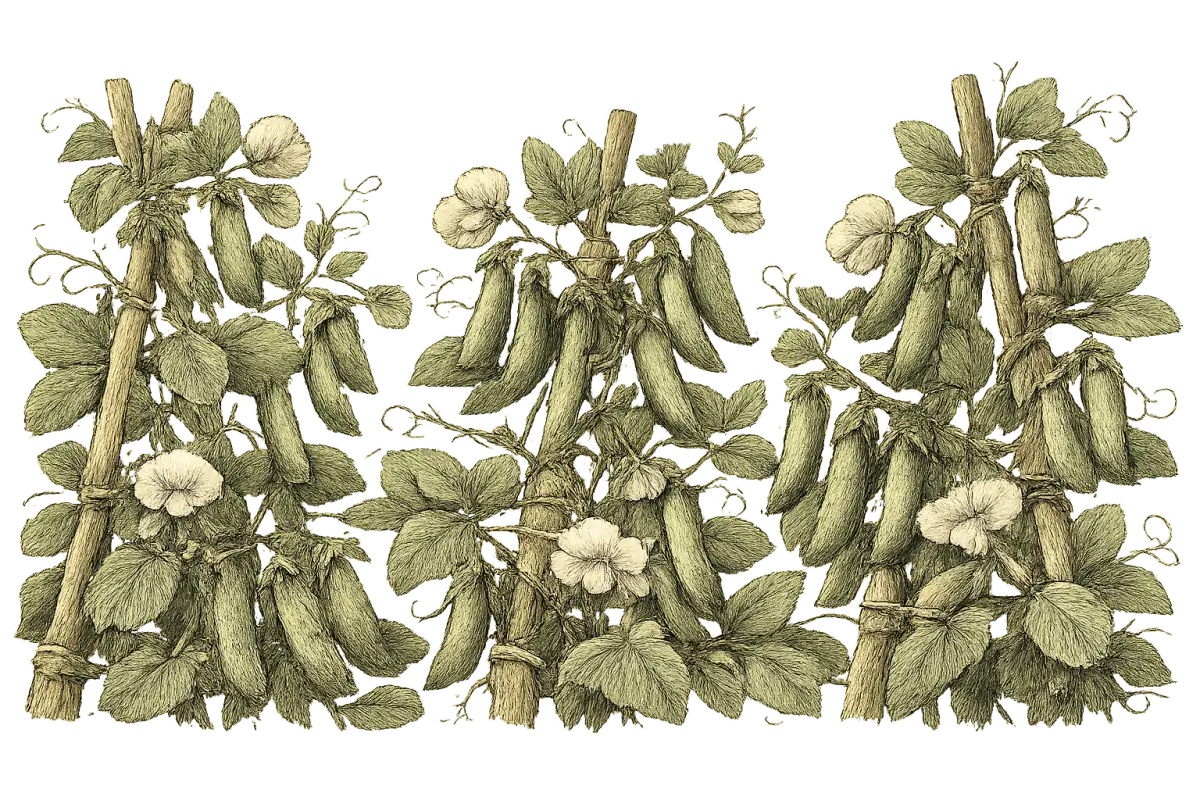
How to grow peas — vintage botanical illustration showing the plant in detail

Peas at a Glance

Sun

Sun

6+ hours full sun

Soil pH

Soil pH

6.0-7.0

Water

Water

1-1

Spacing

Spacing

2-3 inches within rows, 18-36 inches between rows"

Days to harvest

Days to Harvest

52-75 days

Height

Height

18 inches to 6+ feet

Soil type

Soil

Well-drained soil

Lifespan

Lifespan

annual

Get your personalized growing data

Enter your zip code for frost dates, growing season, and soil type.

Here is a fact that should change how you think about peas: the moment you pick one off the vine, its sugar starts converting to starch. Within two to four hours at room temperature, you can taste the difference. Within 24 hours, a significant amount of that sweetness is simply gone. This is why peas from the grocery store taste like faintly green cardboard, and why peas eaten in a garden, still warm from the sun, taste like an entirely different vegetable.

That flavor is the whole point. And it is completely achievable if you know what you are doing.

Peas are one of the easiest vegetables you can grow. They fix their own nitrogen, tolerate light frost, ask almost nothing in the way of fertilizer, and produce prolifically in cool weather that shuts down most other crops. They are your first planting of spring and one of the most rewarding. But a handful of mistakes -- most of them completely avoidable -- turn what should be a reliable, sweet harvest into a short-lived disappointment: nitrogen-bloated vines with no pods, plants cooked by heat before they ever produced, a two-week glut followed by nothing.

This guide fixes all of that. We will cover the right varieties for every zone, how to manage soil without overthinking it, watering in a way that does not invite disease, the harvesting rhythm that doubles your total yield, and the mistakes that derail more pea crops than any pest or disease ever could.

Get these things right and you will have more sweet peas than you know what to do with. That is a problem worth having.


Quick Answer: Peas Growing at a Glance

USDA Zones: 3 through 10 (cool-season crop; timing varies dramatically by zone)

Pea Types: Sugar snap (whole pod), snow (flat pod), shelling (peas only)

Soil pH: 6.0-7.0

Soil Temperature for Sowing: Minimum 40F; seeds germinate in 7-14 days

Frost Tolerance: Down to 28F -- peas can handle light frost

Heat Ceiling: Stops flowering above 80F; dead above that for long

Sowing Depth: 1 to 1.5 inches

Spacing: 2-3 inches within rows; 18-24 inches between rows

Trellis: Required for pole types (5-6 ft); strongly recommended for bush types

Water: 1 inch per week; drip or soaker hose only -- no overhead watering

Fertilizer: None for nitrogen; bone meal and wood ash at planting only

Inoculant: Yes -- always, especially in new beds

First Harvest: 52-75 days depending on variety

Harvest Frequency: Every 1-2 days during peak -- this is non-negotiable

Succession Plant: Every 2-3 weeks throughout the cool window


The Temperature Problem (Why Timing Everything Else Follows From This)

Peas do not care about your calendar. They care about temperature.

They thrive between 40F and 75F. They tolerate frost down to 28F without flinching. But above 80F, they stop flowering. Not "slow down" -- stop. A week of 85F days effectively ends your crop. This single biological fact dictates everything about how you grow peas: when you plant, which varieties you choose, whether you succession plant, whether a fall crop makes sense in your zone.

Most people plant too late. They wait until the ground "feels ready," until there is no frost in the forecast, until it seems like proper spring. By that point, in most zones, they have burned half their window. Peas should go in the ground when temperatures are still uncomfortable for humans -- late winter or very early spring depending on where you live. A light frost will not hurt pea seedlings. A week of warm weather in May absolutely will.

The other half of the equation is summer heat. It arrives at different times in different zones, but it arrives everywhere. Your job is to get peas in the ground early enough that they mature in cool weather, not in spite of warm weather. In zones 8 through 10, that means a January or February planting. In zones 3 and 4, it means late April or early May the moment soil is workable. In zone 6, it means March, ideally before the last frost, because the plants can handle it.

This is the rare case in vegetable gardening where being aggressive pays off. Plant early. The peas can take it.


Soil: Less Is More (Especially With Nitrogen)

Peas are fundamentally different from most vegetables when it comes to soil. They fix their own nitrogen -- a symbiotic relationship with Rhizobium leguminosarum bacteria that colonize their roots and convert atmospheric nitrogen into a form the plant can use. When this partnership is working, the plant essentially fertilizes itself. You can verify it is working by digging up a plant four weeks after emergence and checking the root nodules: pink or red inside means active fixation. White or green inside means the bacteria are present but inactive. No nodules at all means the bacteria are absent entirely.

This changes your entire approach to soil prep.

pH matters. Keep it between 6.0 and 7.0. Below 6.0, the Rhizobium bacteria become less effective and Fusarium wilt pressure increases. Above 7.5, you will need to work in elemental sulfur or acidic organic matter. Test your soil before planting. It costs a few dollars and saves a lot of frustration.

Drainage is non-negotiable. Cold, wet spring soil and pea seeds are a bad combination. Damping off -- the condition where seedlings emerge and immediately collapse at soil level -- is caused by soilborne fungi (Pythium and Rhizoctonia) that thrive in exactly those conditions. If water puddles on your bed for more than an hour after rain, you have a drainage problem. The fix is either raised beds (the reliable solution) or amending heavily with compost to break up clay structure. Either way, fix it before planting season, not during.

Compost is your primary amendment. Work 2-4 inches into the top 6-8 inches of soil before planting. Compost improves drainage in clay soils, improves water retention in sandy soils, and supports the soil biology that peas depend on.

What to add at planting: Bone meal for phosphorus -- about 2 tablespoons per linear foot of row -- supports root development and pod formation. Wood ash provides potassium. A balanced organic fertilizer with a low nitrogen number (2-5-5 or 3-5-3 is fine; anything with nitrogen above 5 is not) is acceptable. That is it. Peas do not want a heavily amended, richly fertilized bed. They want moderate, well-drained, biologically active soil.

Inoculant is cheap insurance. A $3 to $5 packet of Rhizobium leguminosarum inoculant covers a large garden. If your bed has not grown peas or beans in the last three to four years -- or if you are working with new garden soil, raised beds with purchased mix, or containers -- there may be no Rhizobium bacteria present at all. Without them, peas must rely entirely on whatever nitrogen is in the soil. The result is pale foliage, slow growth, and mediocre yields. Mist seeds lightly with water, dust them with inoculant powder, and plant immediately. The bacteria are alive and sensitive to UV light and heat -- do not coat them and leave the seeds sitting on a bench in the sun for an hour.

One important soil note: Do not plant peas in the same bed more than once every three to four years. Fusarium wilt -- a soilborne fungal disease -- persists in soil for years and accumulates with repeated legume plantings. Rotate peas to fresh ground. When you are done with the season, cut plants at soil level rather than pulling them out. The nodule-bearing roots decompose underground and release their fixed nitrogen for the next crop. It is free fertilizer. Leave it there.


Best Pea Varieties by Zone

Choosing the right variety is the most consequential decision you will make. The wrong variety in the wrong zone either runs out of season before it fruits, capitulates to heat before the first picking, or gets obliterated by powdery mildew before you get a second harvest. Get it right and variety selection does half the work for you.

A word on the three pea types before we get into zones. Sugar snap peas -- you eat the whole pod -- are the most popular for home gardens and have the most forgiving harvest window. Snow peas -- flat pods harvested before the peas develop -- are essential for stir-fry and have the tightest harvest timing of the three. Shelling peas -- you shell the pod and eat only the peas -- have the most intense sweetness of all, but require the most labor and have the fastest sugar-to-starch conversion after harvest. Most home gardeners start with sugar snap for the best effort-to-reward ratio. All three are covered below.
What zone are you in?

Enter your zip code for frost dates, growing season, and soil type.

Short-Season Zones (3-5): Speed Is the Priority

Zones 3 and 4 are the hardest zones for peas -- not because peas hate cold, but because your cool-weather window is short. You may have only 50 to 70 usable days between when the soil becomes workable in late April or May and when summer heat ends the season. Every day of that window counts.

The strategy here is simple: plant the moment soil reaches 40F, choose the fastest-maturing bush varieties available, and succession plant every two weeks to extract maximum harvest from the limited window.

For sugar snap, Sugar Ann (bush, 2 feet, 52 days) is your first choice in zones 3 and 4. It is the earliest-maturing snap pea in widespread cultivation. Compact, minimal support needed, and it will fit into windows that rule out almost every other variety. Cascadia (bush, 3 feet, 58 days) is the top pick for zone 5, where you have slightly more time. Cascadia carries resistance to both powdery mildew and enation virus -- a disease package that no other snap pea matches. If you have had mildew problems or you are in a humid climate, Cascadia is the right call regardless of zone.

For snow peas in zones 3 through 5, Oregon Sugar Pod II (bush, 2.5 feet, 60 days) is the standard. It is compact, disease resistant, and reliable in cool conditions.

For shelling peas, Little Marvel (bush, 18 inches, 55 days) is almost comically compact and perfectly timed for zones 3 and 4 where every day of the season matters. Green Arrow (semi-bush, 24-28 inches, 62 days) steps in for zone 5 -- high yields and documented resistance to both powdery mildew and Fusarium wilt.

Standard Zones (6-7): The Full Menu Opens Up

Zone 6 gives you enough cool-weather window to grow pole varieties, which means higher yields, longer harvest periods, and the ability to grow the full range of pea types. Take advantage of it.

The original Sugar Snap (pole, 5-6 feet, 65 days) is the benchmark snap pea for zones 6 and 7 -- extraordinary flavor and heavy production, but it needs a sturdy trellis. If powdery mildew has been a problem in your garden, step up to Super Sugar Snap (pole, 5 feet, 64 days), which adds mildew tolerance to essentially the same plant. For a lower-maintenance option, Cascadia still works well here as an early planting or for gardeners who do not want to deal with a 6-foot trellis.

Snow pea growers in zones 6 and 7 should look at Mammoth Melting Sugar (pole, 4-5 feet, 68 days) -- large pods and generous production in a zone with enough season to support it. Oregon Giant (bush, 3 feet, 60 days) is the alternative if you want a compact plant with good disease resistance.

For shelling peas, Green Arrow is the workhorse of the region -- widely available, high-yielding, and resistant to both mildew and Fusarium. Lincoln (semi-pole, 3 feet, 65 days) is worth planting alongside it: an heirloom with exceptional sweetness and enough heat tolerance to keep producing a bit longer as temperatures climb. It bridges the gap between true cool-season production and the beginning of summer.

Both zones 6 and 7 support a fall crop. Sow 8 to 10 weeks before your first expected frost -- fast-maturing bush types are the better choice for fall since the days are shortening. A fall pea crop often produces less than spring, but the flavor is excellent as temperatures cool.

Warm Zones (8-9): Plant Early, Move Fast

The spring window in zones 8 and 9 is short. Plant in January or early February and your peas will be racing to finish before the heat of March and April ends the game. The wrong variety -- one that needs 70+ days and prefers a longer cool window -- simply will not make it.

Sugar Ann (bush, 52 days) does the most work in warm zones. Its speed is its value. Plant it in mid-January in zone 8 and early January in zone 9 and it finishes before the worst heat arrives. Cascadia (bush, 58 days) is worth planting alongside it for its mildew and enation virus resistance, both of which matter more in warm, humid conditions.

For snow peas in zones 8 and 9, Oregon Sugar Pod II remains the best option. Disease resistant, compact, and appropriately fast.

For shelling peas, Wando (bush, 2.5 feet, 65 days) is the standout -- specifically bred to handle warmer temperatures and the most heat-tolerant shelling pea available. It gives you the best chance of a meaningful harvest if the season runs warm. Lincoln is a reasonable backup with its own documented heat tolerance.

Zone 9 growers should consider whether a fall crop might actually outperform spring. Planting in October or November as temperatures cool from summer gives fall peas a gentler start and more time to develop before the heat returns in spring. It is worth trying.

Hot Zones (10+): Winter Crop, Tight Window

In zone 10, peas are a strictly cool-season winter crop. There is no spring window. There is no fall planning to weigh. Peas go in November through January and are harvested by March before heat makes further production impossible.

The variety list shortens considerably. Speed and disease resistance are everything: Sugar Ann for snap (52 days), Oregon Sugar Pod II for snow (60 days), Wando for shelling (65 days) with its heat-tolerance buffer in case the winter runs warm. Cascadia fills in with its disease resistance package for snap peas.

Do not experiment with slow, high-yield pole varieties in zone 10. They will not finish.

Quick Reference: Top Picks by Zone

Zone GroupTop Snap PeaTop Snow PeaTop Shelling PeaKey Trait
3-4Sugar AnnOregon Sugar Pod IILittle Marvel50-60 day maturity; beat the short window
5CascadiaOregon Sugar Pod IIGreen ArrowDisease resistance; 58-62 days
6-7Sugar Snap / Super Sugar SnapMammoth Melting SugarGreen Arrow / LincolnFull yield; pole varieties viable
8-9Sugar Ann / CascadiaOregon Sugar Pod IIWandoSpeed + heat tolerance + disease resistance
10Sugar AnnOregon Sugar Pod IIWandoWinter-only; fastest available

Planting: The Details That Actually Matter

Peas are always direct-sown. Do not start them indoors and transplant. Their roots are sensitive to disturbance and they do not recover well from it. Direct sowing is not just easier -- it is the correct method.

Soil temperature: Minimum 40F. Seeds germinate in 7 to 14 days at 40 to 50F and a bit faster -- 7 to 10 days -- at 60 to 70F. You do not need to wait for 60F. You need at least 40F.

Depth: 1 to 1.5 inches. Not shallower (poor germination, frost exposure), not deeper (slower emergence).

Spacing: 2 to 3 inches between seeds within a row. Row spacing of 18 to 24 inches for bush types, 24 to 36 inches for pole types. One very practical approach: plant a double row 6 inches apart on either side of a central trellis. Both rows climb the same structure. Efficient use of space.

Do not pre-soak pea seeds. Unlike beans, pea seeds crack and rot if pre-soaked. Plant them dry -- or with only the inoculant coating.

Install the trellis before you plant. This is the instruction most people ignore and later regret. Once pea seedlings are up, adding a trellis means disturbing roots and knocking over young plants. The trellis needs to be in the ground before a single seed goes in. Even bush varieties benefit from support -- it keeps pods off the soil, improves air circulation, and makes harvesting possible without a frustrating ground-level hunt. For pole types, you need a genuinely sturdy structure: cattle panel fencing, nylon trellis netting on 6-foot stakes, or bamboo with cross-supports. Peas climb with tendrils that grip string, wire mesh, and thin netting. They cannot grip smooth poles or anything wider than about a quarter-inch in diameter. Plan your trellis material accordingly.


Watering: Consistent and Low

The fundamental rule for peas is 1 inch of water per week from all sources. The method of delivery matters as much as the amount.

Use drip irrigation or a soaker hose. Full stop. Overhead watering -- sprinklers, overhead hoses, anything that wets foliage -- creates the persistently damp leaf surfaces that accelerate powdery mildew and invite other fungal diseases. It also splashes soilborne pathogens onto lower leaves. Drip irrigation keeps water at the soil surface, leaves completely dry, and avoids the wet-dry cycles that produce tough, unevenly filled pods. A soaker hose laid along each side of the row does the same job more simply and almost as well.

If you do not have drip or soaker set up and must hand-water, keep the nozzle near the soil and water in the morning so any incidental splash on leaves dries before evening.

Stage-specific adjustments matter. From planting to emergence, you want moderate moisture -- enough to trigger germination, not enough to rot seeds. Cool spring soil (40 to 50F) drains and dries slowly, so overwatering is the more common mistake at this stage, not underwatering. Damping off, where seedlings collapse at soil level from fungal attack, is a direct consequence of cold, waterlogged soil around germinating seeds.

Flowering and pod fill are the stages where water stress costs you the most. Inconsistent moisture during these stages produces pods that are tough, unevenly filled, and misshapen. Even a short dry spell during flowering causes blossom drop and reduces the number of pods that set. At this stage, increase to 1 to 1.5 inches per week and monitor soil moisture more actively.

Mulch is your best watering tool. Apply 2 to 3 inches of straw or shredded leaves when plants are 4 to 6 inches tall. A properly mulched pea bed may need watering only half as often as an unmulched one. Mulch also keeps roots cooler as spring transitions to summer -- a meaningful benefit that extends productive life by days or weeks. Leave a 1-inch gap between the mulch and the stems to prevent stem rot.

The check: push your finger 1 to 2 inches into the soil. Moist to the touch means no water needed. Dry and warm means water now. Soggy or muddy means stop watering and check your drainage.


Pests and Disease: What to Worry About and What to Ignore

Peas are low-maintenance on pests. Serious infestations are unusual. The diseases are where the real losses happen, and most of them are preventable with one or two good decisions.

Powdery mildew is the main event. White, powdery coating on leaves and stems, starting on lower foliage and working its way up. It thrives in the warm dry days and cool dewy nights that define late spring across most of the country -- the exact conditions when your later-planted peas are trying to finish. Severe mildew reduces yield and makes pods tough and flavorless.

The single most effective control is planting resistant varieties. Cascadia (snap) is resistant to both powdery mildew and enation virus. Super Sugar Snap (snap) is tolerant. Oregon Sugar Pod II (snow) carries multi-pathogen disease resistance. Green Arrow (shelling) is tolerant of both mildew and Fusarium wilt. Wando (shelling) is the most heat-tolerant shelling pea and offers mildew tolerance as well. Plant these and you largely do not have to think about mildew.

Beyond variety selection: plant early so plants mature before warm weather. Trellis everything -- air circulation through properly supported vines is the environmental defense against mildew. Avoid overhead watering. At the first sign of infection, neem oil spray applied every 7 to 10 days suppresses but does not cure it. Potassium bicarbonate spray (1 tablespoon per gallon of water with a few drops of liquid soap) changes leaf surface pH to inhibit fungal growth. If mildew has engulfed a plant, remove it -- do not compost it.

Fusarium wilt is the long-game threat. Soilborne, persists for years, shows as yellowing and wilting starting at the plant base. The control is crop rotation -- do not grow peas or any legume in the same bed more than once every three to four years. Green Arrow has documented Fusarium resistance. Maintain soil pH at 6.0 to 7.0; Fusarium pressure increases in more acidic soils. There is no chemical cure once a plant is infected.

Aphids are the most significant pest. Small green or black clusters on stems and developing pods, producing sticky honeydew. They matter beyond the direct feeding damage because they are the sole vector for pea enation virus -- a disease that causes blister-like swellings on pods and ruined yield. Cascadia and Oregon Sugar Pod II are both resistant to enation virus; controlling aphids on these varieties still matters but the stakes are lower. For control: a strong blast of water from a hose removes most aphids and many cannot find their way back. Repeat every 2 to 3 days during outbreaks. Encourage beneficial insects by avoiding broad-spectrum pesticides and planting alyssum or yarrow nearby. Floating row covers at planting physically exclude aphids and are worth the effort in gardens with a history of aphid or weevil problems.

Pea weevils -- small brownish-gray beetles -- are worth a mention mainly because their larvae bore into developing seeds inside pods. The adults leave characteristic U-shaped notches on leaf edges that look alarming but rarely cause serious damage. Row covers at planting are the most effective control.

Most pea problems trace back to timing, variety choice, or drainage. Fix those three things and you will rarely need to treat for anything.


Succession Planting: How to Have Peas for Three Months Instead of Three Weeks

A single pea planting produces for approximately two to three weeks. If you plant everything at once, that is your harvest window. Three weeks of peas and then nothing until next year.

This is not how it has to work.

Sow a new batch every two to three weeks throughout your cool-weather window. Three plantings produces 6 to 9 weeks of harvest. Four plantings can stretch to 12 weeks. Stop planting when daytime highs consistently exceed 75F -- beyond that point, new seedlings will hit the heat wall before they have a chance to produce.

The alternative strategy: plant early, mid, and late-maturing varieties on the same day. Sugar Ann (52 days), Cascadia (58 days), and Sugar Snap (65 days) planted the same week in zone 6 gives you three separate harvest windows from a single planting date. Less management, same extended season.

In zones 6 through 9, a fall crop is also viable. Sow 8 to 10 weeks before your first expected frost. Choose fast-maturing bush types -- the days are shortening, which slows growth, so you want varieties that do not need a long season. Fall peas often produce less than spring, but the flavor can be exceptional as temperatures drop.

The math makes succession planting a straightforward decision. The only reason not to do it is forgetting. Set a reminder. Plant something every two weeks until the window closes.

What zone are you in?

Enter your zip code for frost dates, growing season, and soil type.


Harvesting: The Feedback Loop That Doubles Your Yield

This is where most gardeners leave the most yield on the table.

Peas have a biological feedback loop: unpicked mature pods signal the plant to stop producing. When a pod matures and begins drying on the vine, the plant registers that its reproductive mission is accomplished and shifts energy away from new flowers. Remove the pod before it matures, and the plant tries again. Remove pods every day and you are telling the plant, over and over, that it has not yet finished. A plant picked daily may produce twice the total pods of an identical plant picked once a week. This is not an exaggeration.

Pick every 1 to 2 days during peak production. Use two hands: one to hold the vine steady, one to pull the pod. Do not skip the hand-on-the-vine step. Pea roots are shallow and pea stems break easily. Pulling without stabilizing can uproot the whole plant or snap the stem, killing everything above the break.

Harvest in the morning. Pods are most crisp and have the highest sugar content in the morning hours. Afternoon heat causes mild wilting and the sugar content drops slightly.

Know when each type is ready:

For sugar snap peas, wait until pods are plump and filled out -- you can see the outline of individual peas inside -- still crisp and bright green, and snapping cleanly when bent in half. Too early and they are thin and sweet but insubstantial. Too late and the pod is tough, stringy, and starchy. Sugar snap has the most forgiving harvest window of the three types: a 2 to 3 day range where they are excellent.

For snow peas, harvest when pods are flat and full-sized (usually 3 to 4 inches) but the peas inside are barely visible. Pod walls should be thin and nearly translucent. Once you can see distinct round bumps where the peas are swelling, you have waited too long -- the pod becomes fibrous and tough. Snow peas have the tightest window of the three. Check plants daily when you are close to harvest time. A pod that looked perfect yesterday can be overgrown today in warm weather.

For shelling peas, wait until pods are round and firm -- cylindrical rather than flat -- and bright green throughout. Gently squeeze the pod; the peas inside should feel full and plump. Shell one pod to test: the peas should be round, bright green, and sweet. If they taste starchy or look pale, you waited too long. The window where shelling peas are at peak sweetness is measured in days, not weeks.

The sugar-to-starch conversion is real and rapid. Peas convert sugar to starch within hours of harvest, and the process accelerates at warm temperatures. This is why home-grown peas taste better than anything from a store -- you are eating them at peak sweetness, not after a supply chain measured in days. For shelling peas especially, pick in the morning, shell immediately, and eat within 30 minutes or refrigerate right away. Never leave shelled peas sitting at room temperature.

If you have surplus and need to store: refrigerate unwashed pods immediately after picking. Sugar snap and snow peas keep 2 to 3 days at best quality. Shelling peas keep 24 hours before flavor degrades significantly. For longer storage, freeze them -- but blanch first (1.5 minutes for shelling peas, 2 minutes for snap and snow), then plunge into ice water, dry thoroughly, freeze in a single layer on a baking sheet before transferring to freezer bags. Properly frozen peas keep 8 to 12 months.


The Mistakes That Kill Pea Crops

Ranked by how often they cause failure.

Mistake #1: Adding nitrogen fertilizer. The result looks like success: lush, dark green vines growing vigorously. But the plant produces almost nothing to eat. Excess nitrogen suppresses nodule formation -- the plant has free nitrogen available and no incentive to invest energy in its Rhizobium partnership. All that nitrogen goes into vegetative growth at the expense of flowers and pods. Do not apply blood meal, fresh manure, or high-N synthetic fertilizer to peas. Do not plant them in a bed that was heavily amended with nitrogen for a previous crop. If the nitrogen number on your fertilizer is above 5, do not use it. Provide phosphorus and potassium instead.

Mistake #2: Planting too late. This is responsible for more failed pea crops than any pest or disease. Planting in May when you should have planted in March. Waiting until it feels like spring rather than planting when the soil is ready. The fix: peas tolerate frost down to 28F. Plant them when the soil reaches 40F, not when the calendar says spring. A light frost will not hurt pea seedlings. A week of 85F days will end your crop.

Mistake #3: Skipping inoculant. Pale foliage, slow growth, mediocre yields -- classic signs of a plant that cannot fix nitrogen because the Rhizobium bacteria are absent. Check whether your bed has grown peas or beans in the last three to four years. If not, inoculate. If you are in a raised bed with purchased soil, inoculate. A $3 to $5 packet covers the whole garden. It is genuinely cheap insurance.

Mistake #4: No trellis, or adding it too late. Pods on the ground rot and attract slugs. Air circulation disappears. Powdery mildew arrives early and spreads fast. Harvesting becomes a ground-level hunt through tangled vines, and you miss pods -- which then signal the plant to stop producing. Install the trellis before planting, not after. Even bush varieties need at least a minimal support structure.

Mistake #5: Not harvesting often enough. Covered above, but worth repeating: harvesting every day or two is not optional if you want maximum yield. If you are picking once a week, you are leaving significant production on the table and accelerating the end of the harvest window.

Mistake #6: Overhead watering. A sprinkler that wets foliage for hours creates the microclimate that powdery mildew needs. It also splashes soilborne pathogens onto lower leaves. Drip or soaker hose only.

Mistake #7: Planting a single succession. Three weeks of peas and then a four-month wait. This one is entirely optional. Plant in successions.

Mistake #8: Pulling plants at end of season. When you pull pea plants out of the ground, you remove the nitrogen-rich root nodules that were decomposing and releasing fixed nitrogen for the next crop. Cut at soil level. Leave the roots. Follow with nitrogen-hungry crops: corn, brassicas, squash, leafy greens.


Frequently Asked Questions

Do peas need full sun?

Yes. Six or more hours of direct sunlight per day. They will tolerate some afternoon shade in warm climates, which can actually extend the season slightly by keeping soil temperatures lower, but full sun produces the best yields.

Can I grow peas in containers?

Yes, with the right variety and setup. Minimum container size is 12 inches deep by 12 inches wide per plant cluster. Drainage holes are mandatory. Use bush varieties -- Sugar Ann and Little Marvel are most practical for containers. Inoculate seeds (potting mix has no Rhizobium bacteria). Provide a small trellis or stakes even for bush types. Monitor moisture daily -- containers dry out faster than beds.

Why are my pea plants not producing pods?

Three likely causes: First, nitrogen overload -- too much nitrogen in the soil is pushing the plant toward foliage production instead of pods. Second, heat -- if daytime temperatures are above 80F, flowering stops entirely. Third, variety mismatch -- a long-season variety planted in a short-season zone may still be maturing when heat arrives. Check which of these applies to your situation.

Can I save seeds from peas?

Yes, easily. Let a few pods dry completely on the vine until the pod turns papery and rattles when shaken. Shell and dry the seeds further indoors for two weeks. Store in a cool, dry place. Pea seeds remain viable for 2 to 3 years. Open-pollinated varieties come true from seed; hybrids may not replicate exactly.

Why do my peas taste starchy, not sweet?

Either they were picked too late, or the sugar-to-starch conversion happened before eating. Overmature pods taste starchy on the vine. Pods that were picked at the right stage but left at room temperature for several hours taste starchy for a different reason -- the enzymes kept working after harvest. Pick in the morning. Eat within the hour or refrigerate immediately.

Should I soak pea seeds before planting?

No. Unlike beans, pea seeds crack and rot if pre-soaked. Plant them dry or with just the inoculant coating. They do not need pre-soaking to germinate well in 40F-plus soil.

What zone are you in?

Enter your zip code for frost dates, growing season, and soil type.


The Bottom Line

Peas are as close to a sure thing as vegetables get, with one significant catch: time. The cool-weather window is real, the sugar-to-starch clock starts at harvest, and everything about the crop rewards gardeners who respect both. Plant early, choose varieties matched to your zone, inoculate seeds, put the trellis in before planting, use drip irrigation, and pick every single day during production.

Do those things and you will grow peas that bear no resemblance to what is sold in supermarkets. That flavor difference is not a matter of freshness. It is a different category of food entirely.

Three successions of peas, started in March, give you two months of harvest in a zone 6 garden. Properly frozen, they keep for nearly a year. The plants fix their own nitrogen and leave it behind for the next crop. They produce meaningful yields in the same cool shoulder season when almost nothing else can.

For a modest amount of garden space and almost no inputs, peas return an extraordinary amount. Get the timing right the first time.

Research for this guide draws on growing data and extension service resources covering variety selection, disease management, and crop production best practices across all USDA zones.

Where Peas Grows Best

Peas thrives in USDA Zones 5, 6, 7. Explore each zone's complete guide for growing tips, companion plants, and seasonal advice.

Also possible in: Zone 3, Zone 4, Zone 8 (challenging but possible with the right conditions).

Not sure of your zone? Look it up by zip code →