Perennials

Ferns: The Shade Garden's Most Reliable Workhorse (And the Most Misunderstood)

Margaret Chen

Margaret Chen

Flower & Ornamental Specialist · Updated April 2026

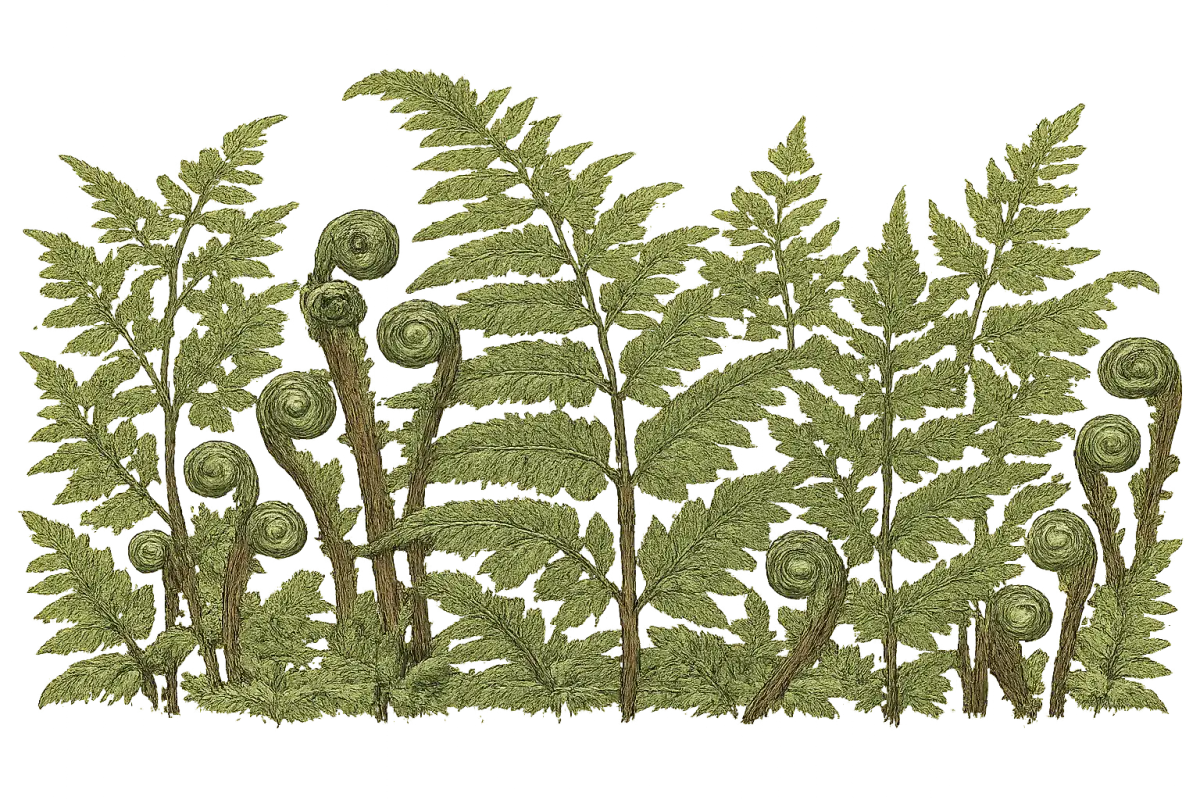
How to grow ferns — vintage botanical illustration showing the plant in detail

Ferns at a Glance

Sun

Sun

0-4 hours morning sun only

Soil pH

Soil pH

5.5-6.5

Water

Water

1 inch per week minimum

Spacing

Spacing

12-48 depending on species"

Height

Height

12 inches to 6 feet depending on species

Soil type

Soil

Rich organic

Lifespan

Lifespan

perennial

Get your personalized growing data

Enter your zip code for frost dates, growing season, and soil type.

Walk into almost any garden center this spring and you will find ferns tucked between the impatiens and the coleus, tagged with vague instructions like "partial shade to shade" and priced like impulse buys. They look effortless. Architectural. Ancient. And they are — ferns predate flowering plants by more than 200 million years, and that ancient lineage shows in how self-sufficient they can be once their needs are properly met.

The trouble is that "properly met" is doing a lot of work in that sentence.

Ferns fail in home gardens not because they are fragile, but because they are specific. Three things will kill a fern faster than any pest or disease: too much direct sun, inconsistent moisture, and — for indoor varieties — air that is far too dry for a plant that evolved on a humid forest floor. Get those three wrong and even the toughest species will brown, wilt, and slowly disappear. Get them right and you will have plants that ask almost nothing from you, laugh at deer, and look impeccable from April through November.

This guide is about getting them right the first time. Which species to plant by zone. How to build the soil they actually want. How to water in a way that matches what ferns evolved to expect. And which mistakes send otherwise healthy plants into a slow, preventable decline.

Ferns are among the most elegant plants you can grow in shade. They deserve a more elegant approach than "stick it in a dark corner and see what happens."


Quick Answer: Fern Growing at a Glance

USDA Zones: 3 through 9 (species-dependent; see variety section)

Light: Partial to full shade; morning sun only; no afternoon direct sun

Soil pH: 5.5-6.5 ideal; tolerates 5.0-7.0; amend if above 7.5

Soil Type: Rich, organic, consistently moist but well-drained

Watering: 1-2 inches per week; moist like a wrung-out sponge at all times

Mulch: 2-3 inches of shredded bark or leaf mold; mandatory, not optional

Fertilizer: Light feeder; top-dress with compost annually; half-rate balanced fertilizer if needed

Humidity (indoor): 60-80% for Boston fern; 70%+ for maidenhair fern

Deer and rabbit resistant: Yes — all common garden fern species

Propagation: Division in early spring; every 3-5 years for clump-forming species

Best beginner varieties: Christmas fern (outdoors), Boston fern (indoors)

Highest design impact: Japanese painted fern (silver and burgundy fronds), ostrich fern (4-6 ft dramatic backdrop)


The Three Pillars Every Fern Demands

Before we talk zones and varieties, I want to establish the non-negotiables. I have seen gorgeous shade garden designs fail because one of these was overlooked, and I have seen awkward, scrappy planting attempts succeed beautifully because all three were honored.

Pillar One: Shade. Ferns are fundamentally shade plants. Not "shade tolerant" the way that phrase gets applied to half the plants in the garden center. Actually, genuinely, shade-requiring. Full shade — less than two hours of direct sun — is fine for most species. Partial shade — two to four hours of gentle morning sun with afternoon shade — is ideal. What ferns cannot tolerate is afternoon sun, particularly in zones 7 and warmer. A west-facing exposure that bakes fronds from 1 PM onward will scorch them within days in midsummer. East-facing exposures, where the sun arrives gently in the morning and retreats before the heat of the day, are as close to perfect as a garden spot gets for ferns. Dappled light filtering through a tree canopy all day is equally wonderful — it mimics the forest floor exactly.

Pillar Two: Consistent moisture. Not occasional deep soaking. Not watering "when it looks dry." Consistent moisture, meaning soil that feels like a wrung-out sponge at all times — damp, cool, never bone dry, never waterlogged. Ferns do not wilt dramatically when thirsty the way impatiens do. They brown gradually, tips first, then frond by frond, and by the time the damage is obvious it cannot be reversed. Those browned fronds will not green up again with the next rain. You wait for new growth.

Pillar Three: Organic, well-drained soil with mulch on top. Ferns evolved on forest floors blanketed in decomposing leaves. They want that organic richness — the humus content, the moisture retention, the loose structure that lets roots spread easily. And they want two to three inches of mulch on top, every year, mimicking that leaf litter layer. Mulch is not decorative finishing. For ferns, it is essential infrastructure that reduces watering needs by up to fifty percent and keeps the soil cool and evenly moist through summer.

Give a fern these three things and it will perform beautifully for decades with minimal intervention. Deny any one of them and you will be troubleshooting all season.


Best Ferns by Zone

Choosing the right species for your zone is the first design decision, not an afterthought. A fern planted in the wrong zone does not just underperform — it declines year over year and eventually dies. The good news is that several species cover enormous zone ranges, so there is reliable, beautiful fern for every garden from zone 3 to zone 9.

What zone are you in?

Enter your zip code for frost dates, growing season, and soil type.

Cold Zones (3-5): Where Ferns Are Completely at Home

Cold zones are, in many ways, fern paradise. The cool temperatures, moist soils, and dense deciduous tree canopies of the northern United States and Canada are exactly what these plants evolved in. You have the widest selection of reliably hardy species and the fewest concerns about heat stress.

Ostrich Fern (Matteuccia struthiopteris) is the showstopper of the cold-zone shade garden. Growing four to six feet tall with elegantly arching, vase-shaped fronds, it provides a dramatic vertical presence that almost nothing else in the shade garden can match. It also produces edible fiddleheads in early spring — tightly coiled, 2-4 inches tall, harvested before they unfurl — making it a genuinely dual-purpose plant. The caveat is that ostrich fern spreads aggressively by underground rhizomes. Plant it where you want a large, sweeping colony, not in a tidy formal border where it will muscle out its neighbors within two seasons. In the moist, rich woodland soils common across northern Minnesota, Wisconsin, and the Upper Peninsula, it is utterly bulletproof.

Christmas Fern (Polystichum acrostichoides) is the essential counterpart — slower, tidier, and requiring essentially zero intervention once established. It forms a neat, clump-forming mound of dark green, leathery fronds that hold through winter (the name refers to the fact that it is still green at Christmas), providing structure and color in the garden when everything around it has died back. If I were recommending a single fern for a beginning gardener in zones 3-5, this would be it every time. It stays put, it survives cold that would devastate more delicate species, and it is completely native — a natural fit for any North American woodland garden.

Japanese Painted Fern (Athyrium niponicum) brings something the other cold-hardy species cannot: color. Its fronds are a luminous combination of silver, purple, and soft green, and they light up dark garden corners in a way that makes you wonder why you ever bothered planting impatiens there. It was named Perennial Plant of the Year in 2004, an honor that reflects how reliably beautiful it performs across a wide range of gardens. It goes fully dormant in winter and emerges faithfully each spring. For the most vivid coloration, plant it where it will receive gentle morning light — the silver in the fronds catches light beautifully — and let it form a spreading drift rather than a lone specimen.

Wood Fern (Dryopteris spp.) deserves mention here for its particular virtue: it is the most forgiving genus when conditions are not ideal. In zones 3-5, the marginal wood fern (Dryopteris marginalis) is an excellent native evergreen option with an upright, architectural growth habit. Where soil moisture is inconsistent or shade is dappled rather than deep, wood ferns hold their composure when Japanese painted fern would struggle. Semi-evergreen in most cold zones, they provide winter presence and ask very little in return.

Zone 5 specifically is where Autumn Fern (Dryopteris erythrosora) first becomes reliably hardy, and it is worth the effort. Its newly emerging fronds in spring are a warm copper-red that gradually transitions to glossy, deep green as they mature — giving you two distinct seasonal looks from a single plant. In a protected location with consistent moisture, it is a spectacular addition to the shade garden palette.

Moderate Zones (6-7): The Goldilocks Zone for Fern Design

Zones 6 and 7 are where fern gardening opens up most expansively. Every major hardy species performs reliably here, autumn fern becomes fully semi-evergreen, and the longer growing season allows Japanese painted fern to develop its most vivid coloration. If you garden in this range, you have the complete toolkit for a sophisticated, layered shade garden.

The classic three-tier fern design I return to again and again uses this zone's full variety range: Ostrich Fern at the back, four to six feet of feathery vertical structure that turns any fence line or building foundation into a design feature. Christmas Fern or Autumn Fern in the middle layer, providing one and a half to two and a half feet of reliable, semi-evergreen presence that ensures the garden looks intentional even in February. Japanese Painted Fern at the front, twelve to eighteen inches of silver and burgundy color right where visitors can appreciate the detail up close.

This zone also unlocks some additional species worth knowing. Hay-Scented Fern (Dennstaedtia punctilobula, zones 3-8) is frankly one of the best ground cover plants available for large, shaded areas — it spreads ambitiously by rhizomes, releasing a pleasant fragrance when brushed, and will naturalize difficult shaded slopes where nothing else wants to grow. Do not plant it where you need tidy edges; do plant it where you want effortless, deer-resistant coverage over a large area.

Lady Fern (Athyrium filix-femina, zones 3-8) earns a place in zones 6-7 for its graceful, feathery fronds and its slightly greater sun tolerance than most ferns — it will handle more sun than its relatives if the soil stays reliably moist. It is, interestingly, the parent species of Japanese painted fern.

For gardeners who want the most beautiful fern that can be grown outdoors, zone 6-7 is also where the hardy Maidenhair Fern (Adiantum pedatum, zones 3-8) performs best. This is the cold-hardy outdoor species — not the tropical indoor maidenhair — and its delicate, fan-shaped fronds on wiry black stems are as elegant as anything in the shade garden. It demands consistently moist soil and genuinely sheltered shade, but in the right spot it is breathtaking. The companion planting possibilities in this zone are also worth emphasizing: pair ferns with hostas for bold leaf contrast, astilbe for feathery summer flower plumes in pink and red, heuchera for colorful foliage in coral and burgundy, and bleeding hearts for graceful spring flowers above the emerging fiddleheads.

Warm Zones (8-9): Where Strategy Matters

In zones 8 and 9, the challenge reverses entirely. The question is no longer winter survival — it is summer endurance. Ferns that evolved in cool, moist forest conditions face genuine heat stress in the South, and the approach to growing them shifts accordingly.

The most important rule for zones 8-9: deep shade is mandatory, not optional. In zone 4, "partial shade" might mean four hours of morning sun. In zone 8, that same exposure will scorch fronds within days during July. These ferns need genuine, consistent shade — under a dense tree canopy, on a north-facing wall, beneath a structure. Dappled light all day is acceptable; any direct afternoon sun is not.

The second rule: irrigation is essential, not optional. Ferns in zones 8-9 need one and a half to two inches of water per week, consistently, through the summer months. Deep mulching — three to four inches of leaf mold or shredded bark — is not just recommended but critical for keeping soil temperature manageable and moisture levels stable.

Not every fern belongs in zones 8-9. Ostrich Fern cannot handle sustained heat above 85°F and should be avoided. Japanese Painted Fern may survive zone 8 but will look washed-out and stressed compared to its cool-zone performance; in zone 9, it is genuinely a poor choice.

The species that do belong here:

Christmas Fern is the number one choice for southern shade gardens, full stop. Its native range extends throughout the southeastern forests, and it handles heat with a composure that imported species cannot match. Evergreen year-round, forming a neat clump, needing nothing beyond shade, moisture, and an annual top-dressing of compost. If you garden in zones 8-9 and want one fern to build your shade garden around, this is it.

Autumn Fern is the perfect complement in these zones — its copper spring color is even more pronounced in warmer climates where the growing season begins earlier, and its semi-evergreen habit in zones 8-9 means it holds attractive fronds almost year-round.

Southern Shield Fern (Thelypteris kunthii, zones 7-10) deserves far more attention than it receives. This native southeastern species actually prefers the heat that defeats other ferns — it is deciduous in zone 7 and becomes semi-evergreen in zones 8-9. For gardeners in the Deep South, it is a revelation: a large, graceful fern that genuinely thrives rather than merely survives.

Quick Reference Table: Top Picks by Zone Group

Zone GroupTop VarietiesTypeWhy
3-5Ostrich Fern, Christmas Fern, Japanese Painted FernHardy deciduous / evergreenCold bulletproof; maximum design range
5-7Autumn Fern, Lady Fern, Hay-scented FernSemi-evergreen / deciduousGoldilocks zone; widest variety; classic layered design
6-8Japanese Painted Fern, Wood Fern, Hardy MaidenhairDeciduous / semi-evergreenFull color range; elegant form; reliable performance
8-9Christmas Fern, Autumn Fern, Southern Shield FernEvergreen / nativeHeat-tolerant natives; deep-shade specialists
Any zone (indoors)Boston Fern, Maidenhair FernTropical houseplantClassic indoor look; humidity-dependent

Building the Soil Ferns Actually Want

I want to talk about soil before planting because this is where most fern disappointments begin. Gardeners plant ferns in whatever ground is already there — heavy clay, compacted soil, or thin, dry ground beneath a tree — and wonder why the plants look miserable despite getting shade and water. The soil is the answer.

The phrase you will see in every fern care resource is "moist but well-drained." It sounds contradictory, but it describes exactly what you find on a forest floor: soil so rich in organic matter that it holds moisture like a sponge while still allowing excess water to drain away freely rather than pooling around roots. Garden soil almost never provides this naturally. It needs to be built.

Ferns prefer slightly acidic to neutral soil — ideally pH 5.5 to 6.5, though they tolerate 5.0 to 7.0 reasonably well. Above 7.5, nutrient lockout begins and you may start seeing yellow fronds with green veins (iron chlorosis), the same symptom that plagues blueberries in overly alkaline soil. A basic soil pH test — $10 to $15 at any garden center — tells you what you are working with before you plant. If your soil is too alkaline, elemental sulfur, peat moss, or pine needle mulch will bring it down; if it is too acidic (uncommon, but possible in very peaty soils), garden lime corrects it.

The amendment strategy depends on what your soil is doing wrong:

Heavy clay soil retains moisture well but drains poorly and compacts under foot. The fix is to mix three to four inches of compost plus one to two inches of coarse sand or perlite into the top twelve inches of soil. If the clay is severe, raised beds are genuinely the best solution — ferns planted in well-amended raised beds over heavy clay will dramatically outperform those planted directly in it. One important warning: do not simply dig a hole in clay soil and fill it with amended mix. That creates a buried bowl that collects water and drowns roots. Amend the entire planting area, not just the hole.

Sandy soil drains beautifully but holds neither moisture nor nutrients long enough for ferns to use them. Mix in three to four inches of compost plus two inches of peat moss or leaf mold. These organic materials act as sponges between the sand particles. Plan on annual compost top-dressing since organic matter breaks down faster in sandy soil, and expect to water somewhat more frequently than in loamy ground.

Loamy soil is already close to ideal. A two-inch layer of compost worked into the top several inches is all the preparation you need.

Mulch ties all of this together. Two to three inches of shredded bark, leaf mold, or pine needles applied over the planting area retains thirty to fifty percent more moisture between waterings, keeps soil temperatures cool through summer, suppresses weeds, and — as it decomposes — gradually feeds the soil with exactly the organic matter ferns evolved to depend on. In zones 8-9, increase mulch depth to four inches where summer heat is most intense. The one essential rule: keep mulch pulled back one to two inches from the crown of each fern. Mulch piled directly against the crown holds moisture against the growing point and invites the fungal rot that will kill the plant from the center outward.

For indoor ferns, a peat-based or coir-based potting mix with perlite for drainage is the correct medium. Commercial "fern and tropical" or African violet mixes work well. Standard potting soil, which is typically formulated for moisture-sensitive plants, often stays too wet. Drainage holes are non-negotiable. And note that terra cotta pots wick moisture from the soil faster than plastic or glazed ceramic — if you are already struggling to keep soil consistently moist, choose plastic or glazed containers.


Watering: The Sponge Standard

Fern watering has one governing rule and it is worth memorizing: soil should feel like a wrung-out sponge at all times. Damp, cool, not dripping. If you squeeze a handful and water streams out, it is too wet. If it crumbles and feels dusty, it is too dry and frond damage has likely already begun.

Outdoor ferns need approximately one to two inches of water per week from rain and supplemental irrigation combined. In zones 3 to 5, cooler temperatures mean less evaporation and rainfall often handles the job; only supplement during true dry spells. In zones 6 to 7, plan on supplemental watering through July and August when summer heat arrives and rain becomes unreliable. In zones 8 to 9, irrigation is not optional — it is the only way to keep ferns alive and attractive through summer, and twice-weekly deep watering is often necessary.

Morning watering is preferable. Water applied in the morning soaks into the soil while the plant is actively using it and allows frond surfaces to dry before evening. Avoid midday watering in hot zones — water droplets on fronds in direct sun can cause minor burn, and rapid evaporation means less water reaches the roots. Soaker hoses and drip irrigation positioned at the base of ferns and covered by mulch are the most efficient delivery methods: they keep water at root level, eliminate frond wetting, and allow automation that makes consistent watering actually achievable.

New plantings need closer attention. For the first two weeks after planting, water every two to three days. From weeks three through six, every three to four days if there is no rain. After six weeks, transition to a normal schedule. Newly planted ferns have no drought tolerance whatsoever — their root systems have not spread into surrounding soil yet, and a single extended dry spell in that first season can kill a plant that would otherwise be completely self-sufficient within a year.

The seasonal pattern matters too. In fall, continue watering until the ground freezes — ferns going into winter with dry roots are more susceptible to cold damage. In zones 8-9 where the ground does not freeze, water evergreen ferns like Christmas fern and autumn fern through dry winter spells, once or twice a month as needed.

One diagnostic note worth keeping: if a fern is wilting, check the soil before you water. Wilting in wet soil means overwatering and possible root rot — the fix is to stop watering and improve drainage, not to add more water. The symptoms of overwatering and underwatering look nearly identical above ground. The soil tells you which one you are dealing with.

Indoor Ferns: The Humidity Challenge

Indoor fern watering is genuinely two separate problems: soil moisture and atmospheric humidity. Both must be managed simultaneously, and the humidity half is where most indoor fern growing fails.

Ferns evolved in tropical and temperate forests where humidity runs 80 to 100 percent. Boston Fern (Nephrolepis exaltata) needs 60 to 80 percent. Maidenhair Fern needs 70 percent or more. The average home in winter, during heating season, runs 20 to 40 percent. Near a heating vent, it can drop to 15 to 25 percent. That gap between what ferns need and what most homes provide is the reason that brown, crispy frond tips are the number one complaint about indoor ferns. It is almost never a pest. It is almost always humidity.

The most effective solution is a cool-mist humidifier positioned within three to four feet of your ferns and running consistently through the heating season. Monitor actual humidity with a digital hygrometer ($10 to $15) placed near the plants and target at least 50 to 60 percent. Grouping multiple plants together raises local humidity by 10 to 15 percent through collective transpiration. A pebble tray — shallow tray filled with pebbles, water added to just below the top of the pebbles, fern pot sitting on the pebbles above the waterline — adds another increment of localized humidity as water evaporates. Daily misting with room-temperature water provides a temporary boost but must be done consistently; once or twice a week does essentially nothing. The naturally humid rooms in most homes — bathrooms with windows, kitchens — are excellent locations for indoor ferns precisely because they maintain higher baseline humidity.

What does not work: sitting the pot in a saucer of water (raises root rot risk without meaningfully raising humidity), misting once weekly (insufficient), placing near a fish tank unless it is very large and open-topped.

Boston fern soil should be watered when the top half-inch feels dry to the touch — thoroughly, until water drains from the bottom, with the saucer emptied after thirty minutes. In summer, this may mean watering every two to four days. In winter, every four to seven days.

Maidenhair fern is an order of magnitude more demanding. Never let its soil dry out even slightly — check daily, and water when the soil surface begins to lose its dark, moist appearance rather than waiting until it feels dry. A single missed watering can cause complete frond dieback. The plant may recover from the roots, but all existing fronds will brown and drop. This is not a plant for beginners or anyone who cannot commit to daily monitoring. If you are new to indoor ferns, start with Boston fern, build the humidity management habits through an entire heating season, and then consider maidenhair once you have the infrastructure in place.
What zone are you in?

Enter your zip code for frost dates, growing season, and soil type.


Planting Ferns: Getting It Right from the Start

Timing

Spring planting is the preferred approach for all zones — after the last frost date through early June, giving ferns an entire growing season to establish roots before winter. Plants put in the ground in spring have the easiest path to establishment.

Fall planting is acceptable in zones 3 through 6 from September through early October, and in zones 7 through 9 through November. The rule is simple: plant at least six weeks before the first hard frost so roots can establish before dormancy. A fern put in the ground three weeks before a hard freeze will not have time to anchor itself properly.

Avoid mid-summer planting in all zones. Transplanting a fern into hot, dry summer conditions stresses it unnecessarily when the goal is establishment, not survival.

The Planting Process

Step 1: Dig the hole twice as wide as the root ball but only as deep. The critical rule: fern crowns — the central growing point where fronds emerge — must sit at or slightly above soil level. Never bury the crown. This is the single most preventable cause of fern death. Planting the crown even an inch too deep invites crown rot.

Step 2: Amend the backfill with two to three inches of compost or leaf mold mixed in. Do not skip this step in unprepared soil — it establishes the organic richness that ferns depend on.

Step 3: Set the plant so the crown rests at or fractionally above the surrounding soil. Check this carefully before backfilling.

Step 4: Water deeply and immediately. Soak the entire root zone so water penetrates to the bottom of the root ball and into the surrounding soil.

Step 5: Mulch with two to three inches of shredded bark, leaf mold, or pine needles. Pull it back one to two inches from the crown — a small clear ring around the growing point. This is non-negotiable; mulch against the crown holds moisture in exactly the wrong place.

Step 6: Water consistently for the first full growing season. Ferns need four to six weeks of consistent moisture to establish roots. After that, established plants become substantially more self-sufficient.

Spacing

For clump-forming species — Christmas fern, autumn fern, Japanese painted fern, wood fern — space plants 18 to 24 inches apart. They grow slowly and maintain their size. For rhizome-spreading species — ostrich fern and hay-scented fern — allow three to four feet and either embrace the spread or install 12-inch deep root barriers at planting to contain it. Designing with spreaders is far easier than fighting them after the fact.

Propagation by Division

Division is the practical method for propagating ferns at home — far simpler than spore propagation, which involves a complex two-stage lifecycle that is more specialist pursuit than everyday gardening. Divide in early spring just as new fiddleheads begin to emerge but before fronds fully unfurl. Dig up the clump, separate it into sections with at least three to four growing points and a healthy root mass each, and replant immediately at the same depth. Keep divisions consistently moist for four to six weeks while new roots establish. Most established clumps benefit from division every three to five years; it keeps the plants vigorous and gives you material to expand a planting or share.


Pests, Problems, and the Deer Advantage

Here is one of ferns' most underappreciated selling points: every common garden fern species is deer and rabbit resistant. Their fronds contain compounds that make them unpalatable, and they lack the tender, succulent growth that browsing animals prefer. In shade gardens where the main alternative — hostas — is actively preferred by deer, this is not a minor detail. In areas with heavy deer pressure, ferns may be the only reliable shade plant available.

Ferns also have remarkably few insect pest problems. Their ancient biology means they predate many of the insect relationships that create havoc on flowering plants. In most gardens, you will spend years growing ferns without ever treating a pest.

When problems do appear, two insects are the occasional culprits:

Scale insects appear as small, immobile brown or tan bumps on frond undersides. Before treating, confirm they are actually scale and not spore clusters — a very common and preventable mistake. Spore clusters (sori) are arranged in regular, symmetrical patterns along the frond: evenly spaced dots or rows that scrape into dusty powder. Scale insects are randomly placed, may appear on both frond surfaces, and are sticky or waxy when scraped. Light scale infestations can be removed by hand or soft brush. Moderate infestations respond to horticultural oil spray applied thoroughly to frond undersides. Avoid systemic insecticides on ferns — many species are sensitive to chemical treatments.

Slugs chew irregular holes in young, tender fiddleheads and newly unfurling fronds in spring, particularly in wet conditions and in zones 7 through 9. The damage is mostly cosmetic on established ferns. Iron phosphate slug bait (Sluggo or similar products) is the most straightforward fix — scatter it around fern crowns in early spring before fiddleheads emerge. It is safe for pets and wildlife. Beer traps, copper tape barriers, and hand-picking after dark are also effective for smaller areas.

The most common fern "problems" are not pests at all. They are environmental mismatches:

Brown frond tips on indoor ferns — almost always low humidity. Not a pest. Not a disease. The dry air of a heated home in winter, concentrated by proximity to a heating vent, is stripping moisture from the fronds faster than they can replace it. The fix is humidity management, not treatment.

Entire fronds browning on outdoor ferns — one of three things: too much sun (damage concentrated on the sun-facing side), drought stress (soil dry several inches down), or cold damage after a late frost or at the edge of the species' zone range. Identify which by checking sun exposure, soil moisture, and recent weather — the fix is different for each.

Brown bumps on frond undersides — before assuming pest, look at the pattern. If the bumps are symmetrically arranged in rows or dots and release dusty powder when scraped, they are sori: completely normal spore-producing structures. This is how ferns reproduce. A fern covered in sori is a healthy fern. Do not apply insecticide to a plant that does not need it.

Crown rot — the most serious common disease, caused by the crown being buried too deep, mulch piled against the growing point, or soil that stays waterlogged. The center of the plant turns brown and mushy. If caught early — reduce watering, pull mulch away from the crown, allow the area to partially dry — the plant sometimes recovers. If rot has reached the center of the crown, it generally cannot be saved. Prevention is the correct strategy: plant crowns at or above soil level and maintain that clearance ring in the mulch, every year.


The Ten Mistakes That Damage Ferns

Understanding what goes wrong is as important as knowing what to do right. Here are the patterns I see repeatedly.

Mistake #1: Planting in too much sun. The most common error by a significant margin. "Partial shade to shade" on a plant tag does not mean "some sun is fine." For ferns, partial shade means two to four hours of gentle morning sun at most. Afternoon sun in zones 7 through 9 can destroy fronds within days during summer. East-facing exposures and spots shaded by tree canopy after midday are the correct choices. A fern in the wrong light exposure will look burned, stunted, and miserable no matter how well you water and fertilize it.

Mistake #2: Inconsistent watering. Ferns do not send dramatic distress signals. They brown quietly, tip by tip, frond by frond. By the time the damage is obvious, fronds are already dead and will not recover. Watering "when it looks dry" is too late. The soil two inches down should feel damp at all times; that is the actual test.

Mistake #3: Ignoring humidity for indoor ferns. Most homes run 30 to 40 percent humidity in winter. Boston fern needs 60 to 80 percent. Maidenhair fern needs 70 percent or more. The brown, crispy frond tips that indoor fern growers report almost universally are humidity damage, not disease. A humidifier running through heating season is the correct solution. Misting alone is insufficient for more than a brief period.

Mistake #4: Burying the crown. Plant the crown at or slightly above soil level. Never below it. Never mulch over it. This single error — common because it goes against the instinct to plant things deep and secure — causes crown rot and kills ferns that were otherwise perfectly situated.

Mistake #5: Wrong species for the zone. Ostrich fern in zone 8 will decline year over year in the heat. Autumn fern in zone 3 may winterkill. Matching species to zone is not a technicality; it is the difference between a plant that thrives for decades and one that struggles into early death.

Mistake #6: Overwatering in poorly drained soil. "Ferns need constant moisture" does not mean "keep them soaking wet." Root rot from waterlogged soil kills ferns. Wilting in wet soil — a confusing symptom that makes gardeners reach for the hose — is overwatering, not drought. Check the soil before watering a wilting fern.

Mistake #7: Cutting back evergreen ferns in spring. Deciduous ferns — ostrich, Japanese painted, hay-scented — need their dead brown fronds removed in early spring. Evergreen ferns — Christmas fern — should never be cut to the ground. Their green fronds photosynthesize year-round; removing them weakens the crown and delays new growth. Remove only individual fronds that are genuinely damaged or unsightly.

Mistake #8: Not mulching. Mulch is essential fern infrastructure, not optional garden decoration. Without it, soil dries faster, temperature extremes stress roots, and in zones 3 to 5, crowns become vulnerable to frost heaving. Apply two to three inches and replenish annually.

Mistake #9: Starting with maidenhair fern indoors. Maidenhair is the fern people fall in love with in the garden center — delicate, extraordinary, unlike anything else. It is also the most demanding common houseplant fern. It requires constant humidity above 70 percent, can never dry out even once, and drops fronds at the first environmental disruption. Start with Boston fern. Build the humidity management habits through an entire heating season. Then, when you have the infrastructure and the routine in place, consider maidenhair.

Mistake #10: Treating spore clusters as pests. Brown dots in symmetrical patterns on frond undersides are sori — normal, healthy reproductive structures. Every fern has them. They are not scale insects, not a disease, not a problem. Do not apply insecticide to a fern that is reproducing normally.


Companion Planting: Building a Shade Garden Worth Looking At

Ferns are most powerful as design elements when they are placed in conversation with other shade plants. The contrast between their fine, feathery frond texture and the bold, architectural leaves of companion plants is one of the most satisfying effects in all of garden design.

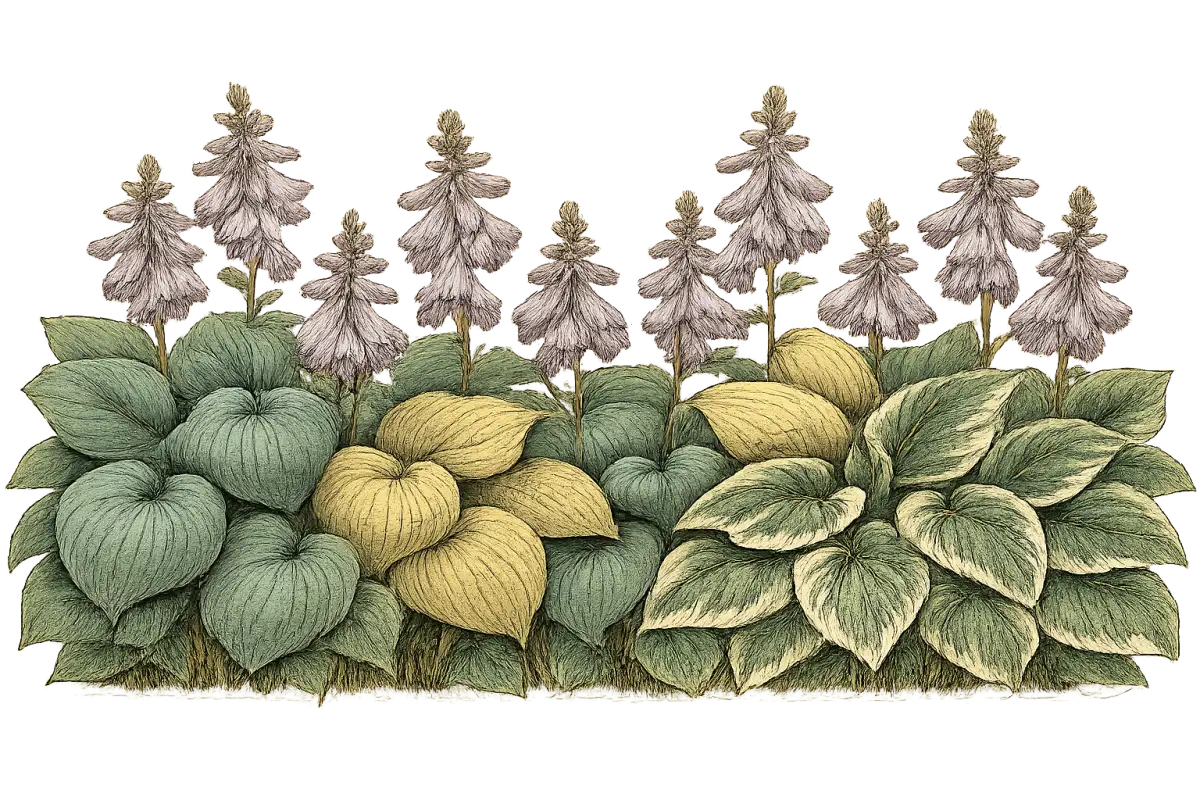
Hostas are the classic partner for a reason: their broad, smooth, heavily textured leaves — in every scale from miniature to dramatic — create the strongest possible contrast with ferny fronds. A sweep of Japanese painted fern in front of a large blue-leaved hosta like 'Halcyon' or 'Elegans' is genuinely beautiful and almost maintenance-free.

Astilbe adds something ferns cannot provide on their own: summer flowers. The feathery plumes in pink, red, white, and soft lavender rise above the fern fronds in June and July, then remain as attractive dried seedheads through fall. Astilbe and ferns share the same moisture requirements, making them natural companions that support each other's needs.

Heuchera (coral bells) brings foliage color — coral, burgundy, lime, caramel, near-black — that contrasts with the greens and silvers of fern fronds. The combination of a burgundy-leaved heuchera with Japanese painted fern is one of the most striking planting combinations available in deep shade.

Bleeding hearts (Dicentra) provide arching spring flowers just as ferns are producing their fiddleheads — the two emerge together in a perfectly timed display. As bleeding hearts go summer-dormant, the expanding fern fronds fill the gaps they leave behind.

Brunnera adds blue forget-me-not flowers in spring and large, heart-shaped leaves with silver variegation in some varieties that echo the silver in Japanese painted fern fronds.

A design principle I return to consistently: mass a single fern species for impact rather than mixing one each of many varieties. Twelve Japanese painted ferns sweeping across a shaded slope is dramatically more effective than two of six different species. The repetition of one texture and color reads as intentional design; the mix of everything reads as collection. Choose your fern, commit to it in quantity, and let the companion plants provide the variety.

What zone are you in?

Enter your zip code for frost dates, growing season, and soil type.


Frequently Asked Questions

Which Fern Is the Easiest to Grow Outdoors?

Christmas Fern (Polystichum acrostichoides) is the answer across the widest range of gardeners. It covers zones 3 through 9 — essentially the entire continental United States. It is evergreen, clump-forming (it will not spread into areas you did not intend), tolerates both deep shade and the dappled light of a woodland garden, and requires virtually zero care once established. An annual top-dressing of compost and occasional removal of any damaged fronds is the complete maintenance program. If you have never grown ferns before and want one you simply cannot fail with, Christmas fern is it.

Can Ferns Grow in Full Shade?

Yes — full shade (less than two hours of direct sun) is appropriate for most fern species, and actually ideal for some, including maidenhair fern and Christmas fern. The concern is not that ferns need more light than full shade provides, but that they need some light. A truly lightless corner — against a north-facing wall surrounded by dense evergreens, for example — will result in pale, leggy, struggling plants. The distinction between "full shade" and "dark corner" is important. Dappled light filtering through a tree canopy all day is excellent; reflected light from a light-colored surface helps in genuinely dark spots.

Do Ferns Spread?

It depends entirely on the species. Clump-forming ferns — Christmas Fern, Autumn Fern, Japanese Painted Fern, Wood Fern — stay where you put them, expanding gradually over years but never colonizing beyond the original planting. These are appropriate for tidy borders and designed beds.

Rhizome-spreading ferns — Ostrich Fern and Hay-Scented Fern — spread aggressively underground and will colonize large areas given the opportunity. This is genuinely useful behavior for naturalizing a shaded slope or filling a large area with ground cover, but completely wrong for a small contained bed. Know which you are planting before you plant it. If you want the look of ostrich fern without the spreading habit, Christmas fern provides comparable evergreen structure at smaller scale.

Why Are My Fern Fronds Turning Yellow?

If the yellowing is on lower, older fronds only, that is natural aging — normal and not a problem. Remove the yellowed fronds and do nothing else.

If yellowing is general across the plant and the soil is consistently wet, overwatering and poor drainage are the most likely causes. Reduce watering frequency, improve drainage if needed, and check that the crown is not sitting in standing water.

If yellowing shows as green veins with yellow tissue between them (interveinal chlorosis), check your soil pH. This pattern is a classic sign of iron unavailability at high pH. Test the soil; if pH is above 7.5, amend with elemental sulfur or acidic organic matter to bring it into the fern's preferred range of 5.5 to 6.5.

Can I Grow Ferns in Containers?

Absolutely, and for indoor varieties it is the only option. Use a peat-based or coir-based potting mix with perlite added for drainage — not standard potting soil, which is often too moisture-retentive in a sealed container. Drainage holes are non-negotiable. Choose a container one to two inches wider than the root ball; overpotting creates excess unused soil that stays wet and promotes root rot. Boston Fern and Maidenhair Fern are the standard indoor container choices. For outdoor containers, Christmas fern and Japanese painted fern both perform well on shaded porches and patios in zones where they are hardy. Container plants dry out faster than in-ground plants, so monitor soil moisture more frequently.

Are Ferns Safe Around Children and Pets?

Most common garden and indoor fern species are non-toxic to humans, dogs, and cats. The edible fiddleheads of ostrich fern are consumed as a seasonal vegetable. However, some species in the broader fern family can cause skin irritation on contact, and hay-scented fern in particular should not be ingested by livestock. The indoor tropical maidenhair fern is generally considered non-toxic, but as with all plants, discourage pets from chewing on fronds. When in doubt, consult your local extension service for species-specific guidance.


The Case for Growing Ferns

There is something I find quietly compelling about ferns as garden plants. They have been doing what they do — growing in shade, reproducing by spores, covering the forest floor — for over 200 million years. Every deer that walks through your garden and leaves your ferns untouched is, in a small way, confirming an evolutionary relationship that old. Every fiddlehead that uncurls in April is completing a lifecycle that predates flowers, predates fruits, predates almost everything we think of as a garden plant.

None of which changes the practical advice in this guide. You still need the shade, the moisture, the organic soil, the mulch. You still need to match the species to your zone. You still need, if you are growing indoors, to take humidity seriously.

But when you get those things right — when a sweep of Japanese painted fern lights up a dark corner with silver and burgundy, when ostrich fern unfurls its dramatic six-foot fronds along a fence line in zone 4, when a Christmas fern holds its elegant dark green through December and January without any intervention from you — there is a particular satisfaction in it. These plants have not changed in 200 million years because they found something that works. Your job is simply to give them the conditions that let it work in your garden.

Facts and care recommendations in this guide are drawn from source material based on extension service research and field trial data, including resources from institutions studying hardy fern performance across USDA zones 3-9.

Where Ferns Grows Best

Ferns thrives in USDA Zones 3, 4, 5, 6, 7. Explore each zone's complete guide for growing tips, companion plants, and seasonal advice.

Also possible in: Zone 8 (challenging but possible with the right conditions).

Not sure of your zone? Look it up by zip code →