 Where to Plant
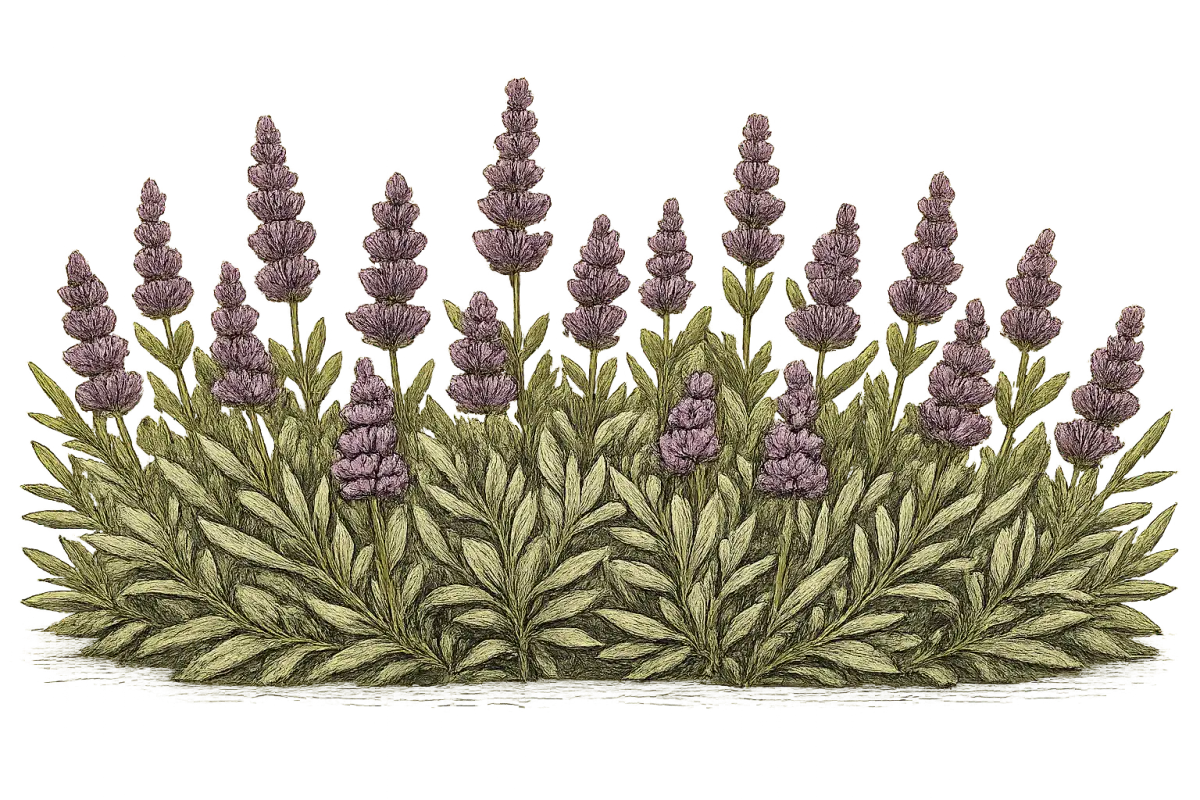
Picture lavender the way it looks in the Provençal countryside: long silver-green wands catching the light, waves of purple rolling toward the horizon, the whole landscape scented. That image is not a fantasy reserved for perfect Mediterranean soil. It is entirely achievable in a garden bed in Virginia, Colorado, or Illinois — and it is completely out of reach if you make the one mistake that kills lavender everywhere it is tried.
That mistake is not underwatering. It is not cold. It is not planting in the wrong zone. It is wet roots. Specifically: poor drainage, overwatering, and the crown-rotting, oxygen-displacing conditions that follow. More lavender dies from saturated soil than from every disease, pest, and winter storm combined. A lavender plant rated to zone 5 will sail through a –20°F winter in well-drained soil. That same plant, in waterlogged clay in zone 7, will be dead by August.
Understand that single fact, and the rest of lavender care becomes astonishingly intuitive. Lavender evolved on Mediterranean limestone hillsides — thin, alkaline, nearly infertile soil that dries completely between rains and never stays wet. When you replicate those conditions, lavender rewards you with a decade or more of dense, fragrant, silver-foliaged beauty that asks almost nothing in return. When you fight them — by mulching with wood chips, watering on a schedule, planting in amended clay — you set yourself up for the rotted, split-open, woody plants that give lavender an undeserved reputation for being temperamental.
This guide covers everything: which species belongs in your climate, which varieties to plant by zone, how to prepare soil correctly (including the mistake that turns clay into concrete), how to water and when to stop, how to prune for a plant that lives 15 years instead of five, and how to harvest for maximum fragrance. By the end, you will understand not just what to do, but why — and that understanding is what separates the gardeners with thriving lavender hedges from the ones replacing dead plants every other spring.
Where to Plant Lavender
Lavender doesn't die from cold — it dies from wet roots. Drainage is the #1 factor in lavender placement, and the wiki research from Colorado State, Utah State, and the US Lavender Growers Association is unambiguous: more lavender dies from saturated soil than from every disease, pest, and winter storm combined.
Site checklist:
- Full sun, 6+ hours direct daily — non-negotiable
- South-facing slope or any spot that drains naturally and dries fast
- Avoid: lawn-sprinkler zones, low spots, downspouts, paths that funnel water toward the bed
Clay soil — the primary lavender killer. If your yard has heavy clay, two things matter:
1. Never add sand directly to clay. This is the most destructive lavender mistake — sand mixed into clay creates a concrete-like substance that's worse than the clay alone, locking up macropores entirely.
2. Correct approach: incorporate coarse organic matter (bark mulch or coarse compost) at ~30% of total volume into the top 6-8 inches. Or build a raised bed with imported well-draining mix. Or, at minimum, plant on a 6-12 inch mound.
Soil pH and lime. Lavender wants 6.5-7.5 — neutral to slightly alkaline (unusual among perennials). Whether you need lime depends on your region:
- Midwest, Mountain West, Desert Southwest: naturally alkaline — no amendment needed
- Southeast, Pacific Northwest: often acidic — apply calcitic or dolomitic lime (~1/8 cup per sq ft, several months ahead of planting)
- Northeast: variable — test first
Mulch matters too. Use gravel or crushed stone. Never wood chips or bark — they trap moisture against the crown. Crushed limestone serves dual duty in acidic zones (mulch + slow pH raise).
Quick placement specs:
- Sun: 6-8 hours direct, south-facing ideal
- Soil: Sandy loam target; pH 6.5-7.5; never sand-amended clay
- Mulch: Gravel only — never wood
- Spacing: 15-18" (dwarf), 18-24" (English), 24-36" (Lavandin); add 25% in humid zones
- Avoid: Untreated clay, wet spots, irrigated lawns, downspout zones
- Zone: 3-10 by species
If your yard has wet/dry zones, map the spots that drain best before planting.
Quick Answer: Lavender Growing at a Glance
USDA Zones: 3 through 10 (with the right species and variety)
Sun: 6–8 hours of direct sunlight daily — non-negotiable
Soil pH: 6.5–7.5 (neutral to slightly alkaline — unusual among perennials)
Drainage: Perfect drainage is the single most important factor; more critical than zone or variety
Mulch: Gravel or crushed stone only — never wood chips or bark
Watering: Deeply and infrequently; established plants may need none at all in rainy climates
Fertilizer: Minimal — 1 tablespoon slow-release per plant per season; over-feeding reduces flowers
Spacing: 18–36 inches depending on variety; add 25% in humid climates
Pruning: Once annually after main bloom — skip this and the plant collapses within years
Culinary use: English lavender (L. angustifolia) only — all other species contain too much camphor
Lifespan with proper pruning: 10–15 years or more
Know Your Lavender: Five Species, Very Different Plants
Before you buy a single plant, understand this: the word "lavender" on a nursery tag tells you almost nothing. The five main species have dramatically different cold hardiness, humidity tolerance, size, fragrance character, and culinary suitability. Buying without knowing the Latin species name is the number one way to end up with a gorgeous French lavender that dies in its first zone 7 winter, or an English lavender rotting in Southeast humidity.
Common names make this worse. "French lavender" is used interchangeably by different retailers to mean either Lavandula stoechas (Spanish lavender) or Lavandula dentata (true French lavender). "French hybrid" often means Lavandin, which is neither French nor a true species. The only common name you can trust completely is "English lavender," which reliably means L. angustifolia. For everything else, ask for the Latin name. Any reputable nursery should provide it.
Here is what you are actually choosing between:
English lavender (Lavandula angustifolia) is the hardiest, most versatile, and most fragrant species — the one that comes to mind when anyone pictures classic lavender. It grows 1–2 feet tall, blooms in early to mid-summer, and has the lowest camphor content of any lavender (below 0.5%), making it the only species appropriate for cooking. Hardiness extends to zone 5 for most varieties, with Munstead surviving to zone 3. Its weaknesses: it dislikes excessive humidity, and in the Southeast it needs very careful siting to avoid fungal disease.
Lavandin (Lavandula x intermedia) is the commercial powerhouse — a sterile hybrid of English lavender and Portuguese spike lavender. Significantly larger than English (2–3 feet), with the highest essential oil yield of any lavender and flower spikes that can reach 6 inches on varieties like Grosso. Its camphor content is higher than English, making culinary use limited. The most significant recent development in lavender cultivation is the variety Phenomenal, a Lavandin introduction that combines meaningful cold hardiness (to zone 4–5, rated to –20°F dormant) with exceptional humidity tolerance — a combination previously unavailable in any single variety.
Spanish lavender (Lavandula stoechas) is the showiest of the five, with striking "rabbit ear" petal bracts above compact flower heads that bloom in early spring — often before any other lavender. It is also the most frost-tender, hardy only to zones 7–9. Not for culinary use. Best deployed as a bold ornamental in warm gardens or in containers that can be moved indoors.
French lavender (Lavandula dentata) earns its place with a nearly continuous bloom season in mild climates — almost year-round in zones 9–10. Named for its toothed leaf margins, it has a subtler fragrance than English and tolerates some humidity better than most. Hardy only to zones 8–10; will not survive frost.
Portuguese / Spike lavender (Lavandula latifolia) is rarely grown on its own — its primary importance is as a parent of Lavandin. Strong camphor fragrance, late summer bloom, hardy in zones 6–9.
The decision tree is simple: cold climates (zones 5–6) call for English lavender or Lavandin. Humid climates call for Phenomenal above all else. Zones 7 and up open the door to Spanish lavender for early spring color. Zones 8–10 are where French lavender thrives. And if you want to cook with lavender, you want English lavender — specifically, confirmed L. angustifolia — every single time.
Best Lavender Varieties by Zone
Zone determines which species survive, but variety selection within that framework determines how beautifully they do it. Here is how to think about variety choice at each point on the map.