Cold Zones (4-5): Short Seasons, But It Still Works
The upper Midwest, northern plains, northern New England, high-elevation Mountain West — you have 90 to 120 frost-free days if you are lucky. Lemongrass has no frost tolerance whatsoever, and outdoor perennial growing is not an option.
Container growing is your only path. Use a 10 to 15 gallon container — smaller pots will bottleneck the plant's growth before the season gets going. Start rooting your grocery store stalks in late February or early March. That gives you a head start before the outdoor season even opens. Move containers outside only after all frost danger is gone, which in zones 4 and 5 typically means late May.
Realistic expectations: plants will reach 2 to 3 feet in a single outdoor season. You will get 4 to 8 harvestable stalks from a first-year plant. That is enough to cook with regularly. It is not the sprawling tropical statement plant you see in zone 9 yards, but it is genuinely productive for the season length.
C. citratus is the only species worth your time here. It roots faster from grocery store stalks, produces harvestable stalks sooner than East Indian varieties, and the thick fleshy base is actually suitable for the culinary prep you are doing. East Indian lemongrass produces thinner stalks that, in a shortened growing season, may never reach the half-inch thickness that signals harvest readiness.
One legitimate alternative for zone 4 and 5 gardeners who find overwintering tedious: treat it as an annual. Root new stalks every February from grocery store stalks. Grow all summer. Compost after first frost. Total cost is a couple of dollars per year. No overwintering headaches. Fresh, vigorous plants each season.
Moderate Zones (6-7): The Productive Middle Ground
With 150 to 200 frost-free days, zones 6 and 7 are where container lemongrass really performs. A 10 to 15 gallon pot with a good start from February propagation will reach full size — 3 to 5 feet — and produce abundantly before fall. Move outside after last frost (mid-April to mid-May depending on your specific zone), bring inside before first frost (mid-October to mid-November).
In zone 7, you have an additional option: planting directly in the ground and digging before frost. Some zone 7 gardeners in sheltered microclimates attempt heavy mulching for overwintering in-ground plants, but success is unreliable. Do not count on it. Dig, pot, and bring inside. If you get lucky with a mild winter and the mulched clump survives — great, that is a bonus. Do not plan around it.
The dig-and-pot method: before first frost, cut foliage back to 6 to 12 inches, dig the entire clump, pot it in a large container with fresh potting mix, and move it indoors to the brightest window you have. Reduce watering immediately. Stop fertilizing entirely. The plant goes semi-dormant. It will look rough by February. That is normal.
C. citratus remains the primary recommendation. The longer zone 6-7 season supports plants large enough that you could also add a pot of C. flexuosus for a dedicated tea-and-aroma plant if you want to experiment.
Zone 8: The Borderline Zone
Zone 8 is interesting because it sits right at the edge of where outdoor overwintering becomes theoretically possible — and practically risky. In zone 8b (15 to 20°F minimums), some gardeners overwinter lemongrass in the ground with 6 to 8 inches of mulch over the crown and get away with it in average winters. Zone 8a (10 to 15°F) is too cold to count on. Losses happen in colder-than-average years.
My recommendation: still use containers for reliability. Accept that you are in a transition zone and hedge your bets. If you plant in-ground, apply that heavy mulch and also keep a backup pot of rooted stalks coming along indoors. The in-ground plant is your aspirational overwintering experiment. The backup pot is your insurance.
C. citratus for cooking; the longer zone 8 season also supports C. flexuosus as a secondary plant for teas and the higher essential oil content if that interests you.
Warm Zones (9-10): Growing It the Way It Wants to Grow
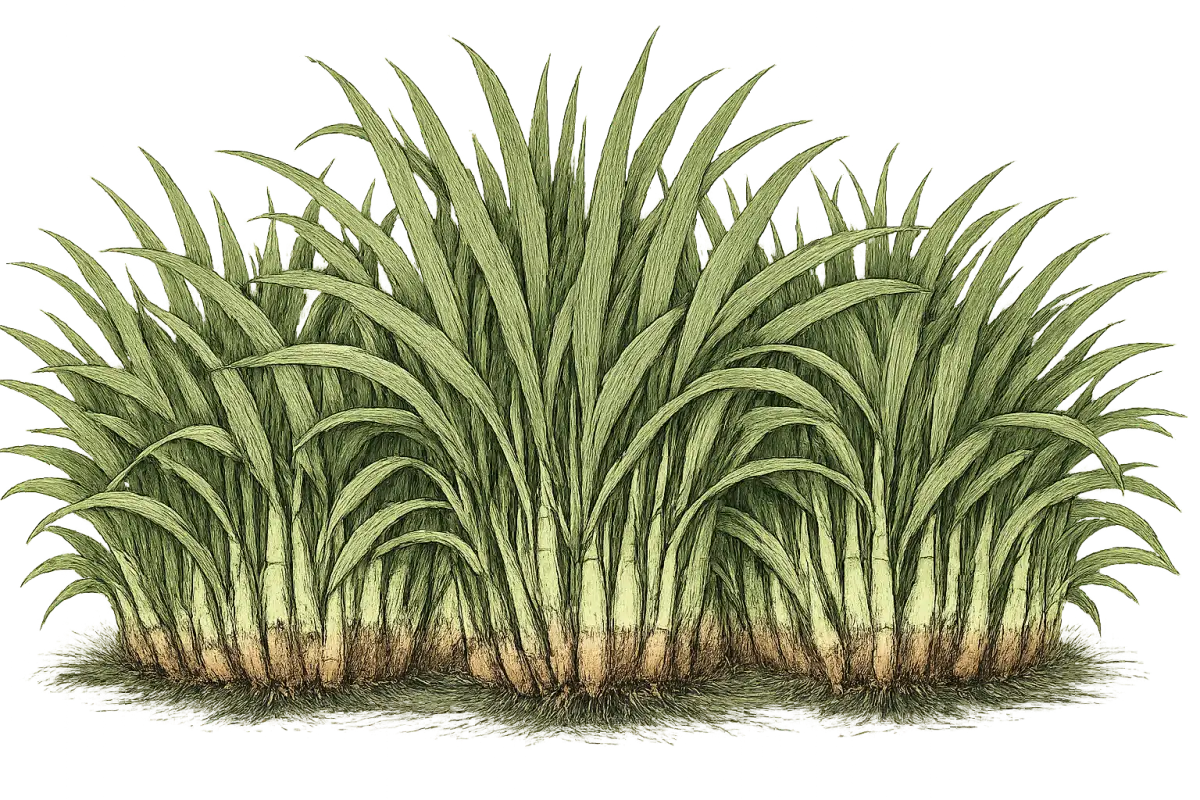
This is where lemongrass stops being a container management exercise and becomes what it actually is: a vigorous tropical perennial that comes back every year, gets bigger each season, and produces so many stalks you will be giving them away.
Plant directly in the ground. Full sun — south-facing if possible. Rich, well-draining soil amended with 2 to 3 inches of compost before planting. Space plants 3 feet apart. Mulch 2 to 3 inches deep around the base.
Plants form clumps 3 to 5 feet tall and wide at maturity. They will need dividing every 2 to 3 years before they become an impenetrable mass of rhizomes. That is not a complaint — those divisions are free plants for you, free plants for neighbors, or free additions to other parts of the garden.
Cut plants back to 6 to 12 inches in late winter to refresh growth. Apply the first fertilizer application of the season and watch the plant respond dramatically once spring warmth kicks in.
All three Cymbopogon species thrive here. Consider planting C. citratus as your primary culinary plant and C. nardus or C. winterianus (citronella grass) separately near outdoor seating — not because the living plant repels mosquitoes from a distance (it does not; that claim is marketing nonsense), but because you will have easy access to leaves for crushing and rubbing on skin, which does provide a couple hours of modest repellency.
Zone 11: Basically Ideal
Southernmost Florida, Hawaii, US territories — lemongrass is in its native conditions here. Plant it, water it occasionally during dry periods, divide it when it gets too large. It can spread aggressively in truly tropical conditions. All species thrive with minimal intervention, and year-round harvest is possible.
Quick Reference Table: Strategy and Species by Zone Group
| Zone Group | Strategy | Primary Species | Secondary Option | Key Priority |
|---|
| 4-5 | Container (10-15 gal) or annual | C. citratus | Annual replacement | Start indoors Feb-Mar; bring in before frost |
| 6-7 | Container or in-ground (dig before frost) | C. citratus | C. flexuosus for tea | Get outside early; bring in before Oct-Nov frost |
| 8 | Container preferred; in-ground with heavy mulch | C. citratus | C. flexuosus | Keep backup rooting stalks; mulch 6-8 inches |
| 9-10 | In-ground perennial | C. citratus | C. nardus for patio | Divide every 2-3 years; cut back late winter |
| 11 | In-ground; minimal care | Any | Any | Control spread; divide regularly |
Propagating From Grocery Store Stalks (Do This Before Anything Else)
Before you spend money at a nursery, understand that the most reliable, cheapest, and frankly most satisfying way to start lemongrass is from grocery store stalks. The success rate is 70 to 90 percent. The cost is a few dollars. And you are guaranteed to get C. citratus — the culinary species — because that is what every Asian market sells.
Here is how it works:
Pick stalks with a firm, intact base — that bulb area at the bottom is where roots emerge. No intact base, no roots. Check for some green or yellow color at the top; completely dried-out white stalks have lost viability. Avoid anything soft, slimy, or moldy. Buy 5 to 6 stalks. You will not get 100 percent germination, and there is no reason to limit yourself when a bunch costs three dollars.
Trim about an inch off the top. Peel away any dead or dry outer layers. Place the stalks in a shallow glass with 2 to 3 inches of water — just enough to cover the base. Do not submerge the entire stalk; the upper portion will rot. Position near a sunny window. Change the water every 2 to 3 days or when it clouds up.
Roots appear in one to three weeks. Warmer room temperatures speed this up. Once roots reach 1 to 2 inches long, transfer to a pot with high-quality potting mix. Do not fertilize for the first 2 to 3 weeks — let the roots establish before you push growth.
The most common propagation failures are avoidable: submerging the whole stalk, ignoring water changes, planting before roots develop, or starting with one stalk instead of several. Use 5 to 6 stalks and you will almost certainly succeed with most of them.
For zones 4 through 7, start this process in late January or February. You want a head start on the outdoor season. For zones 8 and 9, January or February also works — the longer your plant has to establish indoors before going outside, the more productive its first season.
Soil: Mostly Worry-Free (With Two Non-Negotiables)
Compared to acid-loving plants that demand precisely calibrated pH, lemongrass is a breath of fresh air. It tolerates a pH range of 5.0 to 8.4. Most US garden soils fall somewhere between 6.0 and 7.5. You are almost certainly fine without amendment. If you know your soil pH is between 5.0 and 8.0, plant with confidence and move on.
The two things that actually matter are drainage and fertility.
Drainage is non-negotiable. Lemongrass roots will rot in waterlogged soil. If you have heavy clay, you have two choices: amend aggressively with compost and coarse organic matter before planting, or build raised beds and fill them with better-draining mix. The drainage test before planting is worth doing: dig a hole 12 inches deep, fill it with water, and time how long it takes to drain. Under an hour is ideal. Over four hours is a problem you need to solve before you plant anything in that spot.
Fertility drives production. Lemongrass generates 3 to 5 feet of foliage growth in a single season. That level of biomass demands serious nutrients — particularly nitrogen. Work 2 to 3 inches of compost into the top 8 to 12 inches before planting. Top-dress annually with 1 to 2 inches of compost. And supplement with fertilizer throughout the growing season. Compost alone will not keep pace with a vigorous lemongrass plant's appetite.
For container plants: use high-quality potting mix. Never garden soil in a container. Garden soil compacts in containers, loses its air pores, becomes waterlogged after watering and brick-hard when dry, and introduces pathogens that thrive in the warm, wet container environment. The difference between a $5 bag of potting mix and a $12 bag is real and worth paying. Refresh the mix every 2 to 3 years when you divide the plant.
One specific container soil problem worth knowing: peat-based potting mixes become hydrophobic when they dry out completely. Water poured on the surface runs down the inside of the pot walls and straight out the drainage holes without actually wetting the root ball. If this happens, submerge the entire pot in a tub of water for 30 to 60 minutes and let it rehydrate from the bottom up. Then maintain consistent moisture to prevent the problem from recurring.
Watering: Two Completely Different Rules for Two Different Seasons
This is the section that decides whether your lemongrass lives or dies, particularly in zones 4 through 8 where overwintering is part of the deal.
There are not complicated nuances here. There are two clear rules, and they change with the season.
Summer Rule: Keep It Consistently Moist
Lemongrass is a tropical from Southeast Asia. During active growth, it is a heavy water user. Its large leaf surface area and rapid growth rate consume substantial moisture. A well-watered plant in full sun can produce 1 to 2 inches of new growth per week at peak summer.
Keep the soil consistently moist throughout the root zone. Do not let it dry out completely between waterings. Water deeply — shallow watering creates shallow roots. Morning watering is preferable because wet foliage overnight invites fungal problems.
Container plants are the demanding case. In hot summer weather — 90°F and above — a 10 to 15 gallon pot in full sun can go from adequately moist to dangerously dry in 24 hours. Check daily. In extreme heat above 95°F, twice-daily watering is not unusual. In-ground plants in zones 9 through 11 need 2 to 3 waterings per week during dry periods; more in sandy soil or heat waves.
A saucer under the pot helps. It catches drainage water and allows the plant to reabsorb it from below. Empty the saucer if water sits for more than a few hours — standing water becomes a mosquito breeding site.
Winter Rule: Back Way Off
This is where most plants die. The container moves inside. Growth slows dramatically because of reduced light and cooler temperatures. The plant uses a fraction of the water it needed in July. The gardener does not adjust. The soil stays saturated. Roots begin to rot — Pythium and Phytophthora are the common culprits. The plant wilts because damaged roots cannot absorb water. The gardener sees wilting and adds more water. The root system collapses.
When lemongrass moves indoors, let the top inch of soil dry between waterings. Check before every watering. In most indoor environments, watering every 7 to 14 days is sufficient during winter. This varies with pot size and room temperature. The finger test is always more reliable than a calendar.
If your plant is wilting and the soil is wet, do not add water. That is root rot in progress. Remove the plant from the pot, trim away brown mushy roots, repot in fresh dry potting mix, and water lightly while the plant recovers.
Humidity Indoors
Heated indoor air in winter typically drops to 20 to 30 percent relative humidity. Lemongrass prefers 50 to 70 percent. Low indoor humidity causes brown leaf tips and — more importantly — creates ideal conditions for spider mites, the most common indoor lemongrass pest. Mist the leaves every couple of days. A humidity tray (pebbles and water beneath the pot, with the pot bottom above the waterline) adds localized humidity. Grouping multiple overwintering tropical plants together creates a slightly more humid microclimate.
Fertilizing: A Heavy Feeder That Rewards Attention
Lemongrass grows fast and produces a lot of biomass. It needs to eat regularly during the growing season.
Apply a balanced liquid fertilizer — 10-10-10 or 20-20-20 — every 2 to 4 weeks from spring through early fall. Compost tea works well as an organic alternative. For in-ground plants, side-dress with compost every 4 to 6 weeks as a supplement to liquid feeding.
Signs you are underfeeding: pale green or uniformly yellowing leaves indicate nitrogen deficiency; slow growth despite adequate sun and water is a general nutrient deficiency signal. Apply a dose of balanced fertilizer and assess the response over two weeks.
Stop all fertilization when plants move indoors for the season. Resume in spring only after you see new green growth — typically March or April. Feeding a semi-dormant plant accomplishes nothing except potentially burning roots that are already stressed.
For in-ground plants in zones 9 through 11, make a final fertilizer application in early fall. That is the last one until spring.
Pests and Diseases: Mostly a Non-Issue
Lemongrass produces high concentrations of citronella oil, citral, and geraniol in its tissues. These are the active ingredients in commercial insect repellents. The same compounds that repel mosquitoes also deter aphids, whiteflies, and most soft-bodied insects from feeding on the plant. The practical result is that lemongrass has almost no meaningful outdoor pest pressure.
The exception is during indoor overwintering.
Spider mites are the most common problem, and they are almost exclusively an indoor winter issue. Heated home air is dry and warm — exactly what spider mites thrive in. Look for fine webbing on leaf undersides and stippled yellowing or bronzing on the leaves. Increase humidity around the plant immediately (misting, humidity trays). Hit the plant with a forceful water spray in the shower to knock mites off. Apply insecticidal soap to all leaf surfaces, including undersides, and repeat every 5 to 7 days for three applications to break the reproductive cycle. Outdoor plants rarely get spider mites because rain, wind, and predatory insects keep populations in check naturally.
Mealybugs — white cottony masses in leaf axils and on stems — occasionally appear on indoor plants. A cotton swab dipped in rubbing alcohol handles light infestations. Insecticidal soap handles heavier ones. Isolate affected plants from other houseplants.
The most serious disease threat is root rot from Phytophthora or Pythium — entirely a consequence of overwatering, not a random pathogen you catch. If the soil is wet and the plant is wilting, that is the diagnosis. See the watering section above.
Rust — orange-brown pustules on leaf surfaces — occasionally appears in humid climates (common in the humid Southeast during summer). It is rarely fatal. Remove affected leaves, improve air circulation, avoid overhead watering. Copper-based fungicide if the case is severe.
The vast majority of lemongrass problems are environmental — wrong temperature, wrong water schedule, insufficient light. Not pests. Not diseases. Adjust the conditions and the problems resolve.
Harvesting: When, How, and What to Do With It
 Where to Plant