 Where to Plant
There is a house in my neighborhood with a dogwood that has been declining for the better part of a decade. Every spring it struggles out a few pale blooms. Every fall the foliage turns a sickly yellow instead of the brilliant red-purple it should be. The owners have fertilized it, sprayed it, pruned it. What they have never done is fix the two problems that were baked in from day one: it is planted on the south side of the house, full western sun, and there is mulch piled a foot high against the trunk like a little mountain.
That tree is not going to make it. And the painful part is that it never had a chance.
I tell that story not to be grim, but because it captures exactly what goes wrong with dogwoods in American landscapes. The problems are almost never mysterious. They trace back to decisions made before the tree went in the ground — which side of the house, how deep to plant it, whether to choose a susceptible variety in a high-risk area. Get those decisions right and a dogwood will reward you for forty years: four seasons of genuine beauty, spring flowers that stop people on the street, fall color that rivals any maple, berries that fuel songbirds through migration, and winter architecture that is elegant even after every leaf has dropped.
Get the decisions wrong and you will spend years wondering why your tree never thrives. This guide is about getting them right the first time.
Quick Answer: Dogwood Growing at a Glance
USDA Zones: 5 through 9 (species-dependent; zones 5-8 are the sweet spot)
Light: Morning sun with afternoon shade in most zones; partial shade to full sun acceptable in zones 5-6
Soil pH: 5.5-6.5 (acidic; test before planting)
Drainage: Well-drained and non-negotiable — dogwoods do not tolerate standing water
Watering: 1 inch per week during growing season; 2-3 times per week for first two years
Irrigation method: Drip irrigation strongly preferred; overhead watering increases disease risk
Mulch: 2-4 inches of organic mulch; maintain a 3-4 inch gap from the trunk
Mature size: 15-30 feet tall depending on species and cultivar
Key disease threat: Dogwood anthracnose (Discula destructiva) — manageable with proper placement and variety selection
Key pest threat: Dogwood borer — almost entirely preventable with mulch and no bark damage
Best placement: East or northeast side of buildings or larger trees; woodland edge
Placement Is Everything (And Most People Get It Wrong)
Dogwoods are natural understory trees. In the wild, they grow beneath oaks, maples, and pines in dappled or filtered light — not in the open middle of a sunny lawn, and not in the dense shadow of a building's north face. Every instinct a dogwood has evolved over millennia is tuned to that in-between world of partial shade and protected conditions. When you honor that, the tree responds. When you ignore it, it struggles in ways that no amount of fertilizer or pruning will fix.
The single most important placement rule: morning sun, afternoon shade. In zones 5 and 6 where summer heat is moderate, full sun is acceptable provided the soil stays consistently moist. But move into zone 7 and full sun becomes a problem — leaves scorch along the margins in late summer, vigor drops, and a stressed tree is a vulnerable tree. By zone 8, significant afternoon shade is not a preference but a requirement, and in zone 9, dogwoods want to be in actual understory conditions beneath larger trees.
The east or northeast side of a house or large deciduous tree is ideal for most landscapes. The tree gets morning light — enough to set flower buds generously and keep foliage drying quickly after rain — but is sheltered from the beating of a western afternoon sun. This positioning also nails one of the subtler benefits of the understory timing: in early spring, before the canopy trees above have leafed out, your dogwood sits in near full sun and blooms its heart out. Then as the season warms, the emerging canopy provides natural afternoon protection.
What to avoid is equally specific. South-facing walls are disqualifying in most zones — reflected heat causes severe, chronic stress. Deep dense shade is equally bad, and for a reason that goes beyond aesthetics: shade is the single biggest environmental risk factor for dogwood anthracnose. The fungus Discula destructiva needs cool, humid conditions to thrive, and deep shade creates exactly that microclimate. A tree in dense shade that never gets its canopy dried by sun and air movement is an anthracnose invitation. Low-lying frost pockets damage emerging flower buds in spring. Compacted soils, common around driveways and construction areas, block the shallow root system from spreading.
Low-lying areas where water collects after rain are also off the table. Dogwoods will not tolerate waterlogged roots, and a wet site that looks fine in a dry summer will reveal itself in a rainy spring.
When you find the right spot — that east-facing edge of a bed, the gap in the shrub border that gets morning light, the corner near the patio where you want something that rewards you from every window — plant your dogwood there and do not second-guess it. Placement done right is worth more than every other care decision combined.
Best Dogwood Varieties by Zone
There are three main groups of dogwood you need to know, and the differences between them matter far more than most gardeners realize.
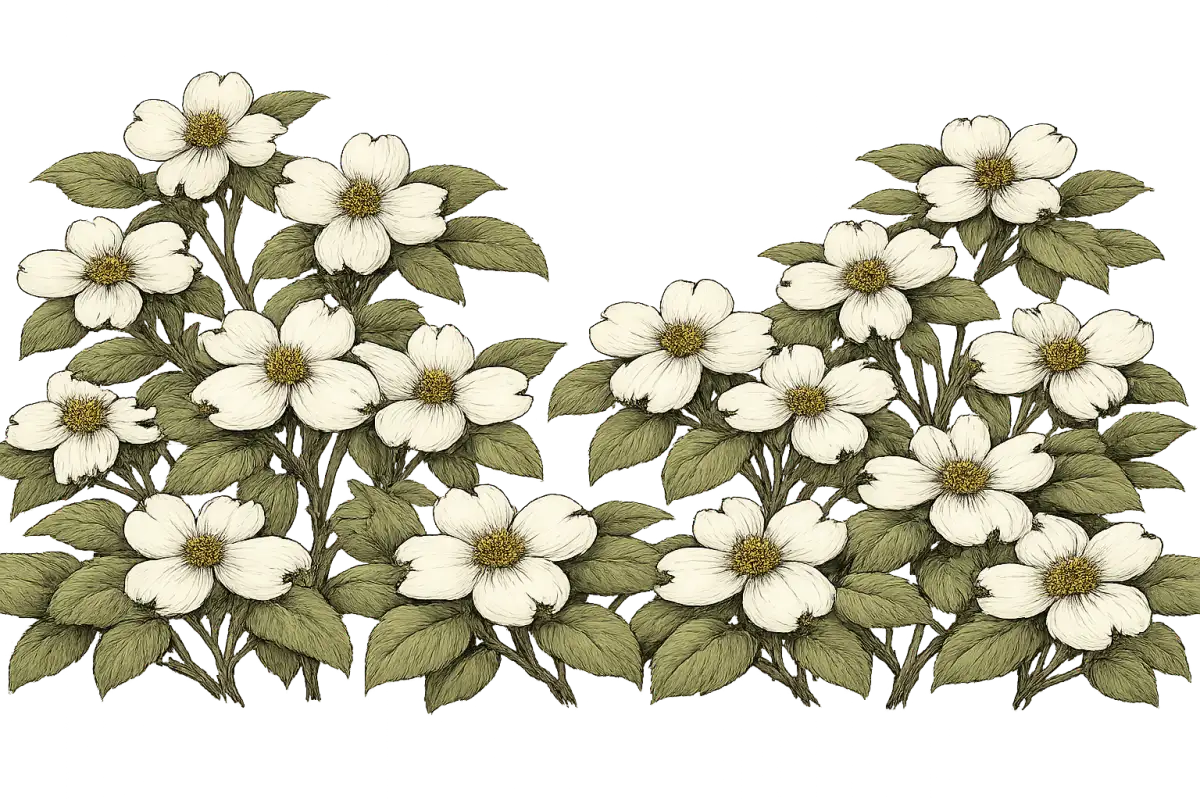
Cornus florida — the native flowering dogwood of eastern North America — is the one most people picture. It blooms in early spring before the leaves emerge, produces the classic large rounded white or pink bracts, bears high-fat red berries that feed over 35 bird species through fall migration, and turns brilliant red-purple in autumn. It is a keystone native species in every meaningful sense. It is also susceptible to dogwood anthracnose, and that susceptibility is the one fact that has to drive your decision-making.
Cornus kousa — the Japanese or Korean dogwood — blooms later, in late May to June after its leaves have emerged. Its bracts are pointed and star-shaped rather than rounded, giving it a distinctly different look. It bears edible, raspberry-like pink fruits in fall. It has excellent anthracnose resistance. It handles zones 5-8 well, though it does not extend into zone 9 the way florida can.
Stellar hybrids, bred at Rutgers University by crossing florida and kousa, fall in between: bloom timing is mid-spring, appearance is intermediate, and disease resistance is good to excellent. They cover zones 5-8.
One practical payoff of growing all three: pair a florida with a kousa and you get nearly two months of dogwood bloom, from April through June.