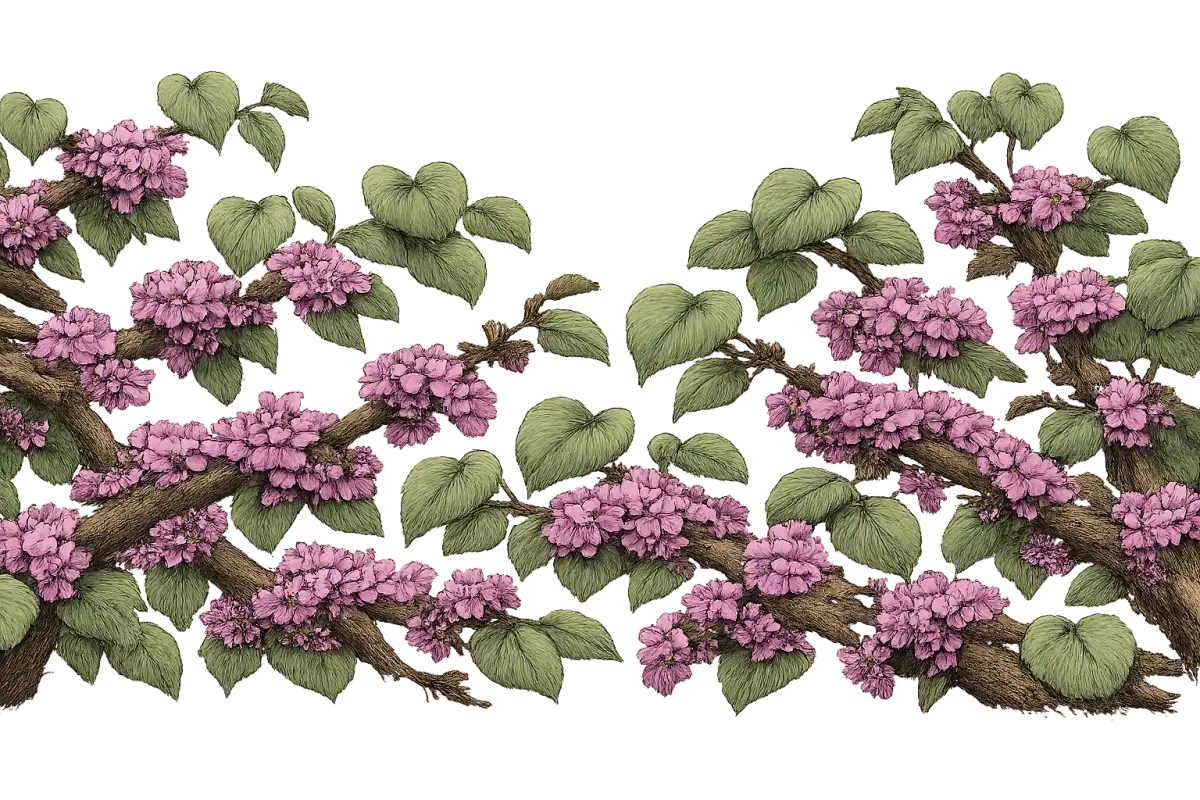
Cold Zones (4-5): Work With the Frost, Not Against It
The single biggest challenge in zones 4 and 5 is not cold — magnolias handle it fine. It is late frost destroying early spring blooms. Star and Saucer magnolias bloom in March, often when there is still plenty of freeze risk. One night below 28°F turns those open flowers brown and mushy. The tree survives completely unharmed, but that season's display is gone.
The mistake I see constantly is planting an early-blooming magnolia and then being bewildered and frustrated every March. The fix is simple: choose later-blooming varieties.
Jane is my top pick for cold zones. At 10-15 feet tall and 8-12 feet wide, it fits the spaces most suburban gardeners actually have. The purple-red tulip flowers open two to three weeks after Star, missing the frost window most years. Plant it on the north or east side of a building — the building's shadow keeps the microclimate cooler in late winter, delaying bloom by another one to two weeks. That combination — late-blooming cultivar plus a sheltered north or east exposure — eliminates most of the frost frustration that plagues cold-zone magnolia growers.
Ann is the choice for tighter spaces, topping out at 8-10 feet. It is the latest-blooming of the Little Girl hybrid series, which means the lowest frost risk of any deciduous magnolia, and its small, non-aggressive root system makes it the only magnolia I am comfortable recommending within 10-15 feet of a foundation. Deep purple-red flowers, slow and tidy growth habit.
Royal Star (15-20 feet) is the classic choice if you want the full starburst flower with 12 to 40 narrow petals. It is more frost-exposed than Jane or Ann because it blooms earlier, but it is also the most cold-hardy magnolia species — reliably to zone 4. If you have a sheltered north or east site, Royal Star is stunning. If you have an open, exposed site, lean toward Jane instead.
Butterflies is worth knowing about for cold zones if you want something genuinely unusual: deep yellow flowers on a 15-20 foot tree, blooming late enough to dodge most frosts. Yellow magnolia flowers stop people in their tracks. If your palette allows it, this is a striking choice.
The critical rule for cold zones: never plant deciduous magnolias against a south-facing wall. The reflected heat from the wall fools the tree into blooming two to three weeks early — directly into the highest-risk frost window. This mistake, which I see regularly, turns a manageable seasonal challenge into a near-annual disappointment.
Zone 6 (-10°F to 0°F): Where the Full Range Opens Up
Zone 6 is the most interesting zone for magnolia selection because the full palette becomes available. You can grow all of the deciduous types that thrive in zones 4-5, and you can now add compact Southern magnolia cultivars to the mix. Late frost is still a minor consideration for the earliest deciduous bloomers, but far less consequential than in zones 4-5.
The arrival of Little Gem is the headline for zone 6. This is the most popular compact Southern magnolia in the country, and for good reason. It grows 15-30 feet tall at maturity (slower and smaller than the species) with a dense columnar habit, produces 3-4 inch flowers prolifically, and — critically — blooms at a very young age, unusual for Southern types that often make you wait years for the first flower. In zone 6, it provides year-round evergreen screening in a size most yards can accommodate. If you are in zone 6 and want an evergreen magnolia, Little Gem is almost always the right answer.
Bracken's Brown Beauty is worth noting for zone 6 gardeners who want a larger Southern type. It is cold-hardy to zone 5b — the hardiest Southern magnolia available — and its leaf undersides are covered in rich brown fuzz that is as attractive as the flowers. It grows to 30-50 feet, so it is for larger properties, but it expands what is possible at the cold edge of Southern magnolia's range.
For deciduous options in zone 6, the same logic from zones 4-5 applies. Jane and Ann for smaller spaces. Saucer (20-30 feet) for dramatic large-scale spring impact — and in zone 6 the frost risk is low enough that Saucer delivers its full performance most years. The hybrid Galaxy and Spectrum offer later-blooming options in the 20-30 foot range if you want large-scale deciduous drama with reduced frost exposure.
Zones 7-8 (0°F to 20°F): The Goldilocks Zone
Zones 7 and 8 are where magnolias are at their easiest. Late frost is rarely a concern. All types thrive. The primary decision is no longer about frost tolerance — it is about what you want the tree to do.
Do you want evergreen screening year-round? Southern types are your answer. Little Gem remains the most versatile choice, working in smaller urban and suburban lots. Teddy Bear is my top recommendation for screening specifically: at 15-20 feet tall and 10-15 feet wide, with an exceptionally dense, compact form, it creates a more effective visual barrier than any other Southern magnolia cultivar. Its root system is the most contained of the Southern types — notably important if you are planting near a patio, driveway, or fence line. For large properties where a commanding presence is wanted, DD Blanchard grows to 50 feet with a strong upright pyramidal form and particularly glossy leaves.
Do you want dramatic spring flowers? The deciduous types deliver that in zones 7-8 without the frost anxiety of cold zones. Saucer magnolia is the most widely planted magnolia in the world — there is a reason. The cup-shaped bicolor flowers, up to 10 inches across, in pink, purple, and white, on bare branches before any leaves emerge, are one of the great spring events in the landscape. At 20-30 feet tall and wide, it is a substantial tree, but in zones 7-8, it performs with minimal fuss.
Butterflies continues to work beautifully in zones 7-8 for that striking yellow flower. Jane stays relevant for smaller lots.
Zones 9-10 (20°F to 40°F+): Southern Magnolia Territory
In zones 9 and 10, the Southern magnolia is in its element. These are hot, often humid climates, and the big evergreen with its glossy leaves and extraordinary fragrant flowers — up to 12 inches across on the species form — is genuinely at home. The deciduous types, by contrast, may struggle to set flower buds properly without adequate winter chill hours, and results become unpredictable.
Little Gem and Teddy Bear are still the workhorses for average-sized lots in zones 9 and 10. Both handle summer heat well, bloom reliably, and stay at manageable sizes. For those with large properties who want the full Southern magnolia experience — the specimen tree, the grand landscape statement — the species form (Magnolia grandiflora) at 40-80 feet is the choice. Give it space it will not outgrow. The red seed cones that open in fall to reveal bright red seeds attract birds and are genuinely beautiful in their own right.
One note on the Southwest portion of zones 9 and 10: the combination of alkaline soil and dry heat is the most challenging environment for magnolias anywhere in the country. In areas with soil pH regularly above 7.5, container growing with an acidic peat- or pine bark-based mix is worth serious consideration. It gives you complete control over soil chemistry that is very difficult to maintain in native alkaline soils under heavy irrigation.
Quick Reference Table: Top Picks by Zone Group
| Zone Group | Top 3 Varieties | Type | Why |
|---|
| 4-5 | Jane, Ann, Royal Star | Deciduous | Late bloom dodges frost; cold-hardy to zone 4 |
| 6 | Little Gem, Jane, Bracken's Brown Beauty | Compact Southern / Deciduous | Full palette available; year-round screening option |
| 7-8 | Teddy Bear, Saucer, Little Gem | Evergreen / Deciduous | All types thrive; best screening and spring drama options |
| 9-10 | Little Gem, Teddy Bear, Southern species | Evergreen Southern | Summer heat-tolerant; species form for large landscapes |
Planting Magnolias: The Decisions That Last a Lifetime
I want to spend real time here, because planting mistakes are the source of the vast majority of magnolia failures. Most of these trees are not killed by pests or disease. They are killed — slowly, over years — by decisions made in the first hour they were in the ground.
Spring. Only Spring.
Plant magnolias in spring. This is not a mild preference — it is a firm rule driven by their biology.
Deciduous types (Star, Saucer, Jane, Ann) should go in the ground before growth starts in spring. Evergreen Southern types go in after the last frost risk but before summer heat arrives. Both need a full growing season of warm soil to establish the root system that gets them through their first winter.
Magnolia roots are fleshy and rope-like — fundamentally different from the fibrous roots of oaks or maples. They are slow to regenerate, sensitive to cold, and they need warmth to push into surrounding soil. A magnolia planted in October is going into winter with inadequately established roots. The fleshy roots fail to anchor the tree, the tree enters winter stressed, and spring brings a weakened tree if it survives at all. If you buy a magnolia at a fall nursery sale — and they are often discounted in fall precisely because most customers know not to plant them — keep it in its container in a sheltered location and plant the following spring.
The Root System Changes Everything
The fleshy, rope-like magnolia root system is not a minor detail. It is the central fact of magnolia care, and every decision from planting method to mulching to garden design downstream of the tree flows from it.
These roots grow in the top 12-24 inches of soil. They spread widely, often beyond the canopy drip line. They are extremely sensitive to physical damage and heal slowly when damaged. A torn or severed magnolia root is not like a fibrous root that regenerates quickly — it is an open wound that heals over months and remains susceptible to fungal infection throughout.
What this means practically:
The hole you dig must be two to three times wider than the root ball, but exactly the same depth. No deeper. Planting too deep is one of the most common tree killers there is, and magnolias are especially vulnerable because the fleshy roots at the bottom of an over-deep hole sit in whatever water collects there. The root flare — where the trunk widens at the base — should be visible above the soil line after planting.
Do not amend your backfill. This counterintuitive instruction trips up a lot of good gardeners who have been told to improve soil. In clay soil, if you fill the planting hole with fluffy compost and potting mix, you have created a bathtub. Water flows easily into your nicely amended soil and cannot escape through the surrounding clay. The root ball sits in water. The roots rot. Backfill with native soil only.
Keep roots wrapped and moist until the literal moment you set the tree in the hole. Fleshy magnolia roots suffer permanent damage when they desiccate, unlike fibrous roots that can often rehydrate. If anything delays planting after you have the tree, keep it in shade with the root ball covered and moist.
After planting, water deeply and thoroughly to settle soil around the roots and eliminate air pockets. Then mulch immediately — 2-4 inches of organic material (shredded bark, pine needles, or leaf mold) extending in a wide ring toward the drip line. Keep mulch three or more inches away from the trunk. Mulch piled against bark causes rot and invites pests.
Site Position: The Frost Siting Rule for Cold Zones
If you are in zones 4-6 and planting a deciduous magnolia, where you plant within your property matters almost as much as which variety you choose.
The north or east side of a building is the preferred position. The building's shadow keeps that microclimate cooler during late winter, which delays bloom by one to two weeks. That delay can be the difference between flowers that open after frost season and flowers destroyed by a March freeze. South-facing walls do the opposite: the reflected heat advances bloom timing by two to three weeks, putting the tree at maximum frost exposure.
Also avoid low spots and depressions where cold air settles on clear nights. Frost pockets amplify every degree of cold and are disproportionately hard on early-blooming magnolias.
Southern magnolias are completely exempt from this concern — they bloom in summer and have no frost vulnerability on their flowers whatsoever.
Watering a Magnolia: Depth Is Everything
The fleshy root system that demands such care at planting also defines how you water for the life of the tree. Shallow roots in the top 12-24 inches of soil dry out faster than deep-rooted trees. The same roots rot quickly in waterlogged conditions. The margin between too dry and too wet is narrower than for most trees.
The fundamental principle: deep, infrequent soaking always beats frequent shallow watering. A lawn sprinkler that runs daily and wets the top inch of soil is not watering your magnolia. It is encouraging surface roots that are even more drought-vulnerable than normal, while doing virtually nothing for the roots actually doing the work at 12-24 inches deep.
The Three-Stage Schedule
Newly planted (first 6-12 months): Water three times per week. Each session should run long enough — 20-30 minutes with a soaker hose or slow-running hose — to move moisture 12 inches into the soil. Test by pushing a screwdriver into the ground 6-8 inches from the trunk. If it slides easily to 10-12 inches, you are in good shape. If it meets resistance at 4-6 inches, your watering is too shallow.
Years 1-2: Drop to once or twice per week. In hot zones (8-10) or during heat waves, stay at two to three times per week. Watch for the warning signs of underwatering during this still-vulnerable period: brown crispy leaf edges (distinct from chlorosis, which causes yellowing), wilting in afternoon heat that does not recover by morning, and premature leaf drop.
Established trees (three-plus years): Magnolias are moderately drought tolerant once established, but "drought tolerant" has a specific meaning here. An established magnolia will survive a two to three week dry spell. It will also drop leaves, produce fewer flowers the following year, and look stressed. Weekly deep soaking during summer dry spells is the difference between a tree that survives and a tree that thrives. In zones 9 and 10, weekly summer irrigation is effectively required even for trees in the ground for a decade.
A soaker hose ring laid from about six inches from the trunk out to the drip line — running 30-45 minutes per session — is the most efficient delivery method for established trees. Install it once and leave it.
Overwatering Is the Hidden Killer
More magnolias are killed by overwatering than by drought, especially in clay-heavy soils. The fleshy roots rot quickly in saturated conditions, and the symptoms — wilting, leaf yellowing — look exactly like drought stress. A well-meaning gardener sees a wilting tree and adds more water, accelerating the decline.
If your magnolia is wilting, check soil moisture at four to six inches deep before you water. Wet, anaerobic soil that smells sour, mushroom growth at the base, soft or yellowing leaves that lack the crispy edges of drought stress — these point toward too much water, not too little. Ensure your planting site drains at least half an inch per hour. If water puddles around the trunk after rain, that tree is in trouble and drainage is the problem to solve.
 Where to Plant