Cold Zones (3–5): Reliability Over All Else
In the upper Midwest, northern Great Plains, and northern New England, winter reliability is the primary selection criterion. For permanent plantings, R. fulgida 'Goldsturm' is the standard — it is deeply cold hardy, forms consistent two-foot clumps, and returns dependably through zone 3 when mulched lightly after first hard freeze. Its golden-orange flowers with the characteristic dark brown cone bloom July through October and are, in the right light, quite beautiful against the warm tones of autumn grasses. Clumps should be divided every three to four years as the centers begin to die out — a normal part of the plant's lifecycle rather than a problem.
If you want to seed a wildflower area in cold zones, R. hirta in straight species form is the most reliable performer. Some ornamental hirta cultivars with unusual flower forms may not self-sow as robustly in zones 3–5 where germination conditions are marginal. The unimproved species gives you the strongest, most self-sustaining naturalization results in challenging climates.
For something with more visual novelty, R. hirta 'Indian Summer' is an All-America Selections winner — its flowers are extraordinary, six to nine inches across, and at three feet tall it makes a focal point rather than a background planting. It is worth noting, though, that the more a hirta cultivar has been selected for flower size and form, the less reliably it typically self-sows. Treat 'Indian Summer' as a showpiece rather than a naturalizer in cold zones.
Standard Zones (5–7): The Full Range Opens Up
Zones 5 through 7 cover most of the country and represent the widest selection of any zone group. Black-eyed susan is at its most comfortable here — this is, after all, the heart of its native range. Almost any species and cultivar performs well, and the choice comes down entirely to purpose.
For a permanent perennial border in these zones, 'Goldsturm' remains the benchmark variety: it earned the Perennial Plant Association's Plant of the Year award in 1999, and decades of widespread cultivation have only confirmed the recognition. Two feet tall, reliably symmetrical clumps, generous three-inch flowers from July through October. One important caveat: plants sold as 'Goldsturm' at big-box retailers are sometimes seed-grown rather than true clonal stock, producing variable performance. Purchase from a reputable perennial nursery when fidelity matters.
For humid regions within this zone group — the Mid-Atlantic, coastal Southeast, and areas of the Southeast where summer humidity stays reliably high — 'American Gold Rush' is a more thoughtful choice than 'Goldsturm'. It was specifically bred for powdery mildew resistance, which in humid zone 6–7 gardens is a real advantage. The foliage stays cleaner through August and September when mildew pressure peaks, and the bloom season extends into October with fine-textured flowers.
For smaller spaces, edging, or containers, 'Little Goldstar' (14–16 inches) and 'City Garden' (16–20 inches) bring fulgida reliability in a more compact form. Both carry the golden-orange flowers of the species and work beautifully at the front of a border or flanking a pathway.
In the hirta category, zones 5–7 support the full cultivar range. 'Cherokee Sunset' is worth seeking out for its double and semi-double flowers in warm bronze, gold, and mahogany tones — considerably richer and more complex than the standard single golden flower, and excellent for cut arrangements. 'Prairie Sun' has a distinctive green center cone and petals with green tips that give it a softer, more unusual quality in a naturalistic planting. 'Denver Daisy' creates a graphic two-toned effect with yellow petals and a darker ring around the brown cone — a good cut flower and an interesting conversation piece in the border.
For meadow and prairie plantings in this zone group, seed straight species R. hirta into the mix alongside R. fulgida divisions for the combination that naturalizes most reliably: the hirta fills gaps immediately and provides the dynamic self-sowing character, while the fulgida forms the permanent structural backbone.
Warm Zones (8–9): Timing and Afternoon Relief
In the Deep South and the warmest parts of the country, black-eyed susan is not a natural prairie plant — it is working against its native climate preferences. That does not mean it fails, but it does mean the timing and species choices need adjustment.
In zones 8–9, R. fulgida 'Goldsturm' may underperform in the hottest microclimates. 'American Gold Rush' handles humidity better and is the stronger fulgida choice for these zones where summer air moisture and heat combine to create peak powdery mildew pressure.
For R. hirta in zones 8–9, consider treating it as a cool-season plant: seed or plant in fall, allow it to bloom through winter and spring before summer heat arrives, and let it naturalize accordingly. This timing sidesteps the worst of the summer heat and aligns with the plant's biennial character in ways that actually suit the southern climate.
In zones 8b–9, afternoon shade protection becomes beneficial when summer temperatures regularly exceed 95°F. A site with eastern exposure — morning sun, afternoon shade from a structure or larger plants — extends bloom and reduces heat stress more effectively than trying to supplement water to a full-sun plant struggling in extreme heat.
Quick Reference Table: Top Picks by Zone Group
| Zone Group | Top 3 Varieties | Species | Why |
|---|
| 3–5 | Goldsturm, R. hirta species, Indian Summer | fulgida / hirta | Cold reliability; fulgida returns true; hirta self-sows |
| 5–7 | Goldsturm, American Gold Rush, Cherokee Sunset | fulgida / hirta | Widest selection; match to border or meadow purpose |
| 6–8 humid | American Gold Rush, Little Goldstar, Prairie Sun | fulgida / hirta | Mildew resistance; smaller forms for dense borders |
| 8–9 | American Gold Rush, R. hirta (fall-planted) | fulgida / hirta | Mildew resistance; fall timing sidesteps summer heat |
Planting Black-Eyed Susan: Timing, Spacing, and What Not to Do
Timing
Spring planting — the standard approach across zones 5–9 — works best once the soil temperature reaches 60°F and after the last frost date. Cool soil slows establishment; there is nothing gained by rushing.
Fall planting is often better than spring for R. fulgida divisions, which establish root systems during the cooler months and arrive in spring already anchored and ready to grow. Plant in September or October, at least six weeks before first frost. Nature usually provides enough moisture in fall across most zones that establishment watering is minimal.
Direct seeding R. hirta is best done in late fall — seeds sown in November overwinter naturally and germinate with spring warmth — or in early spring, pressing seeds gently onto the soil surface. R. hirta seeds need light to germinate; do not bury them. Cold stratification, whether natural or a few weeks in the refrigerator in a damp paper towel, improves germination rates.
Spacing
- R. fulgida: 18–24 inches. The rhizomes will fill in over two to three seasons; give them room to do so gracefully.
- R. hirta: 12–18 inches for transplants; thin to 12 inches when direct-seeding. More densely planted hirta produces a fuller meadow effect in year one.
- R. laciniata: 24–36 inches. This is a large plant, and crowding it produces the floppy, shadowed stems you want to avoid.
Planting Depth
Set plants at the same depth they were growing in the nursery container. Planting the crown too deep encourages crown rot in heavier soils — a mistake that announces itself slowly and by the time it is obvious, cannot be undone.
The One Thing to Leave Alone
Do not amend the planting hole. No compost, no fertilizer, no soil conditioner. This instinct is so common among caring gardeners that it is worth saying plainly: enriching the soil before planting black-eyed susan actively works against you. It produces rapid, lush, vegetative growth with tall stems too weak to hold themselves upright and fewer flowers per plant. The plant evolved in lean prairie soil. That is the condition it flowers best in.
The single exception is genuinely extreme soil — compacted construction fill, exposed subsoil from grading, pH outside the 5.5–7.5 range. In those cases only, a modest addition of coarse compost (not rich compost, not fertilizer) to improve structure — not fertility — is appropriate.
Soil and Watering: The Prairie Logic
Drainage Is the Only Hard Rule
Black-eyed susan grows with equal success in clay, sandy loam, silty loam, and rocky fill soil. The thing it will not forgive is standing water. Prolonged root saturation invites root rot and rapidly kills plants that would have shrugged off anything else you threw at them. Before planting, test drainage the simple way: dig a hole twelve inches deep, fill it twice with water, and time how long the second fill takes to drain. If it clears in four hours or less, plant freely. If water is still standing at twelve hours, raise the bed or choose a different site.
Clay soil that drains within four to six hours of rain is fully acceptable — it can actually benefit black-eyed susan by retaining moisture through dry spells, reducing watering demands during establishment. Plants in clay tend to be more compact than in lighter soils, which often makes them more attractive.
Sandy soil works extremely well once establishment is complete. The primary limitation is the first four to six weeks: sandy soil dries quickly, and new roots have not grown deep enough to access subsurface moisture. Water more frequently during this period specifically, then step back and let the plant's natural drought tolerance take over.
Watering During Establishment
The only period when black-eyed susan genuinely needs consistent attention is the first growing season — specifically the first four to six weeks after planting. During this window:
- Water every two to three days in hot weather above 85°F
- Water every three to five days in mild weather
- Water deeply each time, wetting the soil six to eight inches down to encourage roots to grow downward rather than staying near the surface
- Check soil moisture at two-inch depth before watering. If it is still moist, wait.
Established Plants: The Rewarding Phase
After the first full growing season, established black-eyed susans are genuinely drought tolerant. In zones 3–7 with typical summer rainfall patterns, established plants rarely need supplemental irrigation in a normal year — these zones most closely resemble the plant's native prairie habitat.
In zones 8–9 during peak summer heat, a deep watering once a week during periods of seven to ten days without rain prevents stress and extends bloom. In the Pacific Northwest, where summers are dry, established plants benefit from irrigation every seven to ten days from July through September.
One watering rule applies everywhere: water at soil level, not overhead. Wet foliage in warm conditions is the fastest route to powdery mildew and septoria leaf spot. Drip irrigation or soaker hoses deliver moisture efficiently and keep foliage dry.
Seasonal Care: What to Do and When
The honesty of black-eyed susan is that most seasons, the answer to "what should I do?" is nothing. But there are specific moments when timely action makes a real difference.
Spring
Remove any winter-damaged stems left standing or cut back from the previous season. Divide R. fulgida clumps that have developed dead centers — this happens every three to four years and is a sign the plant is healthy and expanding, not declining. Thin R. hirta self-sown seedlings once they reach three to four inches; keep the strongest plants at twelve-inch spacing and pull the rest.
Do not fertilize. This is true in spring, summer, fall, and every other season.
Summer
Water transplants and young plants during dry spells. If extended bloom is a priority, deadhead spent flowers by cutting back to the nearest lateral bud or leaf node — this encourages additional flower production and can extend the season by several weeks. Deadheading R. hirta also controls the volume of self-sown seedlings the following spring, which is worth considering if you want a more managed effect.
No staking is required for species-type plants in full sun. The hirta cultivars bred for very large flowers — particularly 'Indian Summer' — may flop in exposed sites. If you grow it, install grow-through rings early in the season before the plant needs them.
Fall
Leave the seedheads standing. This is not laziness — it is the right choice ecologically and aesthetically. Goldfinches actively seek rudbeckia seedheads from September onward, working them through February in milder climates. Juncos, sparrows, and chickadees follow. The dark, architectural seedheads against frost-silvered stems or snow are genuinely beautiful in a winter garden. R. hirta colonies rely on this moment: the seeds that fall now become next year's plants.
In zones 3–5, you may cut stems back to four to six inches after the first hard frost for tidiness. In zones 6–9, leave them until late winter.
Divide R. fulgida if clumps are overgrown and centers are dying out. Fall division establishes well and allows roots to settle before spring growth demands begin.
Late Winter (February–March)
Cut or mow the entire planting back to four to six inches before new growth begins — this is the single required annual task for naturalized or prairie plantings. It removes accumulated dead material, creates open soil patches that favor R. hirta seed germination, and mimics the natural fire cycles that prairie plants evolved with. Unlike fire, it can be done in an afternoon.
Bare soil left after this cleanup is not a problem. It is a germination site. Resist the urge to mulch everything before the seedlings emerge.
Designing with Black-Eyed Susan: How to Make It Look Intentional
Black-eyed susan is one of those plants that rewards design thinking. A single specimen in a mixed border is pleasant. A sweep of fifteen plants against a drift of little bluestem grass catching the September light is something you will photograph every year.
Mass Planting
The most important design principle for black-eyed susan is to plant in masses. Seven to twelve plants is the minimum for a naturalistic effect; below that, the planting reads as a conventional border perennial rather than the prairie plant it is. For large-scale meadows, plant or seed in drifts of twenty-five to fifty or more. The golden mass of rudbeckia against ornamental grasses is one of the most effective combinations in naturalistic landscape design.
Formal vs. Naturalistic Settings
Formal or structured borders call for R. fulgida 'Goldsturm' or 'Little Goldstar'. The uniform height, reliable clumping, and consistent golden-orange flowers behave like a well-mannered perennial. Plant in groups of three to five within a mixed border for a controlled prairie aesthetic without the variability of self-sowing.
Naturalistic meadows and prairie gardens are where R. hirta belongs. Its dynamic, shifting character — plants appearing in slightly different positions each season as the self-sowing population renews itself — is an asset rather than a management problem in this context. Seed it into the meadow mix and let it find its level over two to three seasons.
Transition zones between maintained lawn and wilder areas respond well to a combination: R. fulgida forming the reliable defined edge, R. hirta seeding into the wilder areas behind, creating a gradient from structured to naturalistic that reads as entirely intentional.
The Classic Combinations
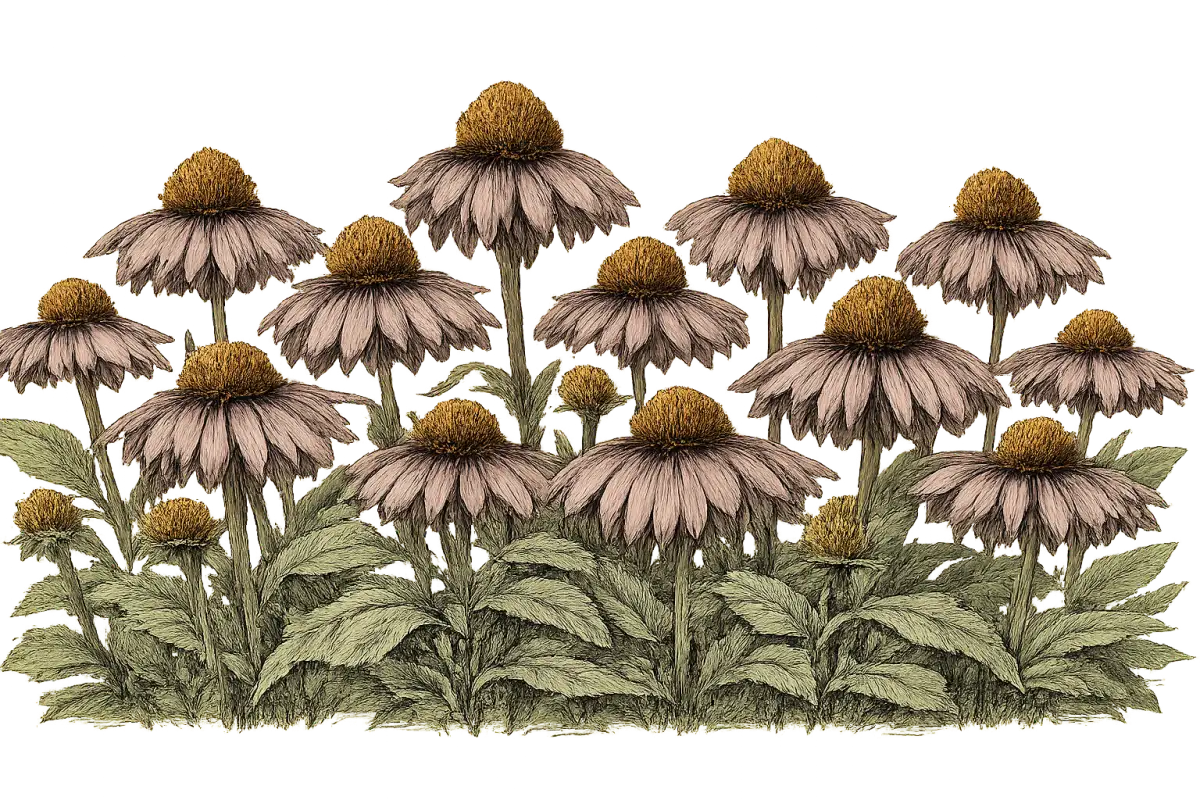
Purple coneflower (Echinacea purpurea) paired with black-eyed susan is the most iconic native planting combination, and it earns that status. Purple-pink and golden-orange are complementary colors that sharpen each other visually, both bloom July through September, both are drought tolerant after establishment, and they attract identical pollinator communities. Plant them in any ratio — they are nearly inseparable in natural prairie communities, and the combination in a garden carries that ecological authenticity.
Blazing star (Liatris spicata) adds a vertical purple spike in July and August that provides striking form contrast to rudbeckia's flat-faced flowers. Both attract monarchs during their southward migration, which peaks in September and October.
New England aster (Symphyotrichum novae-angliae) blooms September through October, extending the pollinator season after rudbeckia peaks. The purple-and-golden autumn combination is as good as the garden gets in fall.
Goldenrod (Solidago spp.) provides late-season warm tone alongside rudbeckia from August through October. It is native, highly attractive to bees, and unfairly maligned — goldenrod does not cause hay fever (that is ragweed, which blooms at the same time but releases its pollen into the air rather than via pollinators). It is worth growing.
For structural backbone, little bluestem (Schizachyrium scoparium) is the classic grass companion. Blue-green summer foliage turns copper-bronze in fall, providing a warm-toned foil that makes rudbeckia's gold more vivid by contrast. Switchgrass (Panicum virgatum), particularly 'Shenandoah' or 'Prairie Fire', adds height and fall red color.
 Where to Plant