Flowers

Zinnias: The Cut Flower That Rewards Every Good Decision You Make

Margaret Chen

Margaret Chen

Flower & Ornamental Specialist · Updated April 2026

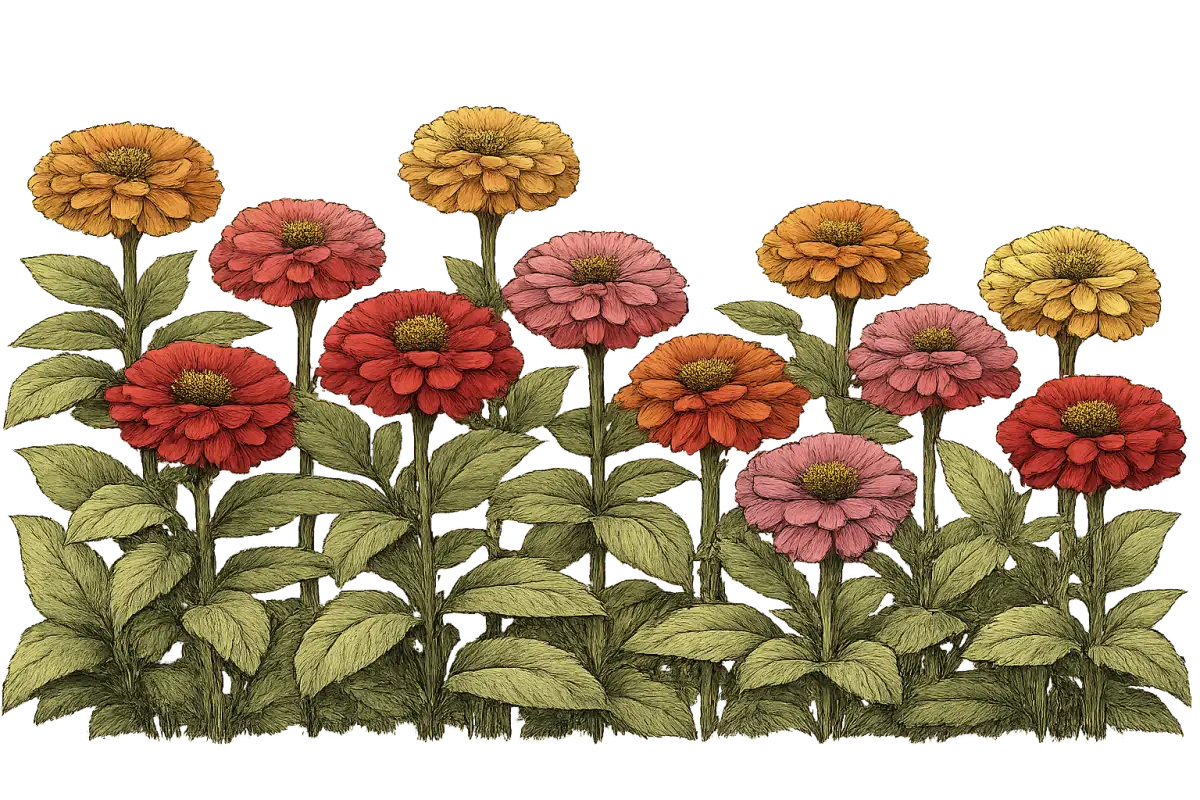
How to grow zinnias — vintage botanical illustration showing the plant in detail

Zinnias at a Glance

Sun

Sun

6-8 hours full sun

Soil pH

Soil pH

5.5-7.5

Water

Water

1 inch per week

Spacing

Spacing

8-24 inches depending on variety type"

Height

Height

6-50 inches depending on variety

Soil type

Soil

Well-drained loamy soil

Lifespan

Lifespan

annual

Get your personalized growing data

Enter your zip code for frost dates, growing season, and soil type.

There is a particular kind of summer garden that stops people on the sidewalk. It is not the one with the most carefully tended roses or the most precisely edged borders. It is the one with zinnias at peak bloom -- a wall of scarlet, coral, lime, and gold erupting from midsummer through the first hard frost, so improbably vivid and so generously abundant that it looks almost unreal.

The wonderful secret about that garden is that zinnias are, flower for flower, the most forgiving and responsive annual most of us will ever grow. They are fast. They bloom more when you cut them. They thrive in heat that shuts down every other summer annual. And a seed planted in warm soil in June will be blooming before the month is out.

So why do gardeners end up with gray, mildewed messes by August? Why do cut stems wilt in the vase within an hour? Why do some beds explode with flowers while others produce a few blooms and stop?

The answer is almost always one of the same handful of mistakes: watering from above, planting before the soil is warm enough, choosing the wrong variety for a humid climate, or skipping the one pruning technique that doubles flower count. None of these are complicated to fix. But if you do not know to look for them, they will quietly undermine a plant that should, by every right, be thriving.

This guide covers everything you need to grow zinnias well -- from variety selection by zone to the precise watering technique that determines whether you get mildew or magnificent blooms, to the simple cut-flower test that separates a vase that lasts ten days from one that wilts before dinner.

Let's get into it.


Quick Answer: Zinnias Growing at a Glance

USDA Zones: All zones with a frost-free summer (effectively zones 2-11)

Sun: 6-8 hours of direct sunlight daily -- non-negotiable

Soil pH: 5.5-7.5 (wide tolerance; well-drained is far more important than exact pH)

Soil: Well-drained is the single most critical soil factor; amend clay with compost

Direct Sow Depth: 1/4 inch (they need some light; do not bury deeply)

Soil Temperature for Germination: 70°F or above (not air temperature -- soil temperature)

Days to Bloom: 60-70 days from seed

Spacing: 8-12 inches (dwarf), 12-18 inches (mid-height), 18-24 inches (tall cutting types)

Watering: 1 inch per week; always at the base -- never overhead

Fertilizer: Balanced liquid every 3-4 weeks; slightly higher phosphorus promotes blooms

Pinching: At 8-12 inches tall; delays first bloom by 2 weeks but dramatically increases total flower count

Deadheading: Every 1-2 times per week throughout the season

Succession Planting: Every 2-3 weeks from first safe sow date through 8-10 weeks before first fall frost

The Mildew Rule: In zones 7-10, use Profusion or Zahara for landscape beds; reserve tall Z. elegans for managed cutting rows


The Mildew Problem (Why August Ruins So Many Zinnia Gardens)

Before we talk about what to plant or how to plant it, I want to address the thing that ends more zinnia seasons prematurely than anything else: powdery mildew.

By midsummer, a large portion of home zinnia plantings across the country start showing that familiar gray-white powder coating on the leaves. The flowers continue briefly, then the plant begins to look ragged, the lower leaves yellow and drop, and what was a gorgeous planting in July becomes an eyesore by Labor Day. Gardeners often assume they did something wrong with watering or fertilizing. In most cases, they did something wrong much earlier -- they planted a mildew-susceptible variety too close together and watered from above.

Powdery mildew in zinnias is caused by the fungus Erysiphe cichoracearum. It thrives on wet foliage, stagnant air, and crowded plantings. The most commonly grown zinnia species -- Zinnia elegans, the one that produces those magnificent 4-to-6-inch blooms in every color imaginable -- is highly susceptible. In humid climates east of the Mississippi, in zones 7 and warmer, this species will almost always develop mildew by late summer unless you actively manage it.

The fix operates on two levels. The first is cultural: water at the soil surface with drip or soaker hose, never overhead; space plants at the wider end of recommendations to allow airflow; and succession plant so that fresh, young, vigorous plants are always coming along to replace the older, more vulnerable ones. The second is variety selection: the Profusion and Zahara series are interspecific hybrids (Zinnia marylandica) that cross Z. elegans with the naturally disease-resistant Z. angustifolia, producing plants with excellent mildew resistance. They are shorter (8-18 inches) and their flowers are smaller (1-2.5 inches), but they stay clean and beautiful from first bloom through frost with essentially zero intervention.

I will be specific about this trade-off throughout the guide because it is the central design decision you need to make: spectacular flowers that require management, or reliable, low-maintenance color all season long. The right answer depends entirely on your climate, your goals, and how much time you want to spend in the garden.

Understanding this upfront shapes every other decision that follows.


Best Zinnia Varieties by Zone

Choosing varieties that match your climate is as important as any care technique. Get this right and zinnias practically grow themselves. Get it wrong and you will spend the summer fighting disease on a plant that was never suited to your conditions.

What zone are you in?

Enter your zip code for frost dates, growing season, and soil type.

Short-Season Zones (3-5): Speed and Simplicity

The defining challenge in zones 3 through 5 is time. Frost-free windows run from 90 to 150 days, which means every day counts and variety selection must prioritize speed.

The good news is that mildew is rarely a serious problem in these zones. Lower summer humidity and shorter seasons mean that even traditional Z. elegans varieties usually finish strong before mildew has a chance to take hold. This gives northern gardeners the full range of zinnia types to work with -- a luxury that humid-climate gardeners do not have.

For landscape beds and containers, Profusion (12-18 inches, blooms in 60 days) and Zahara (8-18 inches, 60 days) are the easiest choices in any zone, but they shine particularly in zones 3 and 4 where you need reliability. Thumbelina at 6-8 inches and 55 days to bloom is the fastest variety available, ideal for edging and small pots. Magellan (10-14 inches, 60 days) delivers larger flowers on a compact plant and looks wonderful in containers.

For cutting gardens in zones 3 and 4, Benary's Giant is the industry standard -- 40-50 inches tall, 4-to-6-inch blooms, in a color range that runs from white to deep burgundy -- but it takes 70 days to flower. In zones 3 and 4, that means indoor starting is not optional; it is the only way to guarantee enough bloom time before frost. Start seeds in individual pots (not flats -- zinnias resent root disturbance at transplanting) 4-6 weeks before your last frost date, and harden off carefully before moving outside. State Fair (30-40 inches, 65 days) is a slightly faster alternative for cutting if timing is tight.

In zone 5, the pressure eases. Most varieties can be direct-sown successfully after mid-May, and sowing can continue through mid-July. Benary's Giant, Oklahoma (30-40 inches, excellent stem length), and the stunning Queen Lime series (24-36 inches, with distinctive green-toned blooms that are extraordinary in bouquets) all perform well without indoor starting.

Succession plant every 2-3 weeks from your first safe sowing date. In zones 3 and 4, your sowing window is June through July 1st at the latest. Every batch you sow will give you 4-6 weeks of peak bloom before the plant tires -- stagger them, and your cutting garden stays productive through September.

Standard Zones (6-7): The Full Palette

Zones 6 and 7 are, from a zinnia perspective, the most privileged places to garden. The entire range of species and varieties performs here, the season is long enough for multiple succession sowings, and the heat that zinnias love arrives reliably and stays.

In zone 6, mildew on Z. elegans is a moderate concern by late summer, especially in wetter years. The cultural prevention strategies -- proper spacing, basal watering, good airflow -- are usually sufficient to keep plants attractive through the season. Direct-sow from mid-April through late July. Benary's Giant is the cornerstone of any zone 6 cutting garden, and pairing it with Queen Lime, Zinderella (a distinctive scabiosa-flowered type at 24-30 inches), and the bicolor Zowie Yellow Flame gives you a cutting palette that covers both classic and unusual.

For landscape beds in zone 6, Profusion and Zahara are excellent low-maintenance choices, but you can also grow California Giants (36-48 inches, fully double dahlia-type blooms) and Envy -- a remarkable chartreuse-green zinnia at 24-30 inches that is extraordinary as both a garden accent and a cut flower.

Zone 7 is where mildew management starts to be a serious design consideration. Summer humidity builds through July and August, and Z. elegans varieties in crowded landscape beds will typically show mildew by mid-August without intervention. My recommendation for zone 7 gardeners is to make a deliberate choice between two planting strategies:

If you want a landscape bed that stays beautiful with minimal fuss through frost, plant Profusion and Zahara at 12-18 inches apart and let them do their job. Both series are All-America Selection winners, and Zahara has the added advantage of resistance to both powdery mildew and bacterial leaf spot, making it arguably the toughest zinnia you can grow in a humid garden.

If you want a cutting garden with dramatic, large-flowered stems for bouquets, grow Benary's Giant or Oklahoma in dedicated cutting rows, spaced 18-24 inches apart, with drip irrigation and preventive fungicidal sprays beginning before symptoms appear. Treat these plants like the high-performance cutting crops they are. Succession plant aggressively -- every 2-3 weeks from late April through August 1 -- so there are always fresh, vigorous young plants coming up as the older ones decline.

You do not have to choose just one strategy. Many of my favorite zone 7 gardens combine a low-maintenance Profusion border with a dedicated cutting row of Benary's Giant tucked into a sunnier, more managed part of the garden. The border provides season-long landscape color; the cutting row provides stems for the house.

Hot and Humid Zones (8-10): Mildew-Resistant Varieties Are Non-Negotiable

In zones 8 through 10, the ground rules change. Persistent humidity from spring through fall means that growing traditional tall Z. elegans varieties in open landscape beds is an exercise in frustration. The mildew pressure is relentless. What looked glorious in May will look catastrophic by July if you are growing susceptible varieties without aggressive management.

For landscape use in zones 8-10, lead with mildew-resistant varieties and do not compromise.

Profusion is the first choice -- specifically bred for heat, humidity, and drought tolerance as well as mildew resistance, it is one of the very few annuals that genuinely looks as good in September as it does in June in the deep South and the humid Southeast. The color range includes orange, yellow, white, cherry, coral, and various bicolors. Zahara offers a wider and more rapidly expanding color palette, and its dual resistance to both powdery mildew and leaf spot makes it the stronger choice in areas where bacterial leaf spot is also a problem. For a lower, spreading option, Z. angustifolia in the Star series (8-12 inches) is naturally disease-resistant and virtually trouble-free.

If you want to grow tall Z. elegans for cutting in zones 8-10 -- and the flowers are magnificent enough that many gardeners do -- then treat it as a managed crop. Space plants 24 inches apart. Water exclusively at the base, ideally with drip lines run beneath 2-3 inches of organic mulch. Begin preventive fungicidal sprays with a sulfur-based product or potassium bicarbonate every 7-10 days before any symptoms appear. Accept that mildew is coming regardless, and plan succession sowings every 2-3 weeks so that fresh plants are always ready to replace declining ones.

In zones 8 and 9, the planting season is remarkably long. Zone 8 can sow from March through July, with blooms running April through November. Zone 9 can sow from February through August. Zone 10 can sow nearly year-round, though it is worth knowing that germination slows when soil temperatures exceed 90°F -- so timing midsummer sowings for slightly cooler soil helps.

Quick Reference Table: Top Picks by Zone Group

Zone GroupTop 3 VarietiesTypeWhy
3-4Profusion, Thumbelina, Benary's GiantZ. marylandica / Z. elegansFast blooming; Benary's Giant needs indoor start
5-6Benary's Giant, Queen Lime, ProfusionZ. elegans / Z. marylandicaFull range works; mildew manageable culturally
7Zahara, Profusion, Benary's GiantZ. marylandica / Z. elegansMildew-resistant types for landscape; Benary's Giant for managed cutting rows
8-9Profusion, Zahara, Z. angustifolia (Star)Z. marylandica / Z. angustifoliaHeat, humidity, and disease resistance
10Profusion, Zahara, Zahara StarlightZ. marylandicaNear year-round growing; mildew resistance essential

\For managed cutting rows only in humid zones; not for open landscape beds*


When and How to Plant

The Soil Temperature Rule

Zinnias are warm-season annuals, and the single most common planting mistake is starting them too early. The calendar says the last frost has passed. The air temperature feels comfortable. The urge to plant is overwhelming. But if the soil temperature is still in the 50s or 60s, your zinnia seeds will sit in the ground and do very little except become vulnerable to soilborne fungi.

Zinnias need soil temperatures of 70°F or above for reliable germination. Below that, germination is slow, uneven, and often leads to damping off -- a soilborne fungal complex that collapses seedlings at the soil line. In most of the country, a soil temperature of 70°F does not arrive until May or June. In zones 3 and 4, it may not arrive until early June.

Buy a soil thermometer. Check at 2 inches depth. Do not plant until the number reads 70°F. A seed planted in warm June soil will catch up to one that has been struggling in cool May soil before you know it -- zinnias grow remarkably fast once conditions are right.

Planting Timing by Zone

  • Zones 3-4: Direct sow June 1 through July 1; last sowing July 1
  • Zones 5-6: Direct sow May 1 through late July; last sowing by July 30
  • Zone 7: Direct sow April 1 through August 1
  • Zone 8: Direct sow March 15 through August 15
  • Zone 9: Direct sow March 1 through September 1
  • Zone 10: Direct sow February through September; avoid peak summer heat for germination

The last sowing date in each zone is calculated as 70 days (the typical time to bloom) before the expected first fall frost. Start earlier and you leave time for succession waves. Start right at the cutoff and you get one last flush before the season ends.

Direct Sowing vs. Indoor Starting

Zinnias strongly prefer direct sowing. They dislike root disturbance, and transplant shock from indoor-started seedlings can set them back enough to negate the time advantage you gained indoors. For most zones and varieties, direct sowing into warm soil is simply the better choice.

The exception is zones 3 and 4, where the frost-free window is short enough that tall cutting varieties like Benary's Giant (70 days to bloom) need the head start that indoor starting provides. In this case, start 4-6 weeks before your last frost in individual pots -- not trays -- to preserve the root ball at transplant. Handle transplants carefully. Harden them off for 7-10 days before moving them permanently outside.

The Planting Process

1. Prepare the bed with 2-3 inches of finished compost worked into the top 6-8 inches. Drainage matters more than any other soil characteristic for zinnias -- if you have clay soil, work in compost thoroughly and consider a raised bed filled with amended soil.

2. Rake the bed smooth. Direct-sown zinnia seeds are planted only 1/4 inch deep -- they need some light to germinate, and burying them too deeply is another common cause of failure.

3. Sow seeds at the spacing appropriate for your variety: 8-12 inches for dwarfs like Thumbelina, 12-18 inches for mid-height types like Profusion and Zahara, 18-24 inches for tall cutting varieties like Benary's Giant and Oklahoma. In humid climates (zones 7-10), use the wider end of each range to maximize airflow.

4. Keep soil consistently moist until germination, which typically takes 5-7 days in warm soil. Use a gentle spray setting to avoid dislodging shallow seeds.

5. When seedlings reach 2-3 inches tall, thin ruthlessly to the final spacing. This is hard. Do it anyway. Overcrowded seedlings become leggy, disease-prone, and ultimately less productive than well-spaced ones.

The Pinch

When your zinnia plants reach 8-12 inches tall, snip the top 3-4 inches of the main stem, cutting just above a leaf set. This single action -- which takes about three seconds per plant -- signals the plant to send up multiple stems from below the cut point. The result is dramatically more flowers and, for cutting types, longer stems.

The trade-off is a 2-week delay in the first flower. For cutting gardens and season-long landscape displays, that trade is worth it every time. The only situation where I would skip pinching is if you need the absolute earliest possible bloom for a specific event. In every other case, pinch.


Watering: The Technique That Determines Your Mildew Fate

The most important watering rule for zinnias is not about quantity. It is about where the water lands.

Water the soil, never the foliage. This single practice prevents more powdery mildew than any fungicide spray, any resistant variety, any cultural adjustment you can make. Wet foliage is the primary controllable trigger for mildew. Eliminate it, and you eliminate the most devastating variable in zinnia growing.

The Method Hierarchy

Drip irrigation is the gold standard. Drip lines or emitters placed at the base of each plant deliver water directly to the root zone without ever contacting a leaf. Ideally, run drip lines under 2-3 inches of organic mulch -- this combination keeps foliage completely dry, minimizes evaporation, prevents soil from splashing onto lower leaves, and moderates soil temperature. It is the single most effective watering setup for zinnias, and it is worth setting up even for a small bed.

Soaker hoses are an excellent, affordable alternative. They seep water along their entire length and are easy to lay along a zinnia row. Use low pressure -- too high and the hose begins to spray, defeating its purpose. Run for 30-60 minutes to deliver approximately 1 inch of water.

Hand watering at the base is acceptable when drip or soaker hose is not practical. Place the hose nozzle at the soil surface, not above the plant, and water slowly enough that there is no splash. It takes more time but keeps the foliage dry.

Overhead sprinklers and hose-end nozzles sprayed over the foliage should be avoided entirely. Every overhead watering session creates a disease window. In humid zones, foliage that gets wet in the evening may not dry until the following morning -- that wet foliage sitting through cool nighttime temperatures is, as a practical matter, a guarantee of fungal problems.

If overhead watering is absolutely unavoidable, do it before 9 AM so foliage has the maximum drying time. Never water in the evening.

How Much, How Often

In-ground zinnias need approximately 1 inch of water per week, including rainfall. Water when the top 1-2 inches of soil feel dry, and water deeply enough to moisten the root zone 6-8 inches down. Deep, infrequent watering encourages deeper roots and keeps the soil surface drier between waterings -- both advantages for disease prevention.

Adjust frequency for your conditions:

  • Temperate zones (5-7), loamy soil: Every 5-7 days
  • Hot zones (8-10): Every 3-4 days; higher evaporation increases demand
  • Sandy soil: More frequently; sandy soil drains fast and holds little moisture
  • Clay soil: Less frequently; retains moisture, with overwatering risk
  • Mulched beds: Significantly less frequently; 2-3 inches of mulch reduces evaporation by 50-70%

Container zinnias operate by different rules. Pots dry out dramatically faster than garden beds, and in hot weather -- above 85°F -- containers may need water daily or even twice daily. Check container moisture by inserting a finger 1-2 inches into the soil every morning in hot weather. Water until it flows freely from drainage holes. Never let containers sit in standing water.

Seedling Watering

During germination and the first weeks of seedling growth, keep the soil consistently moist but never saturated. There is a meaningful difference. Constantly soggy soil creates ideal conditions for damping off -- the soilborne fungal complex that collapses seedlings at the soil line. The goal is even moisture: never bone dry, never waterlogged.

After germination, begin allowing the soil surface to dry slightly between waterings. Once seedlings are 3-4 inches tall, transition to the deeper, less frequent watering pattern appropriate for mature plants.


Fertilizing Zinnias: Less Than You Think

Zinnias are moderate feeders. They do not require heavy fertilization, and one of the most common mistakes -- over-fertilizing, particularly with nitrogen -- produces exactly the wrong result: lush, dark green foliage with disappointingly few flowers. The plant redirects energy to leaf production when nitrogen is abundant. More fertilizer does not mean more blooms.

Apply a balanced liquid fertilizer every 3-4 weeks during the growing season. A formula slightly higher in phosphorus -- the middle number in the analysis, as in 10-20-10 -- promotes flowering over vegetative growth. Do not use high-nitrogen lawn fertilizer near your zinnias.

Container zinnias need more frequent feeding because nutrients leach from pots with every watering. Apply every 2 weeks with a balanced liquid formula.

If your plants are already producing lush foliage but sparse blooms, stop fertilizing entirely and give the plant time to shift into bloom mode. In most cases, it will redirect its energy within a few weeks.


Deadheading and Succession Planting

What zone are you in?

Enter your zip code for frost dates, growing season, and soil type.

Zinnias are what botanists call cut-and-come-again flowers: every time you cut a stem or remove a spent flower, the plant responds by producing more. This is not a metaphor. It is a direct hormonal response to removing the flower head before it sets seed. Leave spent flowers on the plant and it begins the process of seed maturation, which signals a slowdown in new flower production. Remove them promptly and the plant keeps blooming.

Deadhead 1-2 times per week throughout the season. Cut spent flowers back to a leaf node or side branch, not just the flower head. Continue through the entire season until the first hard frost ends things for the year.

If you want to save seed at the end of the season, designate a few specific blooms and stop deadheading those. Allow the heads to dry completely on the plant until they are brown, crisp, and brittle, then snip and rub them apart gently. Seeds are black and arrowhead-shaped. Store in labeled paper envelopes -- not plastic bags, which trap moisture -- in a cool, dark, dry location. Note that only open-pollinated varieties produce seeds that grow true to the parent. F1 hybrids (including Profusion and Zahara) will not reproduce faithfully from saved seed.

Succession planting is the other half of the equation. A single batch of zinnias sown in May will peak in July and begin to decline by August -- faded, increasingly mildew-prone, and running out of flower-producing energy. If that is your only planting, the last quarter of your growing season is a disappointment.

Sow a fresh batch of seeds every 2-3 weeks from your first safe sowing date through 8-10 weeks before your expected first fall frost. Each wave produces 4-6 weeks of peak bloom. Stagger the waves and you have continuous, fresh, vigorous flowering from midsummer through frost. In humid climates, succession planting has an additional benefit: young plants are naturally more vigorous and disease-resistant than aging ones, so fresh batches replace mildew-damaged older plants throughout the season.


Pests, Diseases, and the Problems You Can Actually Prevent

Zinnias are relatively trouble-free compared to most ornamentals, with one significant exception -- powdery mildew, which we have covered at length. Beyond mildew, the pest and disease pressure is largely manageable with basic cultural practices.

Diseases You Will Encounter

Damping off kills zinnia seedlings at the soil line, collapsing them almost overnight. It is caused by a complex of soilborne fungi (Pythium, Rhizoctonia, Fusarium) that thrive in cold, wet conditions. The fix is entirely cultural: use well-drained soil or sterile seed-starting mix, keep seedlings moist but never soggy, provide good airflow, and ensure germination temperatures are at 70-75°F. There is no practical treatment once damping off begins -- prevent it, because you cannot cure it.

Bacterial leaf spot produces brown to dark brown spots with water-soaked edges and yellow halos. The Zahara series has specific resistance to this disease, making it valuable in areas where leaf spot appears alongside mildew. Cultural management -- avoiding overhead watering and maintaining adequate spacing -- reduces risk. Copper-based bactericides can slow spread if the problem is caught early.

Alternaria leaf spot creates a diagnostic ring pattern -- circular brown spots with concentric rings resembling a target. It is managed the same way as bacterial leaf spot: remove affected foliage, improve airflow, avoid wetting leaves.

Pests Worth Knowing

Aphids cluster on new growth and bud tips. A strong water spray directed upward at leaf undersides dislodges them effectively. Insecticidal soap is low-toxicity and reliable on contact. In pollinator gardens, avoid systemic insecticides that persist in plant tissue and harm beneficial insects visiting the flowers.

Japanese beetles skeletonize leaves with characteristic efficiency -- veins remain, tissue between is eaten. Hand-picking into soapy water is the most effective approach for small plantings. Neem oil sprays deter feeding. Do not use Japanese beetle traps near the garden; they attract more beetles than they catch and increase damage to nearby plants.

Spider mites are most common in hot, dry conditions -- zones 7-10 during drought periods. Stippled, bronzed leaves with fine webbing on the undersides are diagnostic. A strong water spray is effective (mites are fragile and easily dislodged); insecticidal soap or neem oil handles heavier infestations.

Caterpillars chew irregular holes in leaves and occasionally flowers. Hand-pick for small infestations. Bt (Bacillus thuringiensis) is effective for larger problems. One important caveat: if you are growing zinnias as part of a pollinator garden to attract monarchs, swallowtails, and fritillaries -- which is one of the finest uses for zinnias -- accept caterpillar damage as a feature of that garden, not a pest problem. Do not spray Bt in butterfly plantings.

The Management Hierarchy

For most home gardeners, this sequence keeps zinnias healthy through the season:

1. Choose mildew-resistant varieties where mildew is a known problem

2. Space properly for airflow at the wider end of recommendations

3. Water exclusively at the base with drip or soaker hose

4. Succession plant every 2-3 weeks so fresh plants replace aging ones

5. Monitor regularly and catch problems early

6. Use targeted treatments when needed -- neem oil covers both mildew and aphids, making it a practical all-purpose option

7. Remove infected material promptly and do not compost it (mildew spores survive the composting process)

8. Rotate planting locations annually to avoid soilborne disease buildup


Cutting Zinnias: The Wiggle Test Changes Everything

If you are growing zinnias partly for cutting -- and you should be, because few summer flowers make more generous or long-lasting bouquets -- there is one technique that separates a vase that lasts ten days from one that wilts before the evening is over.

It is called the wiggle test, and it is non-negotiable.

Zinnia flowers open before their stems have fully matured and hardened. A bloom can look fully open and completely beautiful while its stem is still too soft to support it once cut. Cut that stem and you have a flower that will be limp within hours, no matter how fresh the water or how cool the room.

The wiggle test: Grasp the stem about 8 inches below the flower head. Gently shake or wiggle it.

  • Stiff, rigid stem: Ready to cut. Will last 7-10 days in the vase.
  • Bendy, wobbly stem: Not ready. Leave it on the plant for another day or two.

Apply this test every time, without exception. The difference in vase life is not marginal -- it is the difference between flowers that last through the week and flowers that do not make it to the next morning.

Harvesting Technique

Cut in early morning when plants are fully hydrated, never during the heat of the afternoon. Cut stems as long as possible, going back to a leaf node. Place stems immediately in cool water. Remove all foliage below the waterline -- submerged leaves break down and generate bacteria that shortens vase life.

Change the water every 2-3 days. With proper harvesting and care, zinnia stems hold 7-10 days. Every cut you make on a zinnia stimulates new flower production from the plant, so cutting for bouquets is also, in effect, an act of deadheading -- the plant comes back stronger.

Zinnias as Pollinator Plants

If you want to plant zinnias specifically to support butterflies and pollinators, the variety choices shift slightly. Single-flowered types provide the easiest access to nectar -- bees and butterflies can reach the center directly. Bright colors, particularly red, orange, and hot pink, are most attractive to butterflies including monarchs, swallowtails, painted ladies, and fritillaries. Zinnias also attract hummingbirds and beneficial insects.

Plant in clusters rather than single rows for maximum pollinator attraction. Combine with other nectar-rich plants -- coneflower, salvia, lantana -- for a planting that draws pollinators from early summer through fall. Succession planting ensures continuous bloom and a reliable food source throughout the season.


The Top Mistakes That Define Zinnia Success or Failure

After everything else in this guide, the difference between a zinnia garden that thrives and one that disappoints usually comes down to one of these errors. I have ranked them by how often they cause real problems.

Mistake #1: Watering from Above

White powder on leaves by midsummer. Plants that look progressively worse despite regular watering. This is the overhead-watering spiral: wet foliage triggers mildew, mildew damages the plant, the gardener sees a struggling plant and waters more, and more overhead water accelerates the mildew. Redirect all water to the soil surface. This single change has more impact on zinnia health than any other adjustment you can make.

Mistake #2: Planting into Cold Soil

Seeds that fail to germinate, or seedlings that sit stunted for weeks without growing. The soil is in the 50s or 60s, and the calendar says it is time to plant. It is not. Wait for 70°F soil temperature. A seed planted in warm June soil will catch up to one struggling in cold May soil -- zinnias grow that fast once conditions are right.

Mistake #3: Overcrowding

Leggy plants reaching for light. Mildew appearing early and spreading rapidly. Competition for light causes etiolation; competition for air circulation creates a humid microclimate that is essentially a mildew incubator. Thin direct-sown seedlings ruthlessly when they reach 2-3 inches. A common sub-mistake: gardeners thin correctly initially but then let volunteer seedlings fill the gaps. Pull the volunteers to maintain spacing.

Mistake #4: Wrong Variety for the Climate

Beautiful tall zinnias that become a mildewed disaster by August -- because someone planted Z. elegans in a humid zone 8 landscape bed without a management plan. Or plants that barely bloom before frost because a 70-day variety was direct-sown in zone 4 without indoor starting. Match variety to climate and purpose before you plant. It is easier than fixing the problem after the fact.

Mistake #5: Cutting Immature Stems

Flowers that wilt within hours in the vase. The bloom looked ready, but the stem was not. Use the wiggle test. Every time. There is no shortcut.

Mistake #6: Skipping the Pinch

Single-stemmed plants with one flower at the top, followed by a long pause. Without pinching at 8-12 inches, zinnias produce one tall stem, one flower, and then slowly begin to branch. With pinching, they branch immediately and produce dramatically more flowers on longer stems. The 2-week delay is worth it in every cutting garden and most landscape settings.

Mistake #7: Over-Fertilizing

Lush, dark green, vigorous foliage with few flowers. Excess nitrogen pushed the plant into vegetative mode. Use a balanced or slightly phosphorus-forward formula, and fertilize every 3-4 weeks -- no more. If plants are already overly vegetative, stop fertilizing and let them shift into bloom mode.

Mistake #8: One-and-Done Planting

Beautiful zinnias in July that look tired and mildewed by September, with nothing coming behind them. Succession plant every 2-3 weeks. The last batch you sow will give you fresh, vibrant blooms when everything else in the late-summer garden is winding down. This is one of the simplest and most rewarding strategies in the garden calendar.


Frequently Asked Questions

Can I Grow Zinnias in Containers?

Absolutely. Zinnias are excellent container plants with the right variety and a few care adjustments. Use a container at least 12 inches in diameter for compact types, 16-20 inches for medium varieties. High-quality commercial potting mix is essential -- garden soil compacts in containers, drains poorly, and often carries soilborne disease. The best container varieties are compact types: Profusion (12-18 inches), Zahara (8-18 inches), Thumbelina (6-8 inches), Magellan (10-14 inches), and Short Stuff (8-10 inches).

Container zinnias need daily moisture checks in hot weather and fertilizing every 2 weeks with a balanced liquid formula -- nutrients leach from containers with every watering. Replace the potting mix each season; old mix loses structure and may harbor disease organisms. Position containers in the sunniest available spot.

Why Are My Zinnias Getting White Powder on Their Leaves?

Powdery mildew -- and the root cause is almost certainly overhead watering combined with overcrowding. Redirect all water to the soil surface. Improve spacing if plants are crowded. If symptoms are already present, remove heavily infected leaves, treat with potassium bicarbonate or sulfur-based fungicide every 7-10 days, and consider whether a mildew-resistant variety like Zahara or Profusion would be a better choice for that spot going forward. In humid zones (7-10), prevention through variety selection is far more effective than treatment.

When Should I Sow Zinnias for the Best Display?

Timing depends on your zone. The universal rule is to wait for soil temperatures of 70°F or above -- not just air temperatures above freezing. After that threshold, sow as early as your zone allows and continue succession sowings every 2-3 weeks through 8-10 weeks before your first expected fall frost. In zone 6, that means mid-April through late July. In zone 9, February through September. Earlier sowings give you more waves of blooms; later sowings give you fresh plants right through autumn.

How Do I Get More Flowers from My Zinnias?

Three techniques, in order of impact: pinch plants at 8-12 inches to stimulate branching; deadhead spent flowers 1-2 times per week to prevent seed set; and cut stems regularly for bouquets, which functions as deadheading and stimulates new production. Also review your fertilizer -- if you are over-applying nitrogen, scaling back will shift the plant's energy from foliage to flowers.

Do Zinnias Need Full Sun?

Yes. Six to eight hours of direct sun daily, without compromise. Zinnias do not merely tolerate heat -- they bloom more in hot weather. While many summer annuals slow or stop flowering during peak summer heat, zinnias accelerate. This makes them ideal for south- and west-facing beds that scorch shade-loving plants. Insufficient sun produces leggy, sparsely flowering plants that are also more susceptible to mildew, since shaded foliage stays damp longer.

How Do I Save Zinnia Seeds?

Select specific high-quality blooms and stop deadheading them at season's end. Allow the flower heads to dry completely on the stem until they are brown, crisp, and brittle. Snip the dried head and rub it apart gently -- the seeds inside are black and arrowhead-shaped. Store in labeled paper envelopes in a cool, dark, dry location. Do not use plastic bags. One important caveat: only save seed from open-pollinated varieties. F1 hybrids like Profusion and Zahara will not grow true to the parent plant from saved seed.


What zone are you in?

Enter your zip code for frost dates, growing season, and soil type.


The Bottom Line

Zinnias are not fussy plants. They want sun, warm soil, water delivered to their roots rather than their leaves, and a little space to breathe. Give them those things and they will bloom with a generosity that few annuals can match -- continuously, prolifically, in a color range that runs from the purest white to the deepest burgundy and every vivid shade between.

The choices that matter most are made before you sow a single seed: choosing a variety suited to your climate's humidity level, waiting for the soil to reach 70°F before planting, and setting up a watering method that keeps foliage dry. Make those decisions well and the rest -- the pinching, the deadheading, the succession sowings -- are pleasures rather than interventions.

Choose your varieties thoughtfully. Plant into warm soil. Water the ground, not the plant. Pinch once. Cut often. Then stand back and let this extraordinary annual do what it does best.

Research for this guide was compiled from zinnia cultivation sources covering complete growing guides, powdery mildew prevention and resistant varieties, seed starting and direct sowing, cut flower production, container growing, and zinnia pollinator garden design.

Where Zinnias Grows Best

Zinnias thrives in USDA Zones 5, 6, 7, 8. Explore each zone's complete guide for growing tips, companion plants, and seasonal advice.

Also possible in: Zone 4, Zone 9, Zone 10 (challenging but possible with the right conditions).

Not sure of your zone? Look it up by zip code →