 Where to Plant
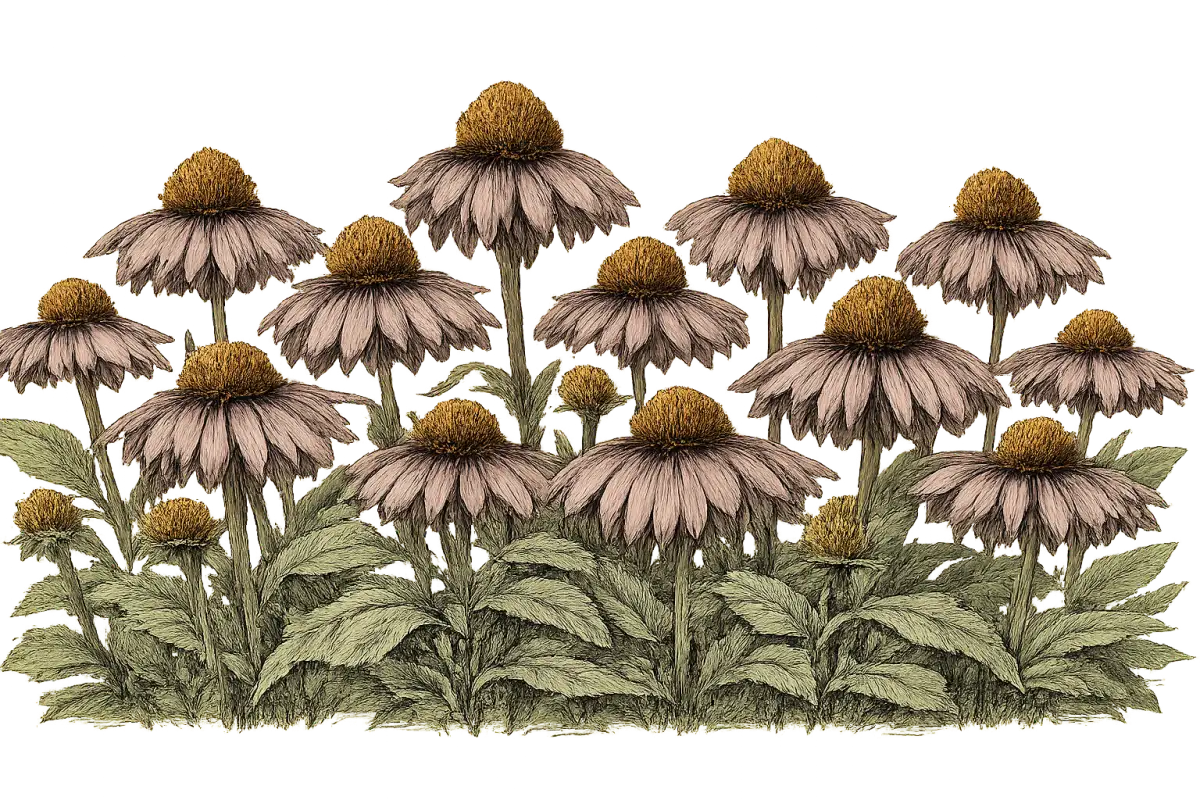
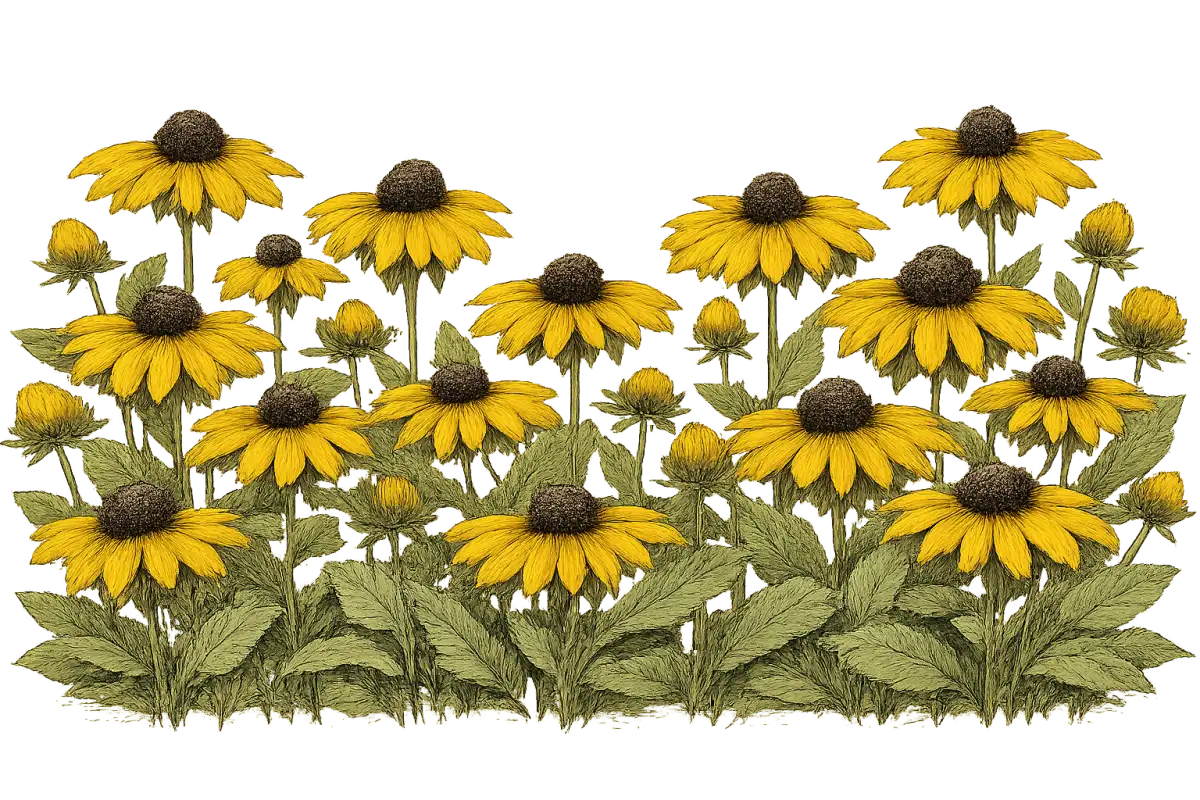
There is a particular kind of beauty in a plant that asks almost nothing of you. Coneflowers bloom in shades of magenta, rose, gold, and cream from midsummer straight through September, hold their spiny bronze seed cones through the grey weeks of December, and return every spring without fanfare — often multiplying on their own into generous, drifting colonies. They attract bees, butterflies, and goldfinches. They stand straight in drought. They look magnificent planted en masse against ornamental grasses or woven through a prairie-style border.
And yet, coneflowers are one of the plants I see fail most often in home gardens. Not because they are difficult. Quite the opposite: they fail because gardeners treat them with too much generosity. Too much water. Too much fertilizer. Too much careful mulching right up against the crown. Coneflowers evolved on the American prairie alongside drought, poor soil, grazing, and wildfire. The conditions that kill them are often the conditions well-meaning gardeners eagerly provide.
This guide is about getting out of your own way. About understanding what these plants actually are — native prairie wildflowers, not pampered perennials — and giving them the lean, sunny, well-drained environment they evolved to inhabit. Do that, and a properly planted coneflower will outlive most of the other plants in your garden by a decade.
Quick Answer: Coneflower Growing at a Glance
USDA Zones: 3 through 9 (E. purpurea); varies by species
Sun: 6+ hours of direct sunlight daily; 8+ hours is ideal
Soil: Well-drained, average to lean fertility; pH 6.0-7.0
Spacing: 18-24 inches between plants
Water: Weekly deep watering in year one; established plants need supplemental water only during 3+ weeks of drought
Fertilizer: None — ever
Crown depth: Exactly at soil level — never buried, not even 1/4 inch
Bloom time: June through September, varying by zone
Lifespan: Species types 10-20+ years; most colored hybrids 2-3 years
Key benefit: Exceptional pollinator and bird value; goldfinches feed on seedheads through winter
The Drainage Problem (Why Most Coneflowers Die Before Their Third Year)
Before anything else in this guide, understand this: crown rot kills more coneflowers than cold, heat, pests, and disease combined. It is almost entirely preventable. And it is almost entirely caused by one thing — soil that stays too wet.
Crown rot is a fungal infection caused primarily by Sclerotinia (white mold) and Phytophthora (a water mold) that attacks the crown — the junction where stems meet the root system — when it sits in consistently wet soil. The plant often looks perfectly healthy going into fall, then simply fails to emerge in spring. The crown has rotted away over winter. By the time any visible symptoms appear — mushy, dark tissue at the base, stems that pull away easily, wilting that does not recover when you water — the plant is almost always beyond saving.
This is worth sitting with for a moment, because crown rot is insidious. It does not announce itself. You water your coneflower faithfully, mulch it generously, and tuck it into a well-composted bed, and you are rewarded with a dead plant the following spring. The faithful watering, the generous mulching, and the rich bed were the problem.
Well-drained soil is the single most important factor in coneflower success. Not sunlight, not variety selection, not watering schedule — drainage. Here is what that means in practice.
If you have sandy or loamy soil, you are already in a good position. Sandy soil drains fast, which coneflowers love. Loamy soil offers the ideal balance. Rocky or gravelly soil is excellent — it actually mimics the conditions of many native Echinacea habitats. Plant directly, water at planting, and step back.
Clay soil is the problem. Clay holds moisture for days after rain or watering, creating the waterlogged conditions that invite crown rot. If your soil is moderate clay (some clay content mixed with other particles), amend the planting area — not just the planting hole — with coarse sand, perlite, and compost. Work amendments into the top 12 inches and aim for roughly one-third native soil, one-third coarse sand or perlite, one-third compost. Plant on a slight mound so the crown sits above the surrounding soil grade.
If your clay is heavy — sticky, dense, pooling water after rain — build raised beds. This is not a compromise or a workaround; it is the most reliable solution available. Beds 8 to 12 inches above grade, filled with a well-draining mix, give you complete control over the conditions crown rot depends on. If you are unsure whether your soil drains adequately, dig a hole 12 inches deep and wide, fill it with water, let it drain, fill it again, and time the second drain. Water gone within one to four hours indicates good drainage. Four to eight hours means you should amend or build raised beds. Eight hours or more means raised beds are mandatory — do not plant coneflowers in-ground at that site.
One more detail that matters as much as drainage: plant the crown exactly at soil level. The crown bud — where stems emerge from the root system — must not be buried, not even a quarter inch. Even that small amount traps moisture around the crown and creates the anaerobic conditions where Sclerotinia and Phytophthora thrive. When in doubt, plant slightly high rather than slightly deep. Look at the plant from ground level after planting and confirm you can see the crown sitting at the soil surface, not buried beneath it. After watering, check again — soil settling can bury a correctly placed crown in minutes.
And keep mulch away from the crown. Pull it back two to three inches from the stems and create a visible bare zone. Gravel or small stone mulch is superior to organic mulch for coneflowers — it does not hold moisture, does not decompose into a wet layer at the soil surface, and mimics the rocky, gravelly surface of native prairie habitats. If you use shredded bark or wood chips, that bare zone around each plant's crown is not optional.
Best Coneflower Varieties by Zone
The most important variety decision you will make has nothing to do with color. It is this: species type or hybrid? Get this right and everything else becomes easier. Get it wrong and you will spend years puzzled about why your plants keep disappearing after two summers.
Species coneflowers — the nine native Echinacea species that evolved across North American prairies — live 10 to 20 years or more with minimal care. They self-sow, quietly filling in gaps and establishing new plants without any effort from you. Self-sown seedlings are often the strongest, most vigorous plants in a garden. For permanent, low-maintenance plantings, species types are the unambiguous choice.
Starting in the early 2000s, breeders created hybrid coneflowers in nearly every imaginable color — orange, red, yellow, double-flowered, dwarf, and bicolor forms. They are visually exciting. They are also genetically predisposed to decline after two to three years. Complex hybrid genetics produce weak root systems that are far more susceptible to crown rot than species types. Most are sterile, meaning they cannot self-sow to replace themselves. This is not a cultural failure when your beautiful orange coneflower dies in year three. It is the biology of how these plants were built.
The right framework: use species types and near-species selections as the structural backbone of your garden, and treat colored hybrids as accent plants you budget to replace every two to three years. With that in mind, here is what to grow where.