Flowers

Begonias: How to Choose, Place, and Grow Them Beautifully (Whatever Your Shade)

Margaret Chen

Margaret Chen

Flower & Ornamental Specialist · Updated April 2026

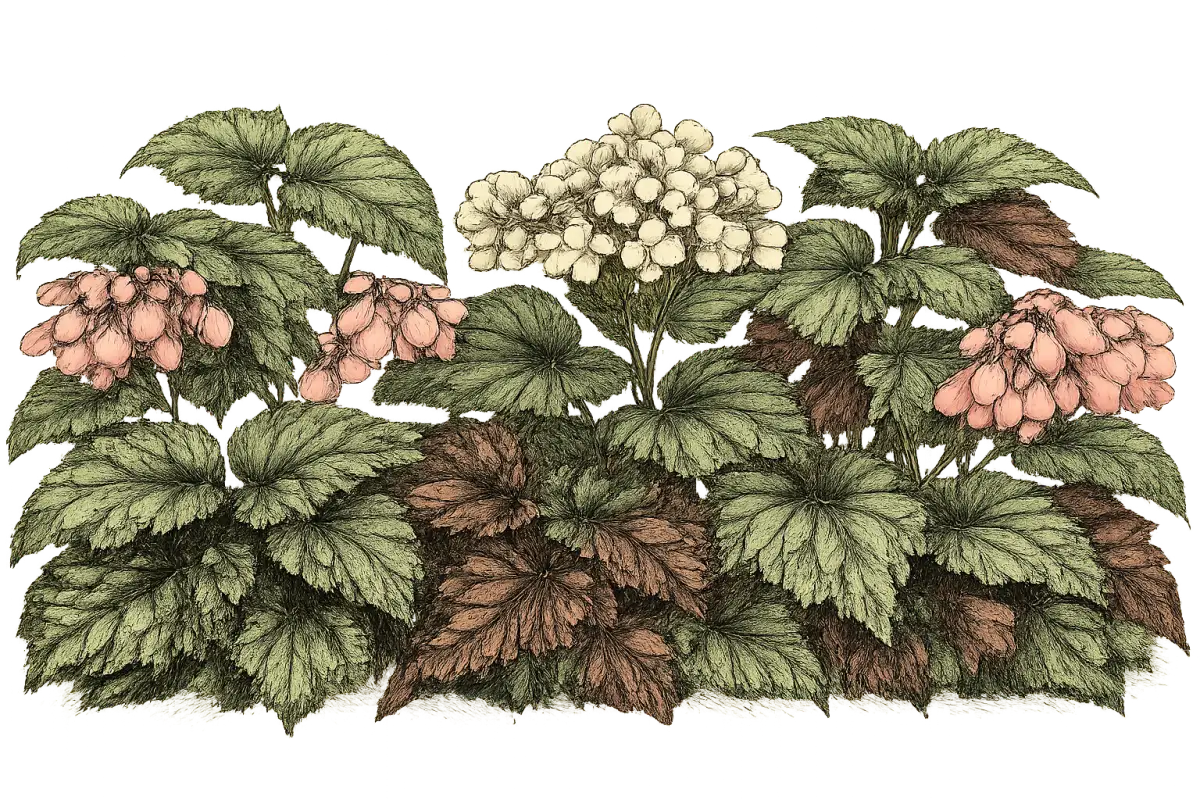
How to grow begonias — vintage botanical illustration showing the plant in detail

Begonias at a Glance

Sun

Sun

Varies by type: wax

Soil pH

Soil pH

5.5-6.5

Water

Water

Consistent moisture

Spacing

Spacing

8-18"

Height

Height

6-24 inches depending on type

Soil type

Soil

Well-draining potting mix or garden soil

Lifespan

Lifespan

Annual in most US zones

Get your personalized growing data

Enter your zip code for frost dates, growing season, and soil type.

Walk through any well-designed shade garden in July, and the odds are good that begonias are doing most of the heavy lifting. Not because they are the only option — there are plenty of shade-tolerant plants — but because they are the ones actually blooming. In the spots where roses sulk and lavender refuses to exist, begonias produce flowers in pink, coral, scarlet, orange, yellow, and white from the moment they go in the ground until the first frost blackens their stems.

And yet, for all their reputation as forgiving annuals, I watch gardeners struggle with begonias constantly. They buy the wrong type for their climate. They put shade-demanding tuberous varieties in a sunny border and wonder why the buds drop before they open. They water from above, invite every fungal disease the plant is susceptible to, and declare begonias "finicky." They plant too early, into cold soil, and rot the crown before the season even begins.

The truth is that begonias are one of the most rewarding flowering plants in the US garden palette — but only when you understand that the four main types have almost nothing in common besides the genus name. A tuberous begonia and a wax begonia require different light levels, different climates, different care, and different end-of-season treatment. Choosing between them is not a matter of preference alone; it is a matter of matching the plant to your zone, your shade level, and your willingness to dig tubers in October.

This guide walks through all of it: which type belongs in your garden, how to site and plant them for maximum color, how to water and feed without rotting them, and how to keep the good ones going year after year.


Quick Answer: Begonia Growing at a Glance

USDA Zones: 3 through 11 (type-dependent)

Light: Partial shade to full shade (type-dependent; bronze-leaf wax can handle more sun)

Soil pH: 5.5–6.5

Soil type: Rich, well-draining; loam or amended beds; never heavy clay without raised beds or amendment

Spacing: 8–12 inches for wax begonias; 12–18 inches for tuberous types

Water: Consistently moist but never waterlogged; water at the base, never overhead

Fertilizer: Balanced 10-10-10 or 20-20-20 monthly in-ground; half-strength every 2 weeks in containers

Safe outdoor planting: After nighttime temps stay above 50°F; tuberous types need soil above 60°F

Bloom season: Late spring through first frost (wax); midsummer through fall (tuberous)

Winter storage: Tubers must be dug in zones 3–9a; wax and cane types can be overwintered as cuttings

Deer resistant: Yes — all three main types are consistently rated deer-resistant


The One Decision That Determines Everything Else

Before we talk about planting or watering or fertilizing, we need to talk about type selection — because most begonia failures begin here, not in the garden bed.

There are over 1,800 begonia species, but the US garden trade organizes around four practical types: wax begonias, tuberous begonias, rex begonias, and cane (angel wing) begonias. These four groups have genuinely different requirements. Treating them interchangeably — buying whatever is on the bench at the garden center and placing it wherever you have a gap — is how you end up with scorched tuberous begonias in a sunny border or pale, stretched wax begonias in deep shade.

Wax begonias (Begonia semperflorens) are the most versatile and most widely planted type. They are mounding, compact plants that bloom continuously from transplant to frost. Their great advantage over other types is their flexibility: bronze and mahogany foliage varieties handle significantly more sun than any other begonia, making them one of the few flowering plants that bridges part-shade and full-sun conditions. They are treated as annuals in zones 3–9 and become short-lived perennials only in zones 10–11.

Tuberous begonias (Begonia x tuberhybrida) are the showpieces — plants that produce fully double blooms up to six inches across in every color from pale yellow to deep crimson. They are the reason serious shade gardeners covet begonias. They are also the most demanding type: they evolved in cool Andean cloud forests, they cannot tolerate afternoon sun in any warm zone, and they stop blooming when sustained temperatures exceed 85–90°F. In zones 3–9a, their tubers must be dug and stored every fall. Get those conditions right, and nothing in the shade garden can rival them. Get them wrong, and you will spend a summer watching expensively large buds drop to the ground unopened.

Rex begonias (Begonia rex-cultorum) are grown almost entirely for their foliage, which is among the most ornate of any cultivated plant. Leaves swirl in spiraling patterns of silver, purple, maroon, bronze, and green — sometimes all on a single leaf. The flowers are small and incidental; most gardeners remove them to keep energy in the foliage. Rex begonias are fundamentally container and houseplants in most US climates, requiring humidity above 50% consistently and tolerating zero direct sun.

Cane and Dragon Wing begonias offer the best of several worlds: vigorous growth, large wing-shaped leaves, and a heat tolerance that exceeds most other types. Dragon Wing Red and Dragon Wing Pink are particularly useful in mixed containers and hanging baskets in partially shaded spots. They are self-cleaning, easy to care for, and one of the most reliable performers for a lightly shaded porch or patio.

Know which type you are growing before you do anything else. Every other decision follows from it.


Best Begonias by Zone and Condition

Matching type to zone is not complicated, but it is non-negotiable. A tuberous begonia in Houston and a wax begonia in a Zone 3 Minnesota border are both going to disappoint — not because begonias are difficult, but because the climate requirements were not considered at the point of purchase.

What zone are you in?

Enter your zip code for frost dates, growing season, and soil type.

Cold Zones (3–5): Short Seasons, Big Rewards

In the upper Midwest, northern New England, and mountain regions, the begonia season is compressed — but the cool temperatures are actually a gift for tuberous types, which thrive precisely where summer heat does not overwhelm them.

For borders and mass plantings, wax begonias are the workhorse of zones 3–5. Long summer days compensate for the short season, and compact varieties bloom prolifically from the moment they go in the ground. The Varsity series is particularly suited to northern zones — it is early-blooming and compact, qualities that matter when your frost-free window may be only 100 days. The Cocktail series, with its bronze foliage, handles the sunnier spots in these zones without stress. The Big series brings larger flowers than typical wax types with good vigor — a beautiful choice for a border that needs visual weight.

For tuberous begonias in zones 3–5, the key is the head start. Start tubers indoors on a heat mat 6–8 weeks before your last frost date — late March for zone 5, early March for zone 4, and mid-February for zone 3 if you want to push for the full display. The Non-Stop series is the right choice for beginners and for short-season zones alike: it initiates blooms with less energy and time than older varieties, which matters enormously when your window closes in September. For hanging baskets, the Illumination series trails dramatically and is among the most spectacular shade-basket plants in existence. If you want foliage interest alongside flowers, the Mocca series brings chocolate-bronze leaves that are as ornamental as the blooms.

Rex begonias work beautifully as patio containers in zones 3–5 through summer — just plan to move them indoors by mid-September when nighttime temperatures approach 50°F.

Mid-Zones (6–7): Where Every Type Has Its Place

Zones 6 and 7 are the most versatile territory for begonias. All four types succeed here, and the decision becomes one of design intent rather than climate limitation.

For sunny-to-partly-shaded borders, bronze-leaf wax varieties carry the season with the least effort. Cocktail series handles 4–6 hours of direct sun in zone 6 without stress. In zone 7, afternoon shade protection is worth providing even for the bronze-leaf types in the hottest weeks of July and August.

For the Pacific Northwest coast — technically zones 7–9 but with the cool summers of a much colder zone — tuberous begonias find their ideal US home. The cool temperatures, persistent overcast, and maritime humidity replicate their Andean origins closely enough that plants can tolerate more light here than anywhere else in the country. An east-facing bed with 4–5 hours of morning sun that would scorch tuberous begonias in Charlotte or Atlanta may work beautifully in Portland or Seattle. Ruffled types like Santa Barbara reach their exhibition-quality potential in Pacific Northwest conditions — the elaborately frilled petals that collapse in summer heat stay pristine in cool coastal air.

For both zones 6 and 7, the shade garden design opportunity is at its richest. Tuberous begonias as mid-border focal points, backed by ostrich ferns and bleeding heart, edged with mass-planted wax begonias and lamium, is a shade combination that requires almost no design skill to look intentional and beautiful.

Warm Zones (8–9): Work With the Heat, Not Against It

This is where begonia selection becomes most important — and where the most common mistakes happen.

The signature mistake in zones 8–9 is purchasing tuberous begonias with enthusiasm in spring, watching them grow beautifully through May and June, and then waiting with increasing frustration as they stop blooming in July. This is not a failure of care. It is a failure of type selection. Tuberous begonias originated in cool Andean cloud forests and are not designed for sustained heat above 85–90°F. In the Southeast, Texas, and inland California, July and August temperatures routinely exceed this threshold for weeks at a time.

In zones 8–9, wax begonias — particularly bronze-leaf varieties — are the primary bedding plant. They handle heat significantly better than tuberous types and will carry color through the entire summer. Dragon Wing types are similarly heat-tolerant and outstanding in large containers and hanging baskets on shaded patios.

If you are determined to grow tuberous begonias in zones 8–9 (and the blooms are worth the effort), place them in deep shade — under high-canopied trees or on a north-facing patio — and plan for a mid-summer bloom gap. Reduce watering slightly during the hottest weeks. They will often resume flowering in September when temperatures drop, giving you a fall display that is genuinely spectacular. The Mocca series, with its better-than-average heat tolerance for a tuberous type, is the best choice for warm-zone gardeners attempting tuberous begonias.

The exception is the Pacific Northwest coast, where zones 8–9 coastal conditions bring cool summers that make tuberous begonias as reliable there as in zone 5 Minnesota — with the added advantage of a longer season.

Zones 10–11: Year-Round Possibilities and Specific Challenges

In South Florida, Hawaii, and coastal Southern California, wax begonias transition from annual to short-lived perennial, which changes the math considerably. A plant that blooms continuously and overwinters without storage is a compelling landscape asset, and the rich foliage colors of bronze and mahogany varieties look stunning year-round in these climates.

Rex begonias thrive outdoors year-round in sheltered spots in zones 10–11, as long as they are protected from direct sun and have access to the humidity these zones naturally provide. This is the one region where rex begonias can be used as true landscape plants rather than container houseplants.

Tuberous begonias are difficult in zones 10–11. Sustained heat prevents the dormancy break the tuber needs, which disrupts the growth cycle. For gardeners in these zones who want the dramatic flowers of tuberous types, containers that can be moved to cool, shaded spots during the hottest months offer the most control.

Quick Reference: Top Picks by Zone Group

Zone GroupTop VarietiesTypeWhy
3–5Non-Stop, Illumination, VarsityTuberous / WaxHeat-tolerant wax for borders; tuberous excel in cool summers
6–7Cocktail, Mocca, Santa Barbara (PNW)Wax / TuberousAll types viable; PNW is peak tuberous territory
8–9Cocktail, Dragon Wing, MoccaWax / CaneHeat tolerance essential; tuberous only in deep shade
10–11Any bronze-leaf wax, Rex cultivarsWax / RexPerennial wax; rex thrives outdoors year-round

Siting and Planting: Light Is the Variable That Cannot Be Corrected Later

Once you have chosen the right type, the placement decision comes next — and light is the variable that matters most. You can amend soil. You can adjust watering. You cannot move a bed that faces west once the plants are in it.

Understanding Shade Levels

The gardening industry's shade categories can be frustratingly vague. Here is how to read them practically:

Partial sun / partial shade means 3–6 hours of direct sun daily. This is the most common shade-garden condition — under trees, against east-facing walls, or on the north side of a building that still catches some morning or late afternoon light. Most begonias perform well here.

Full shade / deep shade means fewer than 3 hours of direct sun. North-facing walls, under dense evergreens, in the shadow of buildings. Only certain begonias produce good flower displays in these conditions.

Dappled shade is indirect light filtered through a tree canopy. The light level fluctuates through the day but provides no sustained periods of direct sun. This is the ideal condition for tuberous and rex begonias — it mimics their native forest habitat.

Light Requirements by Type

Wax begonias with green foliage prefer partial shade — 3 to 4 hours of direct morning sun with dappled or open shade in the afternoon. East-facing exposures are ideal.

Wax begonias with bronze or mahogany foliage can handle 4–6 hours of direct sun in zones 3–7. In zones 8–10, protect from afternoon sun even with the bronze-leaf types.

Tuberous begonias need bright, indirect shade. Dappled light under open-canopied deciduous trees is ideal. Direct afternoon sun — even an hour — causes bud drop, leaf scorch, and flower bleaching. North-facing beds, under mature trees with high canopies, and east-facing spots protected from afternoon sun all work. This is a hard limit, not a preference.

Rex begonias need bright indirect light to full shade. Even 1–2 hours of direct afternoon sun causes bleaching and leaf scorch within days. For outdoor container use, position in zero direct sun. Indoors, a bright north or east window works; south windows need sheer curtains.

Dragon Wing and cane types tolerate morning sun comfortably and need shade from afternoon sun, especially in zones 7 and warmer.

Planting Timing by Zone

The most important timing rule for begonias is also the most violated: do not plant until nighttime temperatures stay reliably above 50°F. Cold, wet soil promotes crown rot before the season even begins, and plants set back by cold soil never quite catch up.

For tuberous begonias specifically, wait until soil temperature is above 60°F at 4-inch depth. Tuberous types planted into cold soil will stall, yellow, and may rot at the crown. In zones 3–5, where waiting means not planting until late May or early June, start tubers indoors on a heat mat 6–8 weeks before your target outdoor date.

General safe outdoor plant dates by zone: early June in zone 3; late May in zone 4; mid-May in zone 5; late April in zone 6; early April in zone 7; late March in zone 8; early March in zone 9. Zones 10–11 can plant year-round.

The Planting Process

In-ground planting: Prepare soil to 8–10 inches deep. Work in 2–3 inches of compost or aged leaf mold if soil is heavy or poor. Space wax begonias 8–12 inches apart; tuberous types 12–18 inches. Plant at the same depth as the nursery container — do not bury the crown. Water thoroughly at planting, then mulch with 1–2 inches of shredded leaf or bark mulch. Keep mulch 2 inches away from the stem base; mulch piled against the crown traps moisture and invites rot.

In containers: Use a well-draining potting mix — roughly 60–70% peat-based or coir-based mix, 20–25% perlite, and 10–15% compost or bark fines. Drainage holes are non-negotiable. Container size matters: 8–10 inch diameter for individual wax or rex types, 12–14 inches for tuberous begonias, 16 inches or larger for Dragon Wing. Terracotta pots offer a natural advantage for begonias by allowing some evaporation through the walls, which reduces the risk of overwatering.

A note on clay soil: Clay is begonias' primary enemy in-ground. It holds water, compacts easily, and creates the saturated conditions that cause crown rot. In heavy clay sites, work in 3–4 inches of coarse compost or perlite to 10–12 inch depth, or skip the amendment entirely and grow in raised beds or containers. The effort of battling severe clay may not be worth it when containers give you complete control.


Soil, Water, and the Narrow Band Between Too Dry and Too Wet

If there is a second principle that governs begonias after light, it is this: consistent moisture without saturation. Begonias rot quickly — sometimes within 48 hours — when drainage fails. Yet they also do not recover well from severe drying. The target is a genuinely narrow band, and most begonia problems trace back to missing it in one direction or the other.

The Right Soil

The ideal begonia soil is rich, well-draining, and slightly acidic. The target pH range is 5.5–6.5 — a range that most US garden soils fall within naturally, though it is worth testing before planting in alkaline regions like the Midwest, Mountain West, and Southwest. If pH runs above 6.5, incorporate elemental sulfur or acidic compost; if it falls below 5.5 (sometimes in Pacific Northwest or Southeast sites), a small amount of lime corrects it.

Loam is the easiest starting point — add 2 inches of compost at planting and begonias will thrive with minimal further amendment. Sandy soils drain well but are nutritionally thin; work in 3–4 inches of compost to improve water and nutrient retention. Clay, as noted, needs serious intervention or a switch to containers entirely.

How to Water

Water at the base of the plant, never from above. This is the single most important watering technique rule for begonias, and ignoring it is the leading cause of bacterial leaf spot, botrytis gray mold, and powdery mildew. Wet foliage in a shaded, partially still environment can stay wet for hours — long enough for pathogens to establish. Use a watering wand, drip irrigation, or soaker hose aimed at the soil. If you cannot avoid overhead irrigation, do it in the morning so foliage has time to dry through the day.

The technique: Push a finger one inch into the soil. If it feels moist, wait. If it feels dry at one inch, water thoroughly until the top 6 inches of in-ground soil are evenly moist, or until water runs freely from container drainage holes. Then wait again.

Wax begonias in-ground typically need water every 2–3 days in hot summer conditions in sandy soil, or every 4–5 days in loam. Container wax begonias may need daily checking in summer heat — containers in direct sun can dry in 24 hours. Tuberous begonias are more moisture-sensitive than wax types; yellow lower leaves, soft stems, and wilting despite moist soil are early signs that overwatering has begun. Rex begonias react poorly to both extremes — overwatering causes leaf drop and rot, while underwatering combined with low humidity produces the crispy brown leaf edges that are often misattributed to pests.

The paradox worth remembering: overwatering produces wilting. When a begonia wilts, the instinctive response is to water it. If the soil is already moist, more water will kill it. Check the soil before you pick up the watering can.

Fertilizing

Begonias are moderate feeders. The goal is steady, consistent nutrition — not heavy feeding. Too much nitrogen produces lush, disease-susceptible foliage at the expense of flowers.

In-ground plants: Apply a balanced, slow-release granular fertilizer (10-10-10 or similar) at planting, then follow with a balanced liquid fertilizer once a month through the growing season.

Container plants: Fertilize every 2 weeks with a half-strength balanced liquid fertilizer (20-20-20). Containers flush nutrients quickly with regular watering, which is why more frequent but lighter feeding is appropriate.

Tuberous begonias in peak bloom: Shift to a fertilizer higher in phosphorus — a 5-10-5 or bloom booster formula — to encourage more and larger flowers. Phosphorus drives root development and flowering; a higher-nitrogen formula during bloom season pushes the plant toward foliage at exactly the wrong time.

Stop feeding in late August or early September. For tuberous begonias specifically, cease fertilizing 4–6 weeks before digging to allow the tuber to harden properly for storage.


Designing with Begonias: How to Make a Shade Garden That Actually Works

This is the part I find most interesting — not just keeping begonias alive, but using them well. A shade garden built around begonias can be one of the most composed, sustained-color spaces in residential gardening. The key is layering types and companions so that something is always happening, and so that the begonias themselves are the flowering anchor among contrasting textures.

The Three-Tier Shade Border

The most reliable shade garden structure works in tiers, with begonias occupying the middle and lower layers:

Ground level (0–12 inches): Mass-planted wax begonias form the continuous-color edge. Pair them with lamium for silver-marked foliage that reads as bright in deep shade, or creeping Jenny for yellow-green contrast that plays off the warm tones of rose and coral begonia flowers.

Mid-layer (12–30 inches): Tuberous begonias work here as focal flowering plants — one or three at a time, not massed, where their individual blooms can be seen clearly. Coleus makes a natural companion at this tier, offering bold foliage in burgundy, chartreuse, and copper that complements every begonia color. Coral bells (Heuchera) in amber and bronze tones adds a low-maintenance foliage note that persists even when flowers are between cycles. Astilbe's feathery plumes in midsummer bridge the gap between spring bulbs and midsummer begonia peak.

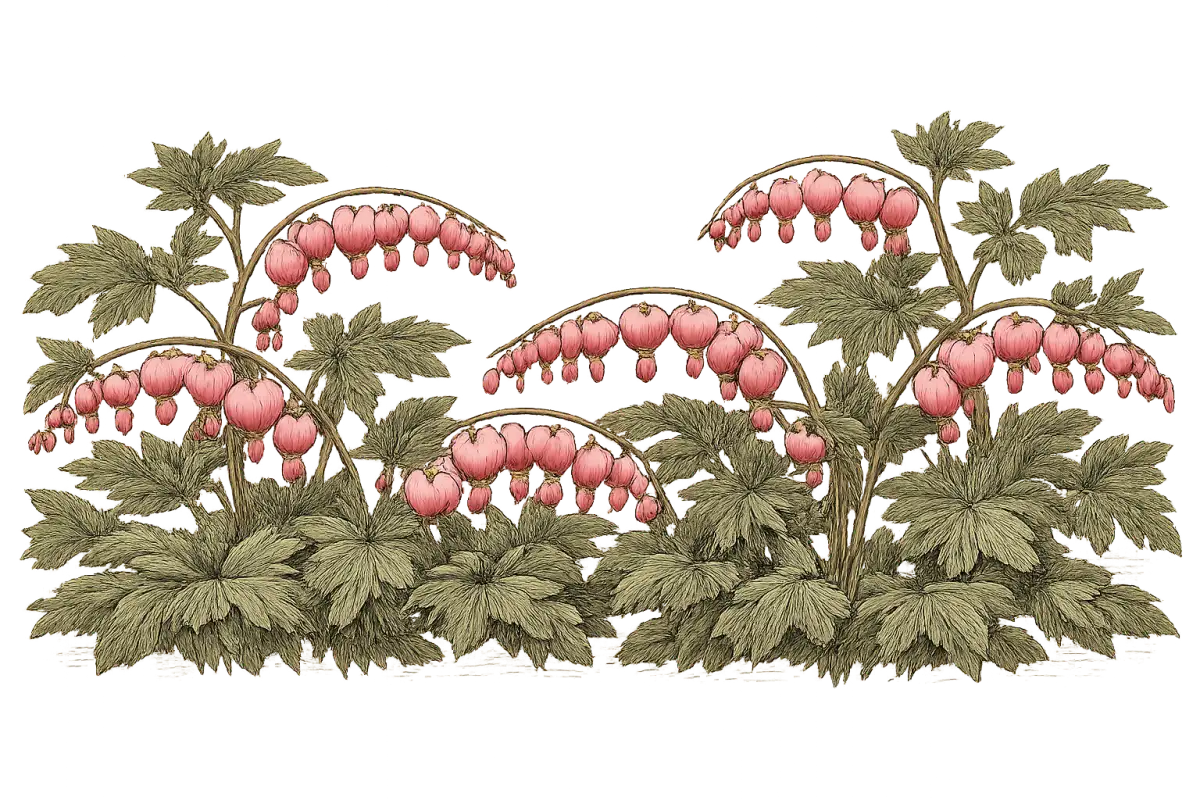
Background and structure (30+ inches): Ferns provide the airy textural backdrop that makes everything in front of them look more deliberate. Ostrich, cinnamon, and autumn ferns all thrive in the same partial shade and consistent moisture that begonias need, and all are reliably deer-resistant. Bleeding heart (Dicentra spectabilis) offers exquisite spring interest and then goes dormant by midsummer — precisely when begonias are hitting their stride. The succession is seamless.

A Note on Color in Shade

Color behaves differently in low light than it does in sun, and choosing begonia colors with that in mind makes a meaningful difference.

White and pale pink varieties appear to glow in shade — they reflect ambient light and brighten dark corners in a way that saturated colors cannot. In deep shade situations, white tuberous begonias or white-flowered Non-Stop types function almost architecturally, becoming the point of brightness around which everything else is arranged.

Dark red and crimson varieties, while beautiful, absorb the limited light in deep shade and visually recede. Reserve them for positions with at least partial light, where the intensity of the color can be properly seen.

Silver-marked rex begonias function like living reflectors in dark spots — their metallic leaf surfaces bounce indirect light around shaded corners and add a luminosity that purely green-foliaged plants cannot provide. In a deeply shaded patio container, a large 'Escargot' rex begonia with its spiraling silver-and-green leaves is both a focal point and a light-amplifier. 'Fireworks', with deep purple-maroon leaves marked in silver, and 'Red Kiss', with its rich burgundy intensity, are equally effective in positions with enough indirect light to show their colors.

Designing for Deer Pressure

Begonias are consistently rated deer-resistant by Clemson Extension, Rutgers, and state university cooperative extensions across the country. The waxy, slightly hairy leaf texture and alkaloid compounds deter browsing in most suburban and rural garden situations. All three main types — wax, tuberous, and rex — share this resistance.

This makes begonias particularly valuable as the reliable flowering component of a deer-resistant shade garden. Build around them with ferns (nearly universally avoided by deer), astilbe, bleeding heart, brunnera macrophylla, hellebores, and coral bells. Avoid hostas and impatiens — hostas are actively sought by deer, and impatiens have mixed deer resistance, particularly in high-pressure areas.

For spring bulb interest in deer-pressure gardens, daffodils, alliums, and snowdrops are among the few flowering bulbs deer consistently ignore. A shade bed sequence of daffodils in spring → bleeding heart in May → tuberous begonias in July → astilbe in August covers nearly the full season with plants deer will not touch.
What zone are you in?

Enter your zip code for frost dates, growing season, and soil type.


Pests, Diseases, and the Problem That Looks Like Both

Begonias are relatively pest-resistant compared to many flowering annuals, but they are meaningfully susceptible to fungal and bacterial diseases — almost all of which are caused or worsened by wet conditions. The disease prevention strategy for begonias is therefore the same as the watering strategy: keep water off the foliage, maintain airflow between plants, and never let soil stay saturated.

The Four Diseases That Matter

Powdery mildew appears as a white to grayish powdery coating on leaf surfaces, typically starting on older leaves. Unlike most fungal diseases, it does not require wet leaf surfaces — it thrives in warm days paired with cool, humid nights, which makes it most common in the humid Southeast and in densely planted shade beds with limited airflow. Remove infected leaves, improve air circulation, and apply neem oil, potassium bicarbonate, or sulfur-based fungicide on a 7–10 day interval while conditions remain favorable. In humid zones (7–9, Southeast), spacing plants 10–15% wider than the minimum recommendation makes a genuine difference.

Botrytis blight presents as gray, fuzzy mold on flowers, leaf tips, or stems — particularly on dying or damaged tissue. It is most problematic in cool conditions (50–65°F), high humidity, and dense foliage, which makes spring and fall, and the Pacific Northwest year-round, the high-risk periods. Remove all affected material immediately (do not compost it), improve ventilation, and apply fungicide (copper-based products work as preventive applications) on 7-day intervals during risk periods. The primary entry point for botrytis on begonias is dead flowers — removing spent blooms promptly is the single most effective prevention.

Stem rot and crown rot are the most lethal begonia problems because they destroy the plant's vascular system before external symptoms are obvious. Caused by Pythium, Phytophthora, Rhizoctonia, and related water molds, crown rot presents as soft, brown, mushy tissue at or just below the soil line. The plant may wilt suddenly without warning. There is no effective cure once established — remove and discard the entire plant, replace surrounding soil in containers, and sanitize the pot. This is entirely preventable through correct watering, well-draining soil, and never letting containers sit in standing water.

Bacterial leaf spot produces small, dark, water-soaked spots on leaves with yellow halos. In humid conditions, spots expand rapidly and coalesce into large areas of dead leaf tissue. There is no effective curative spray — copper-based bactericides can slow spread if applied early, but the real prevention is keeping foliage dry. This disease spreads in water: from rain splash, overhead irrigation, and handling wet plants. Spacing plants adequately and watering at the base eliminates most risk.

Insect Pests

Mealybugs appear almost exclusively on indoor and container-grown rex begonias as cottony white clusters in leaf axils. Early infestations respond to a cotton ball dipped in isopropyl alcohol; moderate infestations need insecticidal soap or neem oil applied thoroughly to all plant surfaces and repeated every 5–7 days for three treatments. Quarantine new plants for 2 weeks before placing them near established plants — mealybugs arrive on infested nursery stock more often than any other route.

Scale affects cane and rex begonias grown as houseplants, appearing as small waxy tan or brown bumps on stems at nodes. Scrape visible scale with a soft toothbrush and apply neem oil to all stem surfaces; repeat treatments are necessary since scale has protected life stages that resist single applications.

Aphids occasionally appear on outdoor wax begonias in spring on tender new growth. A strong stream of water from a hose handles most infestations; natural predators typically control them without further intervention on healthy outdoor plants.

When the Problem Is Not a Disease at All

The most common misdiagnosis in begonia care is applying fungicide or insecticide to a plant that has an environmental problem. Before reaching for any spray, work through this diagnostic sequence:

Is the plant getting direct sun it cannot tolerate? Brown patches on sun-exposed leaves are sun scorch, not disease. Is the soil consistently moist but not wet? Yellow lower leaves plus a soft stem base indicate overwatering. Crispy brown edges with dry soil indicate underwatering. Are indoor plants near an air conditioning vent or a drafty window? Begonias drop leaves in cold drafts regardless of watering. Is the rex begonia showing crispy edges despite adequate watering? Check humidity — the indoor air around it should be above 50%.

Most environmental problems are resolved by correcting the condition. No spray needed.


Overwintering: Tuber Storage, Cuttings, and the Annual/Perennial Decision

The end-of-season question for begonias is really two separate questions: whether to save what you have, and how. The answers differ by type and by zone.

The Tuberous Begonia Storage Decision

The decision of whether to dig and store tuberous begonia tubers is worth making deliberately. A mature tuber produces more and larger flowers each successive season — a 3-year-old tuber will significantly outperform a first-year plant. Large exhibition tubers capable of producing 4–6 inch blooms take multiple seasons to develop and cannot be replaced cheaply. If you have invested in premium varieties not readily available at local garden centers, storage is almost certainly worth the effort.

On the other hand, the Non-Stop series and other compact tuberous varieties are inexpensive ($2–5 per tuber in spring) and widely available as nursery transplants. Replacing them annually is cost-effective, and tuber storage requires specific temperature conditions (40–50°F, consistently) that many homes cannot provide. Beginners lose a significant percentage of tubers in their first storage attempts — which eliminates the benefit entirely.

The pragmatic guidance by zone: storage is often worthwhile in zones 3–5 if you have premium varieties, because the short growing season makes a head-start mature tuber particularly valuable. In zones 6–7, either approach works and personal preference should guide the decision. In zones 8–9a, most gardeners treat tuberous begonias as annuals.

The Storage Protocol

When to dig: Wait for the first light frost to blacken the foliage. Do not dig early — the foliage is still photosynthesizing and sending energy to the tuber until frost ends the growing season. Digging early reduces stored energy reserves.

After frost blackens the foliage, cut stems back to 2–3 inches above soil level. Leave the stubs — they handle the tuber without direct touch and separate cleanly when curing is complete.

Digging: Use a garden fork, working from 6–8 inches away from the plant base to avoid cutting through the tuber. Brush off loose soil with your hands. Do not wash.

Curing: Place tubers in a single layer in a dry, airy location at 60–70°F for 1–2 weeks. When the stem stub removes with gentle pressure (it twists off cleanly), curing is complete. Inspect every tuber — discard any that feel soft, show rot spots, or smell foul. They will spread rot to healthy tubers in storage.

Storage conditions: 40–50°F is the critical temperature range. Above 55°F, tubers break dormancy and exhaust their reserves before spring. Below 38°F, tuber tissue can be damaged. A root cellar is ideal; an unheated garage works in zones 5–7 where temperatures stay above freezing; a cool basement may work in older homes where basement temperatures run 45–55°F. An old refrigerator in a garage set to 40–45°F is excellent.

Pack tubers in dry peat moss, vermiculite, or dry sawdust. Do not let tubers touch — contact is how rot spreads between them. Check every 4–6 weeks, removing any soft or rotting tubers immediately. If tubers appear shriveled, mist the packing material very lightly — do not wet the tubers themselves.

Restarting in spring: Begin 6–8 weeks before your last frost date. Place tubers hollow-side up in barely moist potting mix — the concave side is the top, the rounded side goes down. This orientation matters; planting upside down delays emergence significantly. Cover barely, no more than half an inch of mix. Keep at 65–70°F; a heat mat set to 68°F accelerates sprouting. Sprouts emerge in 2–4 weeks.

Overwintering Wax, Rex, and Cane Begonias

Wax begonias can be overwintered as houseplants with surprisingly little effort. Take 4–6 inch stem cuttings in early September before frost, root them indoors in moist perlite, and maintain as compact houseplants through winter. They can be returned to the garden next spring or used as cutting stock for additional plants. This is most practical for prize varieties or for gardeners in zones 3–4 who want to avoid the annual cost of new transplants.

Rex begonias should move indoors before nighttime temperatures drop below 50°F, to the brightest available indirect-light location — a north or east window or under grow lights. Reduce watering to every 7–10 days through winter and resume normal care in March when days lengthen.

Dragon Wing and cane begonias bring indoors before frost, cut back by one-third to one-half to manageable size. Dragon Wing in particular maintains attractive growth indoors through winter with adequate light.


The Top Mistakes That Ruin Begonias (and the Specific Fixes)

Begonias fail in predictable ways. Here are the mistakes I see most often, ranked roughly by how frequently they cause actual plant death or loss of bloom.

Watering from above is the fastest route to disease on begonias. Wet foliage in a shaded environment stays wet for hours, creating ideal conditions for bacterial leaf spot, botrytis, and powdery mildew. The fix is simply method: use a watering wand aimed at the soil, or drip irrigation. If you must use overhead irrigation, morning is the only time — foliage has the full day to dry.

Overwatering kills more begonias than underwatering. The symptoms of overwatering — yellow lower leaves, soft stem base, wilting despite moist soil — are easy to diagnose once you know to look for them. The wilting-despite-moist-soil paradox trips up the most gardeners: they see wilting and add more water, accelerating the death spiral. If the soil is moist and the plant is wilting, the problem is root rot from previous overwatering, and additional water will hasten death. Let the soil partly dry, check for and remove rotten roots, and repot in fresh, dry mix with added perlite.

Placing tuberous or rex begonias in direct sun is a placement error that becomes obvious only after the damage is done. Bleached or tan patches on leaves, bud drop on tuberous types, and stressed appearance despite adequate water are all symptoms. The fix is simply a better spot — bright indirect light, dappled shade under high-canopied trees, or an east or north-facing exposure that never receives direct afternoon sun.

Planting too early in cold soil produces plants that sit without growing, yellow, and may develop soft, rotting crowns. The single rule: wait until nighttime temperatures stay reliably above 50°F. For tuberous types, wait for soil temperatures above 60°F at 4-inch depth. Buying transplants early and keeping them in a sunny indoor spot or cold frame until conditions are right is far better than planting them out into cold, wet ground.

Using tuberous begonias in hot-summer zones without a plan is the predictable disappointment. If you are in zones 8–9 outside the Pacific Northwest coast and you plant tuberous begonias in a standard mixed border, they will stop blooming in July. This is not failure — it is biology. Use wax begonias (particularly bronze-leaf varieties) as the primary summer bedding plant in hot zones, and if you want tuberous types, place them in deep shade with full awareness of the mid-summer bloom gap.

Skipping deadheading on tuberous types allows seed pods to develop, which diverts energy from flower production. Tuberous begonias produce both large showy male flowers and smaller female flowers with seed pods. Remove spent male flowers and any developing female flowers or pods promptly. (Wax begonias are self-cleaning and need no deadheading.)

Over-fertilizing with nitrogen produces lush, dark foliage and few flowers, while making soft new growth more susceptible to disease. Use a balanced fertilizer (10-10-10 or 20-20-20) for general growth, and shift to a higher-phosphorus formula (5-10-5 or a bloom booster) when tuberous begonias are in active bloom. Lawn fertilizers and high-nitrogen formulas (30-10-10) are the wrong choice for flowering begonias.

Neglecting tuber storage conditions results in tubers that arrive at spring either shriveled from desiccation or black from rot. The two most common errors are storage temperatures above 55°F (which causes premature sprouting) and any moisture in the storage medium (which promotes fungal rot). The fix: pack tubers in truly dry peat moss, vermiculite, or sawdust; store at 40–50°F; keep tubers in single layers without touching each other; and check every 4–6 weeks.


Propagating Begonias: How to Make More of What You Love

Begonias are among the most rewarding plants to propagate. They root quickly from cuttings, generate multiple new plants from a single leaf, and divide readily. The method depends entirely on the type.

Stem cuttings are the universal method for wax begonias, Dragon Wing, and cane types. Take 4–6 inch cuttings below a node on a healthy, non-flowering stem. Remove leaves from the bottom half, leaving 2–3 leaves at the top. Root in moist perlite or vermiculite under a humidity tent at 65–75°F; roots form in 2–4 weeks. Rooting hormone (IBA at 0.1–0.3%) speeds the process by 1–2 weeks. Late summer is the ideal time for overwintering cuttings — take them before bringing plants indoors, root them while the parent plant finishes its outdoor season.

Leaf cuttings are the remarkable technique specific to rex and rhizomatous begonias. A single mature rex begonia leaf can produce 10 or more new plants. Select a healthy, mid-age leaf, turn it face-down, and cut straight across the major veins at 1-inch intervals. Lay the leaf face-up on moist perlite or seed-starting mix, pin it flat so the cut veins contact the medium, and cover with a clear humidity dome. Keep at 70–75°F in bright indirect light. New plantlets emerge from each cut-vein contact point in 4–8 weeks. Separate and pot individually when plantlets reach 1–2 inches tall.

Tuber division works for tuberous begonias in spring when tubers are starting to sprout. Using a clean, sharp knife, cut the tuber so each piece has at least one sprout and a portion of the fleshy tuber body. Dust all cut surfaces with powdered sulfur or let dry for 24 hours to reduce rot at the cut face. Divisions are more vulnerable to rot than intact tubers — water very lightly until active leaf growth establishes. Divided tubers may bloom less heavily in their first season but will build up over successive years.

Seed is technically possible for wax begonias but practically challenging for home gardeners. Begonia seeds are dust-like — a packet may contain fewer than 100 seeds, each smaller than a grain of sugar. Germination takes 2–3 weeks at 70–75°F with consistent humidity under grow lights; seedlings require 12–16 weeks to reach garden-ready size. Most home gardeners purchasing wax begonia transplants are buying F1 hybrid varieties that produce uniformly consistent plants — commercially produced under controlled greenhouse conditions that are difficult to replicate at home.

What zone are you in?

Enter your zip code for frost dates, growing season, and soil type.


Frequently Asked Questions

Can I Grow Begonias in Full Shade?

It depends on the type. Tuberous begonias and rex begonias tolerate deeper shade than most flowering plants — in fact, these are the types to reach for in genuinely full-shade conditions. Wax begonias will survive in deep shade but bloom less prolifically, and bronze-leaf varieties need more light to maintain their foliage color. Dragon Wing begonias need more light than tuberous or rex types and are not suited to deep shade. The practical answer: for full-shade beds, start with tuberous begonias (Non-Stop series is bred for better low-light flowering), add rex begonias as foliage accents, and use wax begonias only if there is at least 2–3 hours of ambient or indirect light.

Why Are My Tuberous Begonia Buds Dropping Without Opening?

Almost always, direct sun or extreme heat is the cause. Tuberous begonias drop buds when exposed to direct afternoon sun — even an hour — or when sustained daytime temperatures exceed 85–90°F. If your plant is sited in full shade, inconsistent watering can also cause bud drop. Check the placement first: is any direct sun reaching the plant between noon and 6 PM? If so, that is the problem. Move to a position with zero direct afternoon sun. If placement is correct, check soil moisture — tuberous begonias want consistently moist soil and will drop buds when stressed by drying.

What Is the Best Begonia for a Hanging Basket?

The Illumination series of trailing tuberous begonias and Dragon Wing Red or Dragon Wing Pink are the top choices. Illumination trails dramatically, with flowers that cascade over the basket edge in single colors from white through deep orange-red. It is the classic choice for a shaded porch basket where you want maximum visual impact. Dragon Wing is the choice when you need heat tolerance along with good looks — it performs better in warm-zone summers than tuberous types and is self-cleaning (no deadheading). For a partially shaded basket where foliage interest matters as much as flowers, a Dragon Wing as centerpiece with trailing rex begonias at the edges is a sophisticated combination.

How Do I Know If My Tuber Is Still Alive After Winter Storage?

Press the tuber gently with your fingers. A healthy, viable tuber feels firm throughout — like a dense, slightly waxy root vegetable. A dead or dying tuber feels soft, mushy, or hollow in spots. Minor shriveling is not necessarily a death sentence — if the tuber is uniformly firm but slightly shriveled, it is likely dehydrated from storage and will plump back up once planted in barely moist potting mix and given warmth. If sprouts have not emerged 3–4 weeks after placing the tuber in warm conditions hollow-side up, try carefully scratching the surface with a fingernail — living tuber tissue is cream or pale tan underneath; dead tissue is brown or black.

Do Begonias Come Back Every Year?

It depends on type and zone. Wax begonias are perennial only in zones 10–11; everywhere else, they are grown as annuals and replaced each spring. Rex begonias are perennial as container plants and houseplants in most zones, and outdoors year-round in zones 10–11. Tuberous begonias are perennial in zones 9b–11 (where tubers stay in the ground year-round) and in zones 3–9a with annual digging and storage. Cane and Dragon Wing begonias can persist as houseplants year after year when overwintered indoors.


The Bottom Line

Begonias are not one plant. They are a family of plants with different personalities, different climate tolerances, and different design roles — and choosing among them thoughtfully is what separates a shade garden that glows from one that merely survives.

Match the type to your zone and light conditions. Give wax begonias the sun-to-part-shade situations they are built for. Give tuberous begonias the cool dappled shade their Andean heritage demands. Use rex begonias where foliage needs to carry the design through seasons when flowers are elsewhere. Water at the base, never overhead. Keep soil moist but never saturated. And in zones where summer heat ends the tuberous begonia season too early, switch to bronze-leaf wax varieties without apology — they were designed for exactly that situation.

Done right, a begonia planting is one of the most composed and sustained-color sequences available to the shade gardener. White tuberous blooms glowing in a north-facing bed alongside silver-marked brunnera. A patio container anchored by a spiraling 'Escargot' rex with Dragon Wing cascading at its feet. A border edge of mass-planted coral wax begonias that has been in continuous flower since May and will not stop until November.

That is what begonias do when they are placed well. Choose your type, site it correctly, and let them do the rest.

Research for this guide draws on sources including Clemson Extension deer-resistance ratings, Rutgers University plant resistance data, and state university cooperative extension planting guides across multiple zones. Variety performance information is drawn from cultivar trial data and field performance records.

Where Begonias Grows Best

Begonias thrives in USDA Zones 5, 6, 7, 10. Explore each zone's complete guide for growing tips, companion plants, and seasonal advice.

Also possible in: Zone 3, Zone 4, Zone 8, Zone 9 (challenging but possible with the right conditions).

Not sure of your zone? Look it up by zip code →