Shrubs

Butterfly Bush: What the Plant Tag Won't Tell You About Placement, Pruning, and Picking the Right One

Tom Bridger

Tom Bridger

Tree & Shrub Specialist · Updated April 2026

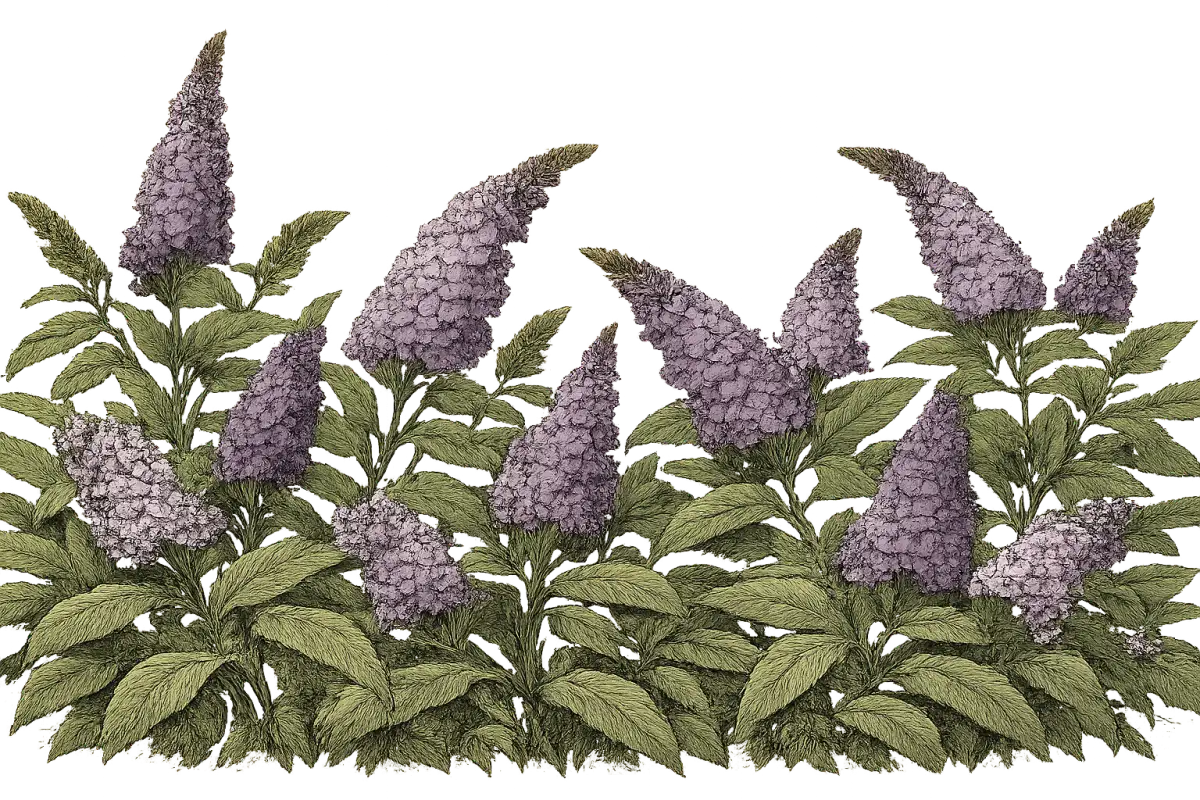
How to grow butterfly bush — vintage botanical illustration showing the plant in detail

Butterfly Bush at a Glance

Sun

Sun

6-8+ hours full sun

Soil pH

Soil pH

6.0-7.0

Water

Water

Drought tolerant once established

Spacing

Spacing

36-120 inches depending on variety"

Height

Height

2-12 feet depending on variety

Soil type

Soil

Well-drained soil

Lifespan

Lifespan

perennial

Get your personalized growing data

Enter your zip code for frost dates, growing season, and soil type.

I have watched a lot of gardeners walk out of nurseries with a butterfly bush in one hand and a completely reasonable set of expectations in the other -- and then seen both collapse within a couple of seasons. Not because butterfly bush is difficult. It is genuinely one of the easiest flowering shrubs you can grow. The problem is that it wants the exact opposite of what most people give it.

Most gardeners treat it like a hydrangea. Rich soil, regular watering, a gentle trim in autumn when they're cleaning up the beds. That combination will give you a waterlogged root system, a towering floppy mess of stems, and a plant that is quietly dying from the crown up. Butterfly bush evolved on rocky, sun-baked mountain slopes in China. It wants lean soil, minimal water once it's settled in, and an annual hard cutback that looks alarming the first time you do it.

There is a second problem that goes beyond care, and it matters before you buy: the traditional varieties of butterfly bush are invasive. A single fertile plant produces up to 3 million wind-dispersed seeds per year. Those seeds colonize roadsides, riverbanks, and disturbed natural areas. Oregon has banned the sale of fertile varieties outright since 2009. Washington lists them as a noxious weed in multiple counties. This is not a fringe concern -- it is why plant selection, more than any other decision, determines whether you are gardening responsibly with this plant.

The good news is that modern breeding has largely solved this problem. Sterile cultivars are widely available in every size, color, and price point. There is genuinely no longer a reason to plant a fertile variety. And once you know which sterile varieties belong in your zone and your garden's space, butterfly bush rewards you with one of the longest bloom windows of any flowering shrub -- midsummer through hard frost, covered in fragrant panicles that pull butterflies and hummingbirds in from what feels like miles away.

This guide covers everything you need to get it right the first time.


Quick Answer: Butterfly Bush Growing at a Glance

USDA Zones: 5 through 9

Sun: Minimum 6 hours direct sun daily; 8+ hours is ideal -- no exceptions

Soil: Well-drained, lean to moderately fertile; sandy, loamy, or rocky preferred; clay requires amendment

Soil pH: 6.0-7.0 preferred; tolerates 5.5-7.5

Water: Deep and infrequent; drought tolerant once established; overwatering is the #1 killer

Fertilizer: One application of balanced slow-release (10-10-10) in early spring -- that is all

Pruning: Hard cutback to 6-12 inches from ground, every late winter/early spring

Planting timing: Spring only in zone 5; spring preferred in zone 6; spring or fall in zones 7-9

Bloom season: July through frost in zones 5-6; June through November in zone 9

Growth rate after pruning: 12-18 inches per month once actively growing

Sterile varieties required: Yes -- plant only Lo & Behold, Pugster, Bloomify, Miss Huff, Asian Moon, or New Gold series


The Drainage Problem (And Why It Kills More Plants Than Anything Else)

Before we talk about varieties, zones, or pruning, I need you to understand this: butterfly bush does not die from neglect. It dies from kindness.

Specifically, it dies from wet roots.

This plant evolved in rocky, well-drained mountain conditions where water moves through quickly and soils are naturally lean. When you put it in heavy clay, plant it in a low spot where water collects, or water it on the same schedule as your roses, you create the conditions for root rot -- and root rot in butterfly bush is fast, catastrophic, and almost never salvageable once it takes hold. The plant wilts despite wet soil. Leaves yellow and drop. Stems go soft at the base. By the time you see those symptoms, the roots are already brown and mushy.

The cruelest part is that the wilting looks like drought stress. The natural response is to water more. That accelerates the death spiral.

So the first thing to do before you plant -- before you even buy a plant -- is test your drainage. Dig a hole 12 inches deep and 12 inches wide at your intended planting location. Fill it with water, let it drain, then refill it and time the second drain. If it takes under an hour, you have excellent conditions. One to four hours is acceptable. Four to eight hours is marginal -- raise the bed 6-8 inches or choose a different location. Over eight hours is a hard no. That site will kill a butterfly bush, and no amount of care will compensate for it.

Clay soil is not automatically disqualifying, but it requires a specific fix. The right approach is to raise the planting bed 6-8 inches above existing grade, or to create a drainage layer of gravel or crushed stone beneath the root ball. What does not work is amending only the planting hole with compost. That creates a bathtub effect -- water flows into the amended pocket from the surrounding clay and sits there. And whatever you do, do not add fine sand to clay. The result is something close to concrete.

One more thing about soil fertility, because it catches people off guard: lean soil actually improves flowering on butterfly bush. Rich, nitrogen-heavy soil produces lush green foliage at the expense of blooms. This is a plant that does better when it struggles a little. Do not amend the planting hole with compost or manure. Do not apply lawn fertilizer anywhere near it. One application of balanced slow-release fertilizer (10-10-10) in early spring is all this plant needs -- and in naturally rich garden soil, you can skip even that.


Best Butterfly Bush Varieties by Zone

The sterility question shapes every variety decision, so let me state it plainly before getting into zone specifics: only plant sterile or low-seed cultivars. The Lo & Behold series, the Pugster series, the Bloomify series, Miss Huff, Asian Moon, and New Gold are all sterile or near-sterile and legal everywhere, including Oregon and Washington. Traditional varieties like Black Knight, Royal Red, and White Profusion produce millions of seeds annually. If you already have one, committed deadheading of every spent panicle is the minimum responsible response. If you are buying new, there is no reason to start with a fertile variety.

With that established, here is what to plant where.

What zone are you in?

Enter your zip code for frost dates, growing season, and soil type.

Cold Zones (5-6): Winter Survival Changes the Calculus

Zone 5 is the cold limit for butterfly bush. The roots are reliably winter-hardy here -- the plant is classified as root-hardy to zone 5 -- but the stems are a different story. In a harsh winter, stems may die entirely to the ground. The plant regrows from the root system and still blooms the same season (which is possible because butterfly bush flowers on new, current-season wood), but stem survival gives you an earlier start and more prolific early bloom.

This is why the Pugster series is the top recommendation for zone 5. These varieties were bred with unusually thick, sturdy stems that survive cold winters significantly better than other dwarf types. Pugster Blue, Pugster Amethyst, Pugster Pink, and Pugster White all sit at around 2 feet tall and wide -- manageable, container-friendly, and genuinely cold-tough. Lo & Behold Blue Chip is also a solid zone 5 choice, though its thinner stems are more vulnerable to dieback than Pugster's.

One rule for zone 5 that cannot be bent: spring planting only. Fall-planted butterfly bushes in zone 5 do not have time to develop sufficient root systems before winter, and they often fail to return in spring. If you find a discounted butterfly bush at a fall nursery sale, overwinter it in its pot in an unheated garage and plant it after the last frost date. It is worth the wait.

Zone 6 opens up more options. You can add the full Lo & Behold series -- Ice Chip (white), Ruby Chip (magenta-red), Purple Haze, and Lilac Chip -- alongside the Pugster varieties. Medium-sized varieties become viable here too: Miss Molly at 4-5 feet produces a deep sangria-red that hummingbirds find irresistible, and CranRazz offers an unusual cranberry-raspberry bicolor in the same size range. Spring planting is still preferred in zone 6, but early fall planting -- with at least six weeks before the first hard frost -- is acceptable if you can manage it.

In both zones 5 and 6, apply 3-4 inches of mulch around the base after the ground freezes for winter insulation. Keep that mulch 2-3 inches away from the stem crown. And prune later in spring than you would in warmer zones: late March to early April, once you can clearly see which sections of stem are still alive and which are dead.

Zones 7-8: The Sweet Spot for This Plant

If zones 5-6 are where you manage butterfly bush through winter, zones 7-8 are where it truly performs. All three size categories thrive here with minimal winter concern, bloom runs from late June through late October, and you can plant in spring or fall with equal success.

The dwarf category gives you the most flexibility. The Lo & Behold series is the low-maintenance standard: sterile, continuously blooming without deadheading, and well-behaved at 2-3 feet. Lo & Behold Blue Chip is the original and still widely considered the benchmark -- dense blue-purple panicles, compact mounding habit, reliable. Lo & Behold Ice Chip is the cleanest white in the dwarf category. Lo & Behold Ruby Chip delivers a rich magenta-red in a footprint that fits anywhere. For those who want slightly larger flowers on a still-compact plant, the Pugster series delivers full-sized panicles on a dwarf framework -- Pugster Blue in particular produces panicles notably larger than most plants in its size class.

Step up to medium size and Miss Molly is the standout for attracting both hummingbirds and butterflies -- the deep sangria-red color is unusual in this plant family and genuinely stops people in their tracks. At 4-5 feet, it fits most mixed borders without overwhelming them.

For full-size specimens -- back-of-border plants, screening, or that corner where you need real presence -- Asian Moon is the responsible choice. It reaches 8-12 feet and is fully sterile, which makes it the best full-size butterfly bush for gardeners who want significant scale without the invasiveness concern. Miss Huff in warm orange-gold-red tones and New Gold in a unique yellow are also sterile full-size options that offer colors you cannot find elsewhere in the butterfly bush family.

I would be less than honest if I didn't acknowledge that Black Knight and Royal Red are still widely sold in zones 7-8. They are spectacular plants -- the depth of purple on Black Knight is hard to match, and Royal Red's magenta-red is genuinely showy. If you plant them, you must deadhead every spent panicle throughout the entire bloom season. One round of missed deadheading on a large plant can mean tens of thousands of seeds released. The sterile alternatives have closed the gap enough that I now steer people toward Asian Moon for that deep purple large-plant effect. It is one less thing to keep up with.

Warm Zones (9): Extended Season, Earlier Pruning

Zone 9 gives butterfly bush its longest possible bloom window -- starting as early as June and continuing into November. The cold-hardiness concerns that dominate zone 5 strategy essentially disappear here. Every variety in the sterile and low-seed categories performs well in zone 9 terms of winter survival.

What changes in zone 9 is timing and drainage emphasis. Prune earlier -- late January to mid-February -- because the plant breaks dormancy sooner. Ensure excellent drainage is a non-negotiable, because warm temperatures combined with wet soil create the most dangerous possible conditions for root rot. Container-grown dwarf varieties in zone 9 may need daily watering during peak summer heat, which is normal given the limited soil volume and high evaporation rates.

Full sun remains essential even in zone 9's heat. Some afternoon shade is tolerated and may extend individual bloom flushes, but it reduces overall flowering and should not be treated as a meaningful accommodation.

Quick Reference Table: Top Picks by Zone Group

Zone GroupTop 3 VarietiesSizeWhy
5Pugster Blue, Pugster Amethyst, Lo & Behold Blue ChipDwarf (2-3 ft)Thick stems survive cold winters; spring plant only
6Pugster series, Lo & Behold series, Miss MollyDwarf to mediumFull dwarf range available; medium varieties viable
7-8Lo & Behold Blue Chip, Miss Molly, Asian MoonDwarf to full-sizeComplete range; long June-October bloom season
9Lo & Behold series, Pugster series, Asian MoonAll sizesLongest bloom season; prune late January to mid-February

When and How to Plant

Timing Is Not Optional in Cold Zones

The planting timing rules for butterfly bush are specific enough that I want to lay them out plainly.

Zone 5: spring only, after the last frost date. No exceptions.

Zone 6: spring is strongly preferred; early fall is acceptable only if six or more weeks remain before the first hard frost.

Zones 7-8: spring or fall, both work equally well.

Zone 9: fall through early spring; avoid planting in peak summer heat when establishment stress is compounded by high temperatures.

Choosing and Preparing Your Site

Full sun is the single most important site factor. Minimum six hours of direct sun daily, with eight or more hours being the target. In partial shade, butterfly bush becomes leggy, reaches toward light, and produces few flowers. There is no shade-tolerant butterfly bush variety -- this is simply not a plant for shaded positions. If you are planting under a tree or on the north side of a building, choose something else.

Good air circulation matters more than most people realize. Avoid planting in stagnant air pockets between walls or in enclosed courtyards. Butterfly bush has few disease problems, and keeping it in open, breezy conditions helps maintain that track record.

Space plants according to their mature size, not their size in the pot. Dwarf varieties (Lo & Behold, Pugster) need 3-4 feet between plants. Medium varieties (Miss Molly, CranRazz) need 5-6 feet. Full-size varieties (Asian Moon, Miss Huff) need 8-10 feet. The most common spacing mistake is crowding dwarf varieties -- they look modest at purchase but they fill their allotted space quickly, and crowding reduces air circulation and bloom quality.

The Planting Process

Dig the hole twice as wide as the root ball and the same depth. Do not plant deeper than the nursery level -- the crown should sit at or very slightly above the surrounding soil line. In well-drained soil, no amendment is necessary. In heavy clay, raise the bed or build in a drainage layer beneath the root ball. Do not add compost or manure to the planting hole regardless of soil type -- lean soil is what this plant wants.

Backfill with native soil, water deeply to settle the soil and eliminate air pockets, then apply 2-3 inches of organic mulch around the base. Keep mulch away from the stem crown by 2-3 inches -- mulch piled against the crown holds moisture against the base and promotes rot.

Do not fertilize at planting. Wait until the following spring, when the plant breaks dormancy.


Pruning: The Annual Reset That Makes Everything Work

Pruning is the most counterintuitive part of growing butterfly bush, and skipping it -- or doing it wrong -- is the second most common reason plants underperform. I want to explain why it works before explaining how, because once you understand the principle, the aggressiveness of the cutback makes sense.

Butterfly bush blooms on new wood. Every flower panicle you enjoy in July and August grew from a stem that didn't exist in March. This means that the harder you cut in late winter, the more vigorous the new growth, and the more flowers you produce. A plant cut to 6-12 inches from the ground will produce 12-18 inches of new growth per month and bloom from July through frost. A plant left unpruned will be 8-12 feet tall and floppy, with flowers only at the very tips -- far above eye level, and far fewer of them.

Think of it like ornamental grasses. The annual reset produces better results every year.

Timing by Zone

The correct window is late winter to early spring, when new growth buds just begin to swell on the stems. That visual cue -- buds beginning to swell -- is the signal that the plant is breaking dormancy and ready to push new growth.

In zones 5-6, prune in late March to early April. In zone 7, early to mid-March. In zone 8, late February to early March. In zone 9, late January to mid-February.

Never prune in fall. This cannot be stated strongly enough. Fall pruning removes the stems that provide some winter insulation to the crown, exposes fresh-cut surfaces to freeze damage, and can stimulate soft new growth during warm spells that is immediately killed by the next hard freeze. Leave stems standing through winter, even if they look dead and untidy. The pruning will happen. It just happens in spring.

How to Do the Annual Hard Cutback

Cut all stems back to 6-12 inches from ground level. All of them. You are removing 80-90% of the above-ground plant structure. This is correct and not a mistake. For dwarf varieties, cut to 4-8 inches. For full-size varieties, you can leave up to 18 inches of framework if you want the plant to reach a bit more height that season, though 6-12 inches is standard.

Cut just above a visible bud or bud pair, angling the cut so water runs off rather than pooling. Use hand pruners for stems under half an inch in diameter, loppers for half to one and a half inches, and a pruning saw for anything thicker. Keep your tools sharp -- clean cuts heal faster than torn, ragged ones.

In zones 5-6, some stems will have partially or entirely died back over winter. Scrape the bark with your thumbnail to find where live tissue begins -- green underneath means alive, dry brown means dead. Cut dead wood back to the first point of live tissue. If stems died all the way to the ground, cut them off at 1-2 inches above soil level and wait. The plant will regrow from its root system. New growth will appear, first bloom will arrive by mid-July, and by August you will have trouble believing the plant died to the ground four months earlier.

Deadheading During the Season

For fertile varieties -- and this applies to Nanho Blue, Nanho Purple, Black Knight, Royal Red, and others that are still in many gardens -- deadheading is not optional. Remove spent flower panicles within one to two weeks of flower fading, before seed capsules form and mature. Cut back to the first set of full-sized leaves below the flower cluster. A new panicle will emerge from that node within two to three weeks, giving you two to three bloom flushes per season instead of one.

For sterile varieties (Lo & Behold, Pugster, Bloomify, Miss Huff, Asian Moon, New Gold), deadheading is optional. The Lo & Behold series in particular was bred for continuous bloom without deadheading -- if a hands-off approach appeals to you, this series is designed for it.


Watering: When Less Is Almost Always More

Once established, butterfly bush wants to be dry. I mean that more literally than it sounds.

During the first growing season, water regularly: every two to three days for the first two weeks after planting, tapering to once a week by the middle of the season. Always water deeply -- a thorough soaking that reaches 6-8 inches into the soil -- rather than frequent light sprinkles that keep roots near the surface. The goal is to drive roots downward and build genuine drought tolerance.

After that first season, pull back dramatically. Established butterfly bush in zones 5-6 rarely needs supplemental water at all -- natural rainfall is usually sufficient, and you should only water during dry spells lasting more than two weeks. In zones 7-8, water during extended dry spells of two weeks or more without rain, or during prolonged heat above 90°F. In zone 9, water every seven to ten days during peak summer drought if there is no rainfall.

When you do water an established plant, water deeply at the base: 2-3 gallons for dwarf varieties, 3-5 gallons for medium, 5-8 gallons for full-size. Then leave it alone.

One nuance worth knowing: afternoon wilting that fully recovers by morning is a normal heat response in butterfly bush, not a sign of drought stress. Do not water based on afternoon wilting alone. Push your finger 2-3 inches into the soil near the root zone. If it feels moist, hold off. The conservative choice with this plant is always to wait rather than water.

What zone are you in?

Enter your zip code for frost dates, growing season, and soil type.

Container-grown dwarf varieties need more attention. Container soil dries faster than in-ground soil, especially in zones 8-9 where daily summer watering is normal and expected. Always use containers with drainage holes -- no exceptions -- and never let a container sit in standing water. Use a well-draining potting mix with 10-20% additional perlite for extra drainage. Water until it flows freely from the drainage holes, then let the top inch or two dry out before watering again.


The Ecological Picture: What Butterfly Bush Actually Does (and Doesn't Do)

The name creates expectations the plant cannot fully meet, and I think gardeners deserve a straight accounting of this.

Butterfly bush is an excellent nectar source. The sugar concentration in its flower panicles is high, it blooms during midsummer when many native plants are between bloom cycles, and it reliably attracts swallowtails, monarchs, painted ladies, fritillaries, native bees, honeybees, and hummingbirds. That part of the reputation is earned.

What butterfly bush cannot do is serve as a host plant. No North American butterfly or moth species can develop on its leaves. No caterpillars will feed on it. Every butterfly you see visiting is there for nectar only -- adults fueling up on sugar, not laying eggs for the next generation. The plant functions as a nectar bar, not as habitat.

This matters because a pollinator garden built around butterfly bush alone will support adult butterflies but not the full lifecycle that sustains butterfly populations. The more valuable approach is to plant butterfly bush alongside native host plants: milkweed (Asclepias) for monarchs, parsley, dill, or fennel for swallowtails, native violets for fritillaries, native asters for pearl crescents and painted ladies. Butterfly bush fills a real and useful niche in that mixed planting -- the midsummer nectar bridge -- but it works best as part of a system rather than the whole of one.

The invasiveness piece connects here too. Fertile butterfly bush colonizes roadsides, riverbanks, and disturbed natural areas, forming dense monocultures that displace native plants -- including the native plants that serve as both nectar sources and host plants for caterpillars. Planting a sterile variety is not just a legal compliance issue in Oregon and Washington; it is the decision that keeps butterfly bush's undeniable nectar value from coming at the expense of the native plant communities that sustain butterflies across their full lifecycle.


The Top Mistakes That Cost Gardeners Years of Bloom

I have ranked these by how frequently they cause either plant death or dramatic underperformance. Most of them follow from treating butterfly bush like a typical moisture-loving garden shrub -- which is exactly the wrong instinct.

Mistake #1: Poor Drainage and Overwatering

Root rot is the number one killer of butterfly bush, and it is almost always a cultural problem rather than a pathogen issue. The plant wilts despite wet soil. Leaves yellow and drop. Stems soften at the base. By the time those symptoms are visible, the roots are typically beyond saving.

Test your drainage before planting. In clay, raise the bed or install a drainage layer. Keep mulch away from the stem crown. Water deeply and infrequently. If you see wilting, check the soil before you reach for the hose -- the problem may be too much water, not too little.

Mistake #2: Planting a Fertile Variety

Traditional Buddleja davidii varieties produce up to 3 million wind-dispersed seeds per plant per year. Those seeds colonize natural areas and crowd out native vegetation. Fertile varieties are banned in Oregon and restricted in Washington. There is no practical reason to plant them anymore -- sterile alternatives exist across every color, size, and price point.

If you already have a fertile variety growing, the minimum responsible management is deadheading every spent panicle before seeds develop. The better long-term solution is replacing it with a sterile cultivar.

Mistake #3: Planting in Shade

Butterfly bush needs full sun -- minimum six hours daily, with eight or more being the target. In shade, it becomes leggy, reaches for light, and produces few or no flowers. The stems bend and fall over under their own weight. There is no shade-tolerant butterfly bush variety. This is not a plant that adapts to lower light conditions; it simply fails in them.

If a previously sunny spot has been gradually shaded by a growing tree, that spot is no longer appropriate for butterfly bush regardless of how well it performed there before.

Mistake #4: Skipping or Misapplying the Annual Prune

Butterfly bush blooms on new wood. Without the annual hard cutback to 6-12 inches in late winter, the plant grows to 8-12 feet of leggy, floppy stems and flowers only at the very tips -- far above eye level, far fewer of them. The fix is simple but aggressive: cut everything to 6-12 inches every late winter. The plant responds with vigorous new growth and dramatically more flowers on compact, sturdy stems.

The timing error matters as much as the technique. Fall pruning -- done when tidying up beds in autumn -- removes the stem structure that protects the crown through winter and can trigger soft new growth that is killed by the next freeze. Prune in late winter to early spring only, when new growth buds begin to swell.

Mistake #5: Overfertilizing

Butterfly bush evolved in lean soil and performs better with less fertility, not more. Excess nitrogen produces lush green foliage at the expense of flowers. One application of balanced slow-release fertilizer (10-10-10) in early spring after pruning is the complete annual fertilizer program. In naturally rich soil, skip it entirely. Never use high-nitrogen lawn fertilizer near butterfly bush, and do not add compost or manure to the planting hole.

If your plant is producing vigorous green growth but few flower panicles, stop all feeding and let the soil lean out over a full growing season. The flowering will return.

Mistake #6: Planting the Wrong Size Variety

A Black Knight or Asian Moon reaching 8-12 feet in a spot allocated for a 3-foot border plant will dominate the bed and require constant fighting to manage. A Lo & Behold Blue Chip in a spot where you need a privacy screen will look underwhelming at 2-3 feet regardless of how healthy it is.

The three size categories exist for a reason. Dwarf varieties (2-3 feet: Lo & Behold, Pugster) belong in borders, containers, and small gardens. Medium varieties (4-6 feet: Miss Molly, CranRazz) suit mixed borders and informal hedges. Full-size varieties (8-12 feet: Asian Moon, Miss Huff) belong at the back of large borders, as specimens, or as screening plants. Annual hard pruning keeps butterfly bush manageable but cannot turn a full-size variety into a dwarf. Choose the right size from the beginning.

Mistake #7: Fall Planting in Zone 5

Zone 5 gardeners are sometimes tempted by fall nursery sales. Resist it. Butterfly bush roots need a full growing season to establish before their first winter in zone 5. A fall-planted specimen often will not return in spring. Buy the plant in fall if you want, but overwinter it in its pot in an unheated garage and plant it after the last frost date the following spring.

Mistake #8: Expecting It to Support the Full Butterfly Lifecycle

This is not a mistake that harms the plant, but it leads to disappointment and missed opportunities in the garden. Butterfly bush attracts butterflies. It does not sustain them beyond the adult nectar-feeding stage. If you want to actually support butterfly populations, plant it alongside milkweed, parsley, dill, native asters, and native violets. Butterfly bush contributes something real in that mix. It just cannot do the whole job on its own.


Pests, Diseases, and What You Actually Don't Need to Worry About

Butterfly bush is one of the most trouble-free ornamental shrubs from a pest and disease standpoint. The list of things that will reliably harm it is short.

Spider mites are the most common pest, appearing primarily during hot, dry conditions in midsummer in zones 7-9. You will see fine stippling (tiny yellow dots) on upper leaf surfaces and possibly fine webbing between leaves in heavy infestations. The fix is straightforward: a strong spray from the hose to dislodge mites from leaf undersides, repeated every two to three days for two weeks. Insecticidal soap works if water alone is insufficient. Avoid broad-spectrum insecticides, which eliminate mite predators and tend to make the problem worse over time.

Japanese beetles feed on butterfly bush foliage in the eastern US, skeletonizing leaves between the veins. Hand-pick beetles in the early morning when they are sluggish and drop them into soapy water. The plant recovers quickly from beetle damage given its vigorous growth rate. Do not use Japanese beetle traps anywhere near the plant -- they attract more beetles to the area than they capture.

Aphids occasionally cluster on new growth tips in spring but are typically controlled within a week or two by naturally occurring predators like lady beetles and lacewings. A strong water spray is usually sufficient.

Root rot is the only disease concern worth taking seriously, and it is not really a disease -- it is a cultural problem. Wet soil causes it. Fix the drainage and the problem goes away. There is no meaningful fungal or bacterial threat to a butterfly bush that is properly sited and watered correctly.

One genuinely good piece of news: butterfly bush is one of the most browse-resistant ornamental shrubs available. Deer and rabbits rarely touch it -- the aromatic foliage, slightly bitter taste, and fuzzy leaf texture make it unpalatable to most browsing animals. In gardens where deer pressure makes growing flowering shrubs difficult, butterfly bush is among the most reliable options. It also tolerates salt spray and saline soils, which makes it a practical choice for coastal gardens and roadside plantings.


Building a Complete Pollinator Garden Around Butterfly Bush

Butterfly bush works best as an anchor in a broader planting rather than as a solo act. The midsummer nectar window it covers -- July through October, when many native plants are between bloom cycles -- is genuinely valuable. The goal is to surround it with plants that extend coverage into spring and late fall, and that provide the caterpillar host function butterfly bush cannot.

For native host plants that work alongside butterfly bush: milkweed (Asclepias) for monarchs, parsley, dill, and fennel for swallowtails, native violets for fritillaries. For native nectar sources that extend the season: coneflower (Echinacea) bridges late spring into summer, goldenrod (Solidago) and native asters carry you through fall and provide caterpillar host value as well. Summersweet (Clethra alnifolia) and Virginia sweetspire (Itea virginica) both serve as nectar sources and host plants for moth species.

That combination -- butterfly bush for the midsummer nectar peak, natives for everything else -- produces the most ecologically complete pollinator garden available to most home gardeners. The butterfly bush earns its place in that mix. It just needs company.

What zone are you in?

Enter your zip code for frost dates, growing season, and soil type.


Frequently Asked Questions

Can I grow butterfly bush in a container?

Yes, and the dwarf varieties are genuinely well-suited to it. Use a container at least 18 inches wide with drainage holes -- drainage holes are non-negotiable, never use a pot without them. Fill with a well-draining potting mix, not garden soil, and add 10-20% perlite by volume for extra drainage. Lo & Behold Blue Chip, Lo & Behold Ice Chip, and the Pugster series are the best container choices: compact, sterile, and adapted to the limited soil volume of a pot.

Container plants dry out faster than in-ground plants, especially in zones 8-9 where daily summer watering is normal. Water until it runs freely from the drainage holes, then let the top inch or two dry out before watering again. Never let the container sit in a saucer of standing water. In zones 5-6, bring containers to an unheated garage for winter -- container soil freezes more completely than ground soil, and roots in a pot are more exposed to temperature extremes than roots in the ground.

Why is my butterfly bush not blooming?

Three possibilities cover most cases. First, check sun -- if the plant is getting less than six hours of direct sun daily, reduced or absent bloom is expected. There is no fix except moving the plant to a sunnier spot. Second, check whether you pruned last spring -- a butterfly bush that was not hard-pruned will produce fewer flowers on a tall, floppy structure, with blooms appearing only at the tips of long stems. Third, check your fertilizer habits -- excess nitrogen produces foliage at the expense of flowers. Stop all fertilizing and let the soil lean out for a season.

If the plant is in full sun, was pruned correctly, and has not been overfertilized, verify it is in good drainage. Root-stressed plants from wet soil produce reduced bloom as one of their early symptoms.

How do I tell if my butterfly bush variety is sterile?

Sterile and low-seed varieties will be labeled by series name: Lo & Behold, Pugster, and Bloomify are the three major sterile series from Proven Winners and similar breeders. Miss Huff, Asian Moon, and New Gold are individually named sterile varieties. If you have a plant labeled only by color or by a variety name like Black Knight, Royal Red, White Profusion, Nanho Blue, or Nanho Purple, it is almost certainly a fertile variety that produces significant seed. When in doubt, contact the breeder or your local extension service. In Oregon and Washington, if a variety is being sold legally, it is sterile -- state law prohibits the sale of fertile varieties.

Can I transplant an established butterfly bush?

You can, but the timing and technique matter. Transplant in early spring just before new growth begins, when the plant is still dormant. Cut back the plant hard to 6-12 inches before digging -- this reduces transplant shock and matches the pruning the plant would receive anyway. Dig as wide a root ball as practical and replant at the same depth in the new location. Water deeply to settle the soil. Expect the transplanted plant to bloom later in its first post-move season, but to recover fully by the following year.

My butterfly bush looks completely dead after winter. Is it?

Probably not, especially in zones 5-6 where complete stem dieback is normal in hard winters. Wait until late March or early April before making any judgments. Scrape the bark on a few stems with your thumbnail -- green tissue underneath means alive, dry brown means dead. If all stems are dead, cut them back to 1-2 inches above ground level and watch the soil line. New growth will emerge from the root system once soil temperatures warm sufficiently. The plant will still bloom that season, typically by mid-July, from the vigorous new growth that emerges from living roots. Butterfly bush is difficult to actually kill; what looks like death in March is often just dormancy in a plant with heavy stem dieback.


The Bottom Line

Butterfly bush is easy to grow when you let it be what it is: a lean-soil, full-sun, drought-tolerant shrub that blooms on new wood and wants to be cut hard every spring. Give it drainage, give it sun, cut it back aggressively every late winter, keep the fertilizer minimal, and then largely leave it alone. That is the complete program for a healthy plant.

Choose a sterile variety -- Lo & Behold, Pugster, Bloomify, Miss Huff, or Asian Moon -- and you eliminate the invasiveness concern entirely. In zone 5, make it a Pugster for the stem hardiness. In zones 7-8, the full palette opens up. Pair it with native host plants so the butterflies that come for nectar have somewhere to lay their eggs and raise the next generation.

Done right, butterfly bush delivers one of the longest bloom seasons of any flowering shrub in the landscape -- midsummer through frost, covered in fragrant panicles that pull in butterflies, bees, and hummingbirds. It is genuinely rewarding. It just requires understanding what it actually needs, which turns out to be considerably less than most gardeners instinctively want to give it.

Start with the drainage test. Pick the right size variety for your space. Plant in spring if you are in zones 5-6. Cut it hard every late winter and step back. The rest takes care of itself.

Research for this guide draws on extension service guidance and cultivar trial data including sources from Oregon State University Extension, Washington State University Extension, and University of Maryland Extension, as well as published invasiveness research from Pacific Northwest naturalization studies and breeder documentation from Proven Winners for the Lo & Behold, Pugster, and Bloomify series.

Where Butterfly Bush Grows Best

Butterfly Bush thrives in USDA Zones 7, 8, 9. Explore each zone's complete guide for growing tips, companion plants, and seasonal advice.

Also possible in: Zone 6 (challenging but possible with the right conditions).

Not sure of your zone? Look it up by zip code →