Vegetables

Sweet [Potatoes](/plants/potatoes): What Every Growing Guide Gets Wrong (And What Actually Matters)

James Calloway

James Calloway

Vegetable & Edibles Specialist · Updated April 2026

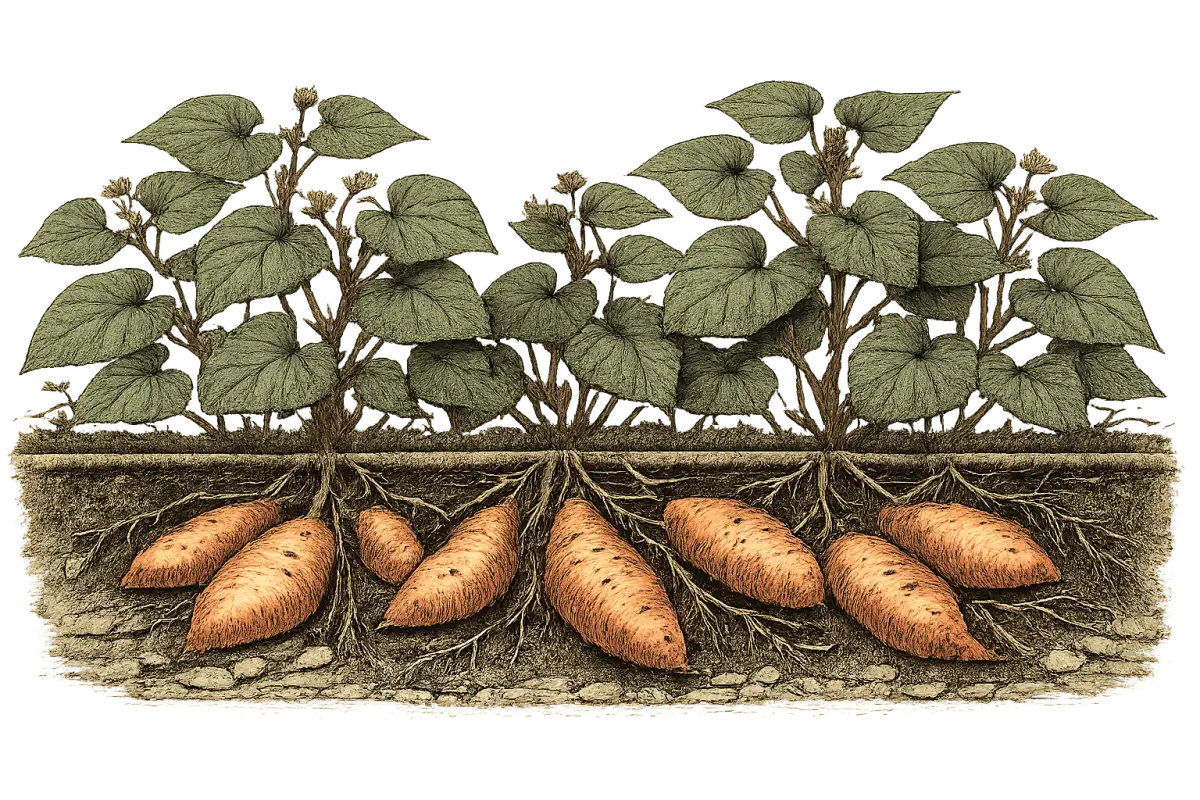
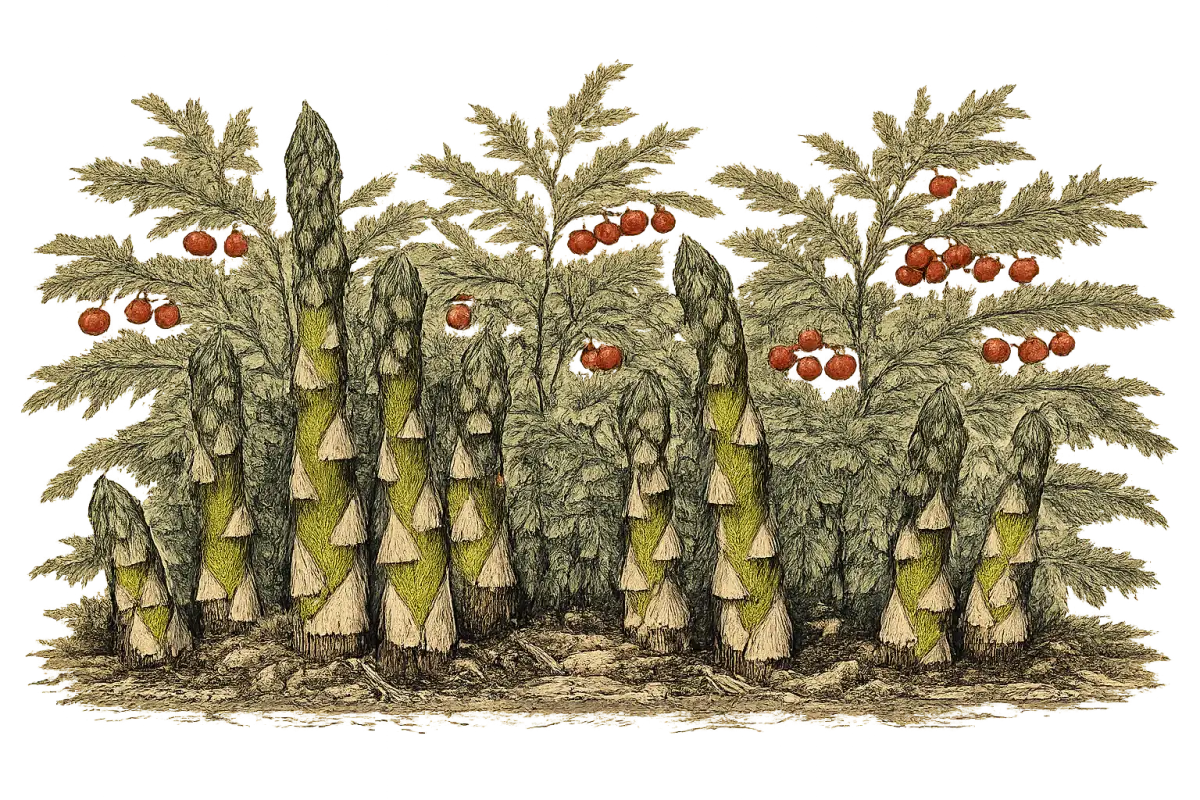
How to grow sweet potatoes — vintage botanical illustration showing the plant in detail

Sweet Potatoes at a Glance

Sun

Sun

Full sun, 6-8 hours daily

Soil pH

Soil pH

5.8-6.2

Water

Water

1-2 inches per week during active growth

Spacing

Spacing

9-18 inches in-row, 36-48 inches between rows"

Days to harvest

Days to Harvest

90-135 days

Height

Height

Trailing vines 12-24 inches tall

Soil type

Soil

Loose

Lifespan

Lifespan

annual

Get your personalized growing data

Enter your zip code for frost dates, growing season, and soil type.

Here is what nobody tells you about sweet potatoes: the most common gardening instincts actively work against you. Richer soil? Worse harvest. More fertilizer? Worse harvest. Planting as early as possible? Stunted plants that never recover. The gardener who carefully amends their beds with compost and feeds regularly is often outperformed by someone who stuck slips into a warm, sandy mound and walked away.

Sweet potatoes are a tropical crop. They want heat, loose soil, and relatively lean conditions. They produce storage roots -- not leafy tops, not vigorous canopies -- and every cultural decision you make needs to support that underground goal. Tip the balance wrong in any direction and the plant happily redirects all its energy into vines you cannot eat.

The payoff for getting it right is real. A well-prepared 10-foot bed of five or six slips can yield 12-18 pounds of sweet potatoes that taste nothing like the grocery store version -- richer, more complex, sweeter over time -- and they store for up to a year under proper conditions. That is months of eating from a few weeks of work.

This guide covers everything: variety selection by zone, the soil and fertility decisions that matter most, how to water (and crucially, when to stop), what to do the moment you dig them up, and the mistakes that destroy most harvests before they even start.


Quick Answer: Sweet Potato Growing at a Glance

USDA Zones: 3 through 10 (with the right variety and techniques)

Sun: Full sun, minimum 6 hours; more is better

Soil Type: Well-drained sandy loam; loose, warm, and relatively lean

Soil pH: 5.8-6.2 (standard); below 5.2 if Streptomyces soil rot is present

Spacing: 12 inches in-row; 36-48 inches between rows

Soil Temperature at Planting: 65F at 4-inch depth for 4 consecutive days (minimum)

Water: 1-2 inches per week; stop completely 2-3 weeks before harvest

Fertilizer: Low-nitrogen, high-phosphorus, high-potassium (5-10-10 ratio); never exceed 75 lbs N/acre

Grown From: Slips (vegetative cuttings) -- never seed

Slip Start Time: 6-8 weeks before last frost (3 months for northern zones)

Days to Maturity: 90 days (Georgia Jet) to 135 days (Jewel)

Yield per Plant: 1-2.5 lbs typical; up to 2.6 lbs with top-performing varieties

Curing: 80-85F, 85-95% humidity, 4-7 days -- non-negotiable

Storage: 55-60F, never refrigerate, up to 12 months properly cured


The Counter-Intuitive Truth About Sweet Potato Soil

Before we get into varieties or zone specifics, let us settle the soil question. Because this is where most gardeners go wrong, and it is wrong in an unusual direction.

UNH Extension puts it plainly: "Sweet potatoes do not need rich, fertile soil. If the soil is too rich in nitrogen the result will be lots of green leaves and very small potatoes." That is not a caution. That is the rule. UMass research confirms it from the other direction -- yields are actually reduced when nitrogen exceeds 75 lbs per acre. There is a hard ceiling on nitrogen that, once crossed, works against you.

What sweet potatoes actually want is structure. Loose, warm, well-drained soil where tubers can expand without restriction. Sandy loam is ideal -- it lets roots push outward and form well-shaped, smooth potatoes. Heavy clay compresses tubers into small, deformed shapes that are difficult to dig and miserable to peel. High organic matter soils produce rough, irregular roots and too much nitrogen. The gardener who builds beautiful, rich raised beds for their tomatoes and then plants sweet potatoes in the same mix is going to grow spectacular vines and mediocre roots.

The soil preparation priority list, in order: drainage first, looseness second, warmth third, fertility last -- and apply it sparingly.

pH: More Specific Than You Think

The target pH for sweet potatoes is 5.8-6.2, which is more acidic than most vegetables. This is not arbitrary. It is driven by disease pressure. Streptomyces soil rot -- the disease that produces rough, scabby, pitted roots -- is favored by soil pH above 5.2. Keeping pH on the lower end suppresses it. Fusarium wilt, on the other hand, is better managed by pushing pH up toward 6.5-7.0.

These are mutually exclusive strategies. If you have no known disease history in your beds, target 5.8-6.2. If you have been seeing scabby, pitted roots, push lower. If your vines are yellowing and collapsing with blue-colored stems -- the distinctive sign of Fusarium wilt -- consider raising pH and switching to nitrate nitrogen forms. Know which problem you are managing. You cannot chase both at once.

Raised Beds and Mounds: Not Optional

Whatever your native soil, build ridges. Mounds 6-10 inches tall with at least 12 inches of width give tubers the vertical space to develop and guarantee drainage. Space mounds 3 feet apart for vine run. This matters more than almost any other site preparation step. Sweet potatoes planted flat into compacted ground produce reliably disappointing harvests regardless of what else you do right.


Best Sweet Potato Varieties by Zone

The variety question is mostly a maturity question. Sweet potatoes need 90-150 frost-free days and soil temperatures above 65F throughout their season. In zones 7 and south, maturity is rarely the limiting factor. In zones 3-5, it is the only question that matters. Plant a 120-day variety in a 90-day zone and you will be harvesting underdeveloped roots in a panic before the first hard frost.

What zone are you in?

Enter your zip code for frost dates, growing season, and soil type.

Cold Zones (3-4): It Is a Gamble, But a Fun One

Northern Homestead describes sweet potato growing in zones 3-4 as "more of a fun crop -- plant it if you enjoy something special." That is honest. Success in these zones depends heavily on whether your summer delivers consistent heat. A hot year produces well. A cool year produces poorly. This is not a staple crop in zone 4. It is a project.

If you are committed, the tools are black plastic mulch (non-negotiable), row covers for the first 3-4 weeks, and slips started in January or February -- a full three months before planting time. You need every heat unit available.

Variety choices in zones 3-4 are short:

Georgia Jet at 90-100 days is the fastest-maturing variety available and gives you the best chance of a harvest before frost. It has earned that reputation. Know, however, that it cracks. UNH Extension does not recommend it commercially for exactly this reason. Home gardeners can tolerate cracking more easily than market growers.

Beauregard at 95-110 days is the safer all-around choice. It is widely available, consistently productive, and forgiving. In Saskatchewan growing reports, it is the baseline recommendation for northern trials.

Centennial at 90-100 days offers something the others do not: clay tolerance. Much of the northern US and Canada has heavy soils, and Centennial handles them better than most.

For zone 4a container growers, there is an unconventional approach worth knowing: place large pots (20+ gallons) directly on asphalt driveways. The radiant heat from pavement pushes soil temperatures significantly higher than ambient air. One Upper Peninsula grower harvested 15 pounds from four plants this way. It works.

Zone 5: The Threshold Where Sweet Potatoes Become Reliable

Zone 5 is where sweet potato growing stops being a gamble and starts being a reliable practice -- if you use the right techniques. MOFGA trial data from Maine confirms this: one upstate New York grower harvested 150 pounds in their third year. Black plastic plus row covers plus early varieties consistently delivers.

Covington has emerged as the standout for this zone. UNH and MOFGA trials show it outperforming Beauregard in uniformity and shape, with the best disease resistance package of any orange-fleshed variety available -- resistant to Fusarium wilt, Streptomyces soil rot, and southern root knot nematode. If you are planting in zone 5 and want one variety to anchor your bed, this is it.

Beauregard remains the backup choice when Covington slips are unavailable. MOFGA trials recorded up to 30 lbs per 12 plants (2.5 lbs per plant) from Beauregard in Maine. Those are real numbers from a real northern climate.

Georgia Jet is the insurance policy. If your season runs short, nothing else matures faster. Just accept the cracking and use those roots first.

Centennial again earns its place in zone 5 for growers dealing with heavier soils. Clay-tolerant, 90-100 days, and consistent.

Planting window in zone 5: June 1-22 based on MOFGA and UNH data. Soil under black plastic reaches 65F in Durham, New Hampshire by June 1. Without plastic, significantly later. Do not rush this. A slip planted in warm soil on June 10 outperforms a slip planted in cold soil on May 15.

Zone 6: The Full Menu Opens Up

Zone 6 provides enough season -- 120-150 frost-free days -- that most varieties become viable and black plastic shifts from essential to beneficial. The pressure is off maturity-wise. Now disease resistance and growth habit become the primary selection criteria.

Covington is still the best single choice here for the same reasons it leads in zone 5: disease resistance is comprehensive and it is now the dominant commercial table stock variety in the US, which means slip availability is excellent.

Carolina Ruby at around 110 days brings red skin and dark orange flesh that stands out visually. It produces high plant numbers from bedded roots, which is useful if you are growing your own slips. UMass lists it explicitly for New England production.

Jewel at 120-135 days becomes viable here, and its Fusarium wilt resistance and nematode resistance are genuinely useful. One caution: Jewel is susceptible to Streptomyces soil rot. If you have had scabby, pitted roots in that bed before, choose something else.

For white-fleshed options, UNH specifically recommends O'Henry for northern growing -- high-yielding, good flavor, and distinctly different from the standard orange. Worth a row if you want variety at the table.

Zones 7-9: Home Territory

This is where sweet potatoes evolved. North Carolina, Louisiana, Mississippi, and the surrounding southeastern states produce the vast majority of commercial US sweet potato production for exactly this reason. Every variety works here. The selection decision shifts from "will it mature?" to "what disease pressure do I have and what do I want to eat?"

Covington is the current commercial standard. Its disease resistance package -- Fusarium wilt resistant, Streptomyces soil rot resistant, southern root knot nematode resistant -- is the most complete among orange-fleshed varieties available anywhere. It has replaced Beauregard as the dominant commercial cultivar in much of the South.

Beauregard is not obsolete. It is still highly productive with good Fusarium resistance, widely available slips, and dark orange flesh that the market knows and expects.

Monaco, a 2021 NC State release, deserves attention. It matches Covington's disease resistance and adds resistance to guava root knot nematode. It runs about 2-3 weeks later to maturity than Covington. Compact plant habit makes it interesting for smaller plots.

Averre (2018) offers straighter roots than Beauregard -- which matters more than it sounds if you have ever tried to peel a gnarled sweet potato -- with high yields and good performance across the region.

For purple varieties, Purple Splendor is the 2021 NC State release that actually makes sense to grow. Resistant to Fusarium wilt, Streptomyces soil rot, and southern root knot nematode, it is the only purple variety with a competitive disease resistance package. Purple Majesty is susceptible to soil rot and nematodes and is adapted specifically to sandy soils. If you are growing purple types for the anthocyanin content or market differentiation, Purple Splendor is the right choice.

One serious warning for zones 8-9, particularly Gulf Coast states: the sweet potato weevil is catastrophic here. It causes over $7 million in annual losses in the southern US. Infested roots become bitter and are completely unmarketable -- inedible for livestock too. LSU AgCenter's integrated management protocol involves certified slips, pheromone trap monitoring, field rotation away from last year's planting, and targeted spray schedules. Do not plant in these zones without a weevil management plan.

Zone 10: Abundance, With a Catch

Frost-free zones can grow sweet potatoes year-round and any variety succeeds from a maturity standpoint. The sweet potato weevil, with no winter kill to reduce populations, becomes the dominant management challenge. All the zone 8-9 weevil guidance applies here, amplified.

Quick Reference Table: Top Picks by Zone

Zone GroupTop VarietiesTypeWhy
3-4Georgia Jet, Beauregard, CentennialShort-season90-100 days; black plastic + row covers essential
5Covington, Beauregard, Georgia JetEarly-maturingBest disease resistance; MOFGA-proven in Maine
6Covington, Carolina Ruby, JewelStandardFull variety access; disease resistance drives choice
7-9Covington, Beauregard, MonacoCommercialBest disease packages; weevil mgmt required in 8-9
10Any variety; focus on weevil IPMYear-roundSeason not limiting; pest pressure is

How to Grow Slips (And Why Store-Bought Sweet Potatoes Will Waste Your Time)

Sweet potatoes are grown from slips -- rooted vegetative cuttings taken from a sprouting tuber. They do not grow from seed. This is the first thing that surprises new growers, and it matters practically because you need to start the process 6-8 weeks before your planting date. In northern zones (3-5), that means starting in January or February.

There are two methods. The soil method is better. Cut a sweet potato lengthwise in half, place it cut-side down in moistened organic growing medium, cover lightly, and maintain 70-80F soil temperature. Northern Homestead's trials confirm slips grown horizontally in warm soil develop faster and stronger than any water-glass method. The water-suspended toothpick approach works, but the slips are weaker and the method is messier.

Critical point that wastes weeks of effort if ignored: Conventional store-bought sweet potatoes are treated with sprout inhibitors -- chlorpropham and similar compounds -- that prevent or significantly delay sprouting. Gardeners who try to start slips from these sit waiting for weeks with nothing happening and assume they are doing something wrong. Buy organic sweet potatoes for slip starting. They sprout freely. Or purchase certified, virus-tested slips from a reputable nursery, which also eliminates the disease transmission risk that NC State specifically flags as the starting point for Fusarium management.

When slips reach 6 inches, twist or cut them off the mother tuber. Cut at least 1 inch above the soil line -- this is not a casual recommendation. NC State's Fusarium research confirms the disease transmits from infected bedding soil through the cut end of the slip. Cutting above the soil line reduces that transmission pathway. Each slip should carry 4-5 leaves and ideally some developing roots before going in the ground.


Planting: The Soil Temperature Rule Has No Exceptions

The minimum planting threshold is 65F at 4-inch depth for four consecutive days. That is from UMass Extension and it is not conservative. Sweet potatoes are "very sensitive to chilling." Plants put into cold soil do not sit and wait for conditions to improve -- they stall, sustain cellular damage, and never fully catch up. A June planting into warm soil will outperform a May planting into cold soil every time.

Night temperatures must also be consistently above 55F. If you are routinely dipping below that at night, wait.

Black Plastic: The Biggest Yield Lever in the Toolkit

In zones 3-6, black plastic mulch is not a nice-to-have. It doubles yields in New England trials. In Durham, New Hampshire, soil under black plastic reaches 65F by June 1 -- without plastic, meaningfully later. It advances maturity by up to 10 days, suppresses weeds through the critical first six weeks when vines have not yet closed canopy, and maintains the loose soil structure that tubers need to expand.

The setup matters. Prepare the ridge or mound first. Lay plastic tightly against the soil surface, covering top and sides. Secure edges with soil. Pre-warm for two weeks before planting. Cut slits 12-18 inches apart along the center ridge. Push slips through the slits at planting.

For the first 3-4 weeks after transplanting, row covers over the plastic add another layer of heat retention. MOFGA trial data shows faster early growth with row covers. They found that row covers helped early season development but did not dramatically affect final yields -- the bigger leverage is in the soil warmth from plastic.

Spacing and Planting Depth

Plant 12 inches apart in the row as the standard. Closer at 9 inches produces more roots but smaller ones -- useful in short-season zones where root count matters. Wider at 18 inches produces fewer but larger roots. Set slips 3-4 inches deep with at least two nodes underground, leaving the growing point and top leaves above ground. Water immediately after transplanting -- 1-2 cups per hole when using black plastic. Plant in late afternoon on overcast days when possible to minimize transplant stress.


Watering: Heavy Early, Taper Late

Sweet potatoes tolerate drought better than most garden vegetables. They will survive dry conditions that kill other crops. That tolerance, however, should not be mistaken for indifference to water. Drought-stressed plants produce significantly smaller roots. And overwatering -- particularly late in the season -- causes cracking, rot, and poor storage quality. The watering schedule matters more than the total volume.

The Three Phases

Phase 1 -- Establishment (first 50-60 days): This is the critical window for root initiation. Water deeply and regularly, providing about 0.75 inch per week minimum. Do not let newly planted slips wilt. The storage roots that form during this period set the ceiling on your entire harvest. Miss it and you cannot recover it.

Phase 2 -- Active growth and tuber bulking (mid-season): Maintain consistent moisture at about 1.5 inches per week. Irregular watering during this phase -- drought followed by heavy water -- is the primary cause of root cracking. Consistency matters here more than volume.

Phase 3 -- Pre-harvest (final 2-4 weeks): This is where most gardeners make a costly error. Maintaining full irrigation right up to harvest causes root splitting, poor curing performance, and accelerated storage rot. Drop to about 0.75 inch per week during the final month. Stop watering completely 2-3 weeks before digging. USU Extension specifically advises to "water with moderation" as plants mature. The roots that go into storage drier are the roots that last the longest.

Drip irrigation is the preferred delivery method -- it keeps foliage dry, reduces foliar disease pressure, and works efficiently under black plastic. If you are setting up plastic mulch, run drip tape underneath before laying it down.


Fertilizing: The Only Rule That Matters Is Less Nitrogen

Most gardening experience teaches you to fertilize generously for good yields. Throw that out for sweet potatoes.

The UMass finding is unambiguous: yields are reduced when nitrogen exceeds 75 lbs per acre. That translates to about 1-1.7 lbs per 1,000 square feet. It is not a large amount. Gardeners who bed heavily with compost, apply balanced vegetable fertilizers, or plant sweet potatoes where they grew a heavily-amended crop the previous year are already over the line before they add anything.

The correct nutrient ratio is low nitrogen, high phosphorus, high potassium -- something like 5-10-10. Phosphorus can go up to 200 lbs P2O5/acre in very deficient soils. Potassium up to 300 lbs K2O/acre. But nitrogen caps at 75 lbs regardless of soil deficiency. This is the opposite ratio of most vegetables, and it catches people off-guard.

Timing the Applications

Broadcast all phosphorus and potassium at planting and work them into the top 6 inches. Split your nitrogen into two applications to reduce the risk of pushing vine growth: Missouri Extension recommends applying nitrogen three weeks after transplanting, then again when vines begin spreading. USU suggests side-dressing with 0.5 lbs of 21-0-0 per 100 square feet in early July. Both approaches accomplish the same goal -- keep nitrogen available without flooding the system.

Do not plant in beds where you applied heavy compost or manure for other crops. That residual nitrogen feeds the vines, not the roots.


Harvesting: Gentle Is Not a Suggestion

Sweet potatoes are ready when roots reach 1.5-2 inches in diameter. You can probe gently around the base of the plant to check without disturbing the hill. By days-to-maturity, you are looking at 90 days for Georgia Jet, 95-110 for Beauregard, around 100 for Covington, and up to 120-135 for Jewel.

The hard deadline is frost. Hard frost damages near-surface roots. And soil temperatures below 50F trigger chilling injury -- internal decay that develops in storage and is irreversible. Harvest before soil temperatures linger below 55F. In New England, that means late September to early October based on MOFGA data. If frost threatens unexpectedly, dig immediately. You can manage imperfect timing; you cannot undo frost damage.

Cut or trim vines 3-5 days before digging. Missouri Extension recommends 2-3 days for home gardens. This makes the roots physically accessible and triggers skin-toughening that reduces harvest damage.

Dig Like You Mean It

Northern Homestead's description of sweet potato skin at harvest time is worth remembering exactly: "They break easily, and the skin is very thin at harvest time." Every nick, bruise, and scrape is an entry point for Fusarium root rot and Rhizopus soft rot. This is not an exaggeration. Damaged roots are your highest-priority storage risk.

Dig an 18-inch-wide circle around each plant's central stem. Use a spading fork, inserting it far enough from the plant to avoid striking roots -- sweet potatoes extend surprisingly far from center. Lever roots upward gently. Do not pull on vines. Do not wash. Do not leave in direct sun. Brush soil off with your hands. Move to shade immediately. Sort damaged roots to use first.

What zone are you in?

Enter your zip code for frost dates, growing season, and soil type.


Curing: The Step That Turns a Vegetable Into a Delicacy

If you have ever dug sweet potatoes, cooked them immediately, and wondered why they tasted starchy and flat, here is your answer. Fresh-dug sweet potatoes are starchy. They are not sweet yet. That sweetness develops during curing and continues developing throughout storage.

LSU AgCenter explains the mechanism: the maltose enzyme develops during the curing process, then activates when baked at 350-375F to create caramelized, syrupy sugars. UNH research found that soluble solids -- primarily sugars -- can more than double in three weeks post-harvest. The sweet potatoes in the grocery store have been properly cured. Yours, if you eat them the week you dig them, have not been.

Penn State's summary of what curing accomplishes covers three things: sweeter flavor, smoother skins, and significantly longer storage life. The wound-healing mechanism specifically matters here -- curing forms a protective periderm layer over every harvest scrape and nick. Without it, every wound remains an open entry point for storage rots.

What Curing Requires

Target 80-85F with 85-95% relative humidity for 4-7 days. Damaged roots need up to 10 days. Cornell recommends 7-10 days as standard.

LSU honestly acknowledges that these exact conditions "will be hard to establish around the home." The approximation is still worth the effort. The warmest room in your house with sweet potatoes loosely covered in towels is better than nothing. Northern Homestead's low-tech method -- plastic grocery bags with holes punched in them, tied closed, placed in the sunniest warmest window available for 10 days -- is more effective than it sounds. The key variables in order of importance are temperature (80-85F matters most), humidity (damp environment, not wet), and duration (4 days minimum, never skip it).

Do not wash roots before curing. Moisture introduced to unhealthy skin accelerates pathogens exactly when you need the opposite.

Wait at least three weeks after harvest before eating for best flavor. MOFGA notes that quality increases dramatically after harvest. The patience is worth it.


Storage: 55-60F and Never the Refrigerator

After curing, move sweet potatoes to storage at 55-60F. Every major extension source agrees on this range. Properly cured sweet potatoes stored correctly last up to a year -- UMass New England guide states this explicitly. Missouri Extension says 6-10 months. Even the more conservative estimates (Penn State at 3-6 months) represent a remarkable shelf life for a garden vegetable.

There are two ways to destroy this in a hurry.

Too cold: Below 50-55F, chilling injury occurs. A hard core develops. Internal discoloration. Off-flavor. Permanent degradation of cooking quality. Penn State notes that "several weeks at 50F may result in a similar degree of injury as 1 or 2 days at 35-40F." The damage is cumulative and irreversible. Chilling injury does not look like rot from the outside. It announces itself when you cut into what appeared to be a perfect sweet potato and find discolored, hard tissue.

The refrigerator is the most common storage mistake home growers make. A standard refrigerator runs at 35-40F. Sweet potatoes put in there will be ruined within days. Leave them out.

Too warm: Above 60-65F, sprouting begins. Texture becomes pithy and dry. LSU describes it as "dry, stringy and pithy." Moisture loss accelerates. The kitchen counter is generally too warm for anything beyond a week or two.

Ideal storage locations: an unheated basement room that stays above 55F through winter, an insulated garage, a root cellar, or an interior closet on an exterior wall where temperatures approximate 55-60F. Avoid unheated sheds in cold climates -- too cold in winter. Avoid storing near apples or bananas -- they emit ethylene that accelerates sprouting. Check stored roots monthly and remove any showing soft spots immediately. One bad root spreads.


Pests and Diseases: What Actually Matters

There is a tempting tendency to treat every leaf hole as a crisis. Resist it. NC State Extension is direct: "There is little evidence that foliar pests do enough damage to warrant treatment" under normal conditions. The LSU threshold for foliar pests is 30% defoliation before yields are affected. Minor leaf damage from hornworms, tortoise beetles, or armyworms is cosmetic. Focus your attention underground.

The Real Threats Are Belowground

Wireworms are the primary belowground pest concern in zones 4-7, especially in beds that were previously in sod or pasture. They create deep, ragged holes in roots that ruin marketability and storage quality. Assess populations before planting by burying corn or small potato pieces 3-4 inches deep and checking after 7-10 days. Treat at planting if you find 4 or more wireworms per 20 shovelfuls of soil. Rotating away from former sod ground is the most effective preventive measure.

Sweet potato weevil is the catastrophic pest for zones 8-10. It does not reduce yields -- it eliminates them. Larvae tunnel through the entire root interior, and infested roots become bitter and unfit for consumption or livestock feed. LSU's management protocol is methodical: certified clean planting material, bed placement as far as possible from last year's fields, pheromone trap monitoring (treat at 4+ weevils per week), and weekly spray applications targeting the base of plants and soil surface.

Disease Prevention in Five Sentences

Use certified disease-free slips. Rotate beds at minimum every 3 years, ideally 5. Remove all crop debris after harvest. Cure promptly. Choose resistant varieties, particularly Covington for the best all-around disease resistance package among orange-fleshed types, and Purple Splendor for the best among purple types.

Fusarium root rot enters through harvest wounds. Streptomyces soil rot is suppressed by lower soil pH. Soft rot is prevented almost entirely by proper curing. Most of what looks like a disease problem is actually a cultural decision made weeks or months earlier.


The Top Mistakes, Ranked by How Much Yield They Destroy

Mistake #1: Too much nitrogen. You will grow the best-looking vines in the neighborhood and the worst sweet potatoes. This is the most common and most damaging mistake. Use 5-10-10. Apply sparingly. Do not plant in recently heavily amended beds.

Mistake #2: Skipping the cure. Starchy, flat flavor. Wounds that never seal. A harvest that rots in weeks instead of lasting months. Four to seven days at 80-85F is the difference between food and disappointment. There is no shortcut here.

Mistake #3: Cold soil at planting. Sweet potatoes damaged by cold soil in their first weeks do not catch up later. Wait for 65F at 4-inch depth. Use black plastic to get there faster. A June planting in warm soil beats a May planting in cold soil.

Mistake #4: Wrong variety for your zone. Planting a 120-day variety in a 90-day season produces nothing but vines and frustration. Match maturity days to your frost-free window. In zones 3-5, maturity is the only variety decision that matters.

Mistake #5: Refrigerating after harvest. The most common post-harvest mistake. Chilling injury at refrigerator temperatures is irreversible. Store at 55-60F. Never the refrigerator.

Mistake #6: Full irrigation through harvest. Cutting back water 2-4 weeks before digging and stopping completely 2-3 weeks out is not optional caution -- it prevents the root splitting, poor curing, and accelerated storage rot that full late-season irrigation causes.

Mistake #7: Rough handling at harvest. Every wound is a rot entry point. Dig wide. Use a fork. Lever gently. Never pull by vines. Never wash before curing.

What zone are you in?

Enter your zip code for frost dates, growing season, and soil type.


Frequently Asked Questions

Can I Grow Sweet Potatoes From the Grocery Store?

Technically yes, but with two caveats. First, conventional store-bought sweet potatoes are treated with sprout inhibitors that prevent or significantly delay sprouting. If you spend six weeks waiting for slips that never appear, this is almost certainly why. Use organic sweet potatoes for slip production -- they sprout freely. Second, variety identity is often unknown in grocery store tubers. You may get perfectly edible results, but you do not know what maturity to expect. For zone 5 and north, where matching a 90-100 day variety to your season matters, buy named variety slips from a reputable nursery.

How Long Do Sweet Potatoes Take to Grow?

From transplanting slips: Georgia Jet matures in 90-100 days. Beauregard and Covington at 95-110 days. Carolina Ruby at around 110 days. Jewel at 120-135 days. In zones 3-5, stick to the 90-100 day varieties and use black plastic mulch. In zones 6 and south, maturity range matters less than disease resistance and growth habit. The season in zone 7 and below is long enough for everything.

Why Are My Sweet Potatoes Thin and Stringy Instead of Fat?

One of three causes, almost certainly the first one. Excess nitrogen redirects energy from root development to vine growth and produces long, skinny roots. Check your fertility inputs -- heavy compost, balanced fertilizers, or beds amended heavily for previous crops are the usual culprits. The second possibility is overcrowding at 9 inches or less between plants, which limits individual root sizing. The third is variety mismatch -- some varieties produce smaller roots by nature. Vardaman, for example, produces compact roots even under ideal conditions. It is bred that way.

Do I Have to Cure Sweet Potatoes?

Yes. There is no version of this answer where skipping curing makes sense. Fresh-dug sweet potatoes are starchy, not sweet. The enzyme that produces sweetness when baking develops during curing. The wound-sealing periderm layer that prevents storage rot forms during curing. UNH research documented sugars more than doubling in three weeks post-harvest. Skip curing and you have starchy vegetables that rot in weeks instead of months. If you cannot achieve the exact 80-85F and 85-95% humidity of commercial conditions, approximate as closely as you can -- a warm room with roots loosely covered is far better than nothing.

What Is the Best Variety for Containers?

Vardaman for true bush habit -- it stays compact, produces the highest sugar content of any variety at 11.5%, and has ornamental purple foliage as a bonus. Trade-off: smallest roots and lowest yields of any named variety. Bunch Porto Rico offers copper skin and variegated flesh with great flavor in a semi-compact habit. Georgia Jet works in containers for short-season zones if the container is large enough (20+ gallons minimum). One important caveat from Northern Homestead, who tested containers directly against ground planting: well-prepared ground beds with black plastic mulch outperformed containers in every trial. If you have any ground to work with, use it.

When Should I Stop Watering Before Harvest?

Reduce to about 0.75 inch per week starting 2-4 weeks before anticipated harvest. Stop completely 2-3 weeks before digging. Full irrigation through harvest causes root splitting and poor storage quality. This is not a minor adjustment -- the roots that go into storage drier cure better, seal more completely, and last longer. The pre-harvest water reduction is as important a harvest preparation step as cutting the vines.


The Bottom Line

Sweet potatoes are not complicated. They are just different. They want lean soil, not rich soil. They want warmth, not early starts. They want careful handling at harvest and patience afterward. Get those things right and the crop manages itself for most of the season.

In short-season zones, the tool set is simple: Georgia Jet or Covington slips, black plastic mulch laid two weeks before planting, soil temperature confirmed at 65F before anything goes in the ground, row covers for the first month. In zone 7 and south, the tools are variety selection for disease resistance -- Covington as the anchor -- and a weevil management plan for anything in the Gulf states.

Cure everything. Store at 55-60F. Wait three weeks before eating.

The sweet potatoes that come out of a well-managed home bed bear no resemblance to the grocery store version. They are sweeter, more complex, and they improve in flavor for months after harvest. Four dollars worth of slips, properly managed, produces a harvest that stores through winter and tastes better in February than it did in October.

That is a good trade.

Research for this guide draws on extension publications from UMass Amherst, UNH Cooperative Extension, Missouri Extension, Utah State University Extension, North Carolina State University, LSU AgCenter, Penn State Extension, Clemson Cooperative Extension, and the Maine Organic Farmers and Gardeners Association (MOFGA). Variety recommendations are based on published cultivar trial data including MOFGA northern trials and NC State breeding program release data.

Where Sweet Potatoes Grows Best

Sweet Potatoes thrives in USDA Zones 6, 7, 8, 9, 10. Explore each zone's complete guide for growing tips, companion plants, and seasonal advice.

Also possible in: Zone 5 (challenging but possible with the right conditions).

Not sure of your zone? Look it up by zip code →