Fruits

Persimmon Trees: The Fruit That Rewards the Patient (and Punishes the Impatient)

Sarah Whitfield

Sarah Whitfield

Fruit & Berry Specialist · Updated April 2026

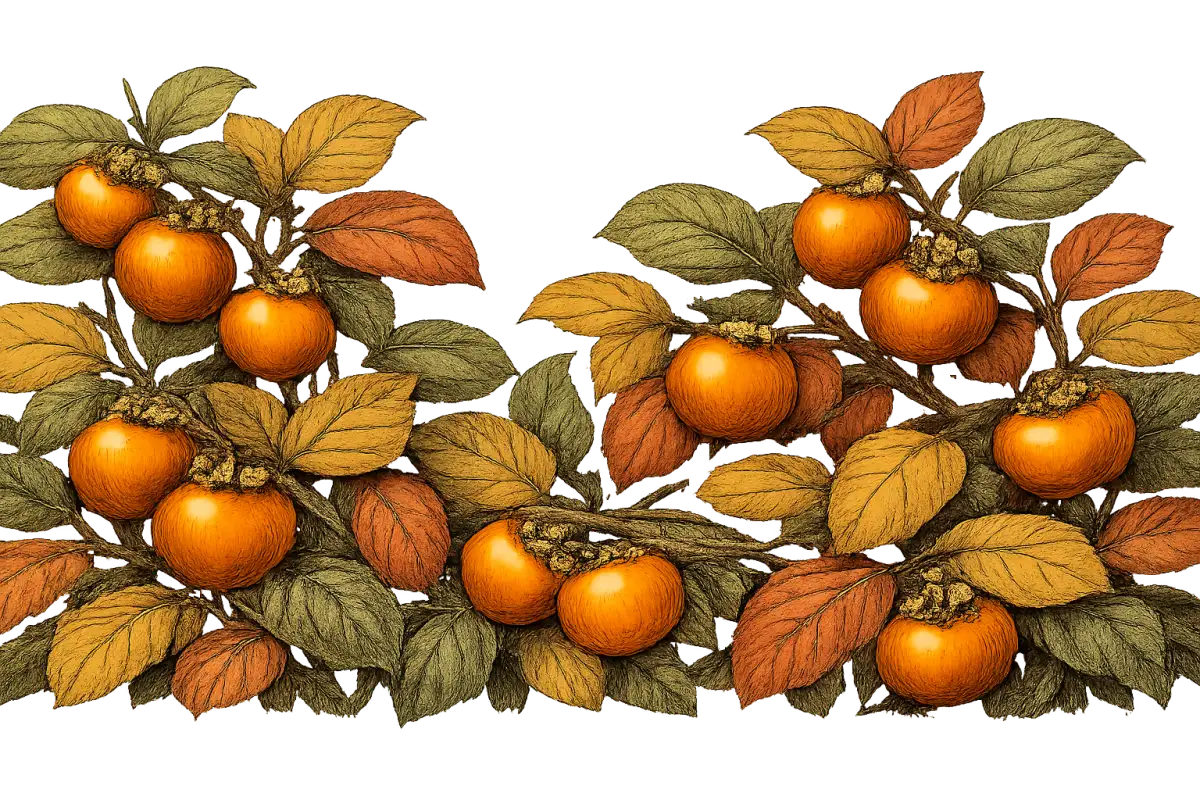
How to grow persimmon — vintage botanical illustration showing the plant in detail

Persimmon at a Glance

Sun

Sun

6-8+ hours full sun daily

Soil pH

Soil pH

6.0-7.0

Water

Water

1-2x per week during establishment (years 1-2)

Spacing

Spacing

15-25 ft

Height

Height

American: 35-50 feet

Soil type

Soil

Well-drained soil

Lifespan

Lifespan

perennial

Get your personalized growing data

Enter your zip code for frost dates, growing season, and soil type.

There is a fruit tree that requires no spray program, tolerates poor soil, shrugs off drought, turns blazing orange in autumn, and produces some of the most extraordinary fruit you have ever tasted. It lives for 75 years. It feeds foxes, wild turkeys, opossums, and white-tailed deer. It asks almost nothing of you.

That tree is the persimmon, and almost nobody grows it.

The ones who do grow it often do so badly, because persimmons come with one category-defining trap that has damaged the reputation of the entire species: eat an astringent persimmon before it is fully ripe, and your mouth will pucker with a chalky, face-contorting tannin hit that you will not forget for years. It is genuinely one of the most unpleasant eating experiences in all of fruit-dom. And it is entirely, completely avoidable -- if you know what you are doing.

That is what this guide is for. We are going to walk you through the two species, the astringent versus non-astringent distinction that determines everything about how you pick and eat your fruit, which varieties to plant in your zone, and the handful of straightforward mistakes that cause most persimmon failures. Because here is what makes persimmons worth your attention: when you get them right, the maintenance burden is lighter than any other fruit tree we work with. No dormant oil schedule. No fungicide rotation. No codling moth traps. Plant it, water it through establishment, fence it from deer for a few years, and then mostly leave it alone.

A mature persimmon will outlast your mortgage. Let's get yours started right.


Quick Answer: Persimmon Growing at a Glance

USDA Zones: 4-9 (American persimmon); 7-10 (Asian persimmon)

Sun: 6-8+ hours of direct sunlight daily

Soil pH: 6.0-7.0 (much more forgiving than most fruit trees)

Soil Drainage: Well-drained -- this is non-negotiable; crown rot in wet soil is the primary killer

Spacing: 20-25 feet apart (American); 15-20 feet apart (Asian)

Spray Program: None routinely needed -- no regular pesticides or fungicides required

Pollination: American types usually need male + female trees; most Asian varieties are self-fruitful

First harvest: 3-5 years (grafted Asian); 4-7 years (American seedling)

Mature tree size: 35-50 feet (American); 15-30 feet (Asian)

Astringent varieties: Must be completely soft before eating -- like a water balloon

Non-astringent varieties (Fuyu): Eat firm off the tree, like an apple


The Decision You Must Make Before Anything Else

Before we discuss zones, soil, or planting technique, you need to understand one distinction. It is the whole ballgame with persimmons, and skipping over it is how growers end up miserable.

Every persimmon variety is either astringent or non-astringent. This determines not just when you harvest, but the entire experience of growing and eating the fruit.

Astringent varieties -- which includes all American persimmons and Asian types like Hachiya and Saijo -- are loaded with soluble tannins until they are completely, utterly, jelly-soft ripe. A firm astringent persimmon looks beautiful. It is deeply colored, it feels satisfying in your hand, and every instinct tells you to bite into it. Do not. The tannins will coat your mouth with a chalky, puckering sensation that lingers for hours. The growers who swear they hate persimmons all made this mistake once. An astringent persimmon eaten fully ripe -- so soft it feels like a water balloon -- is honey-sweet, rich, and almost pudding-like in texture. It is a different fruit entirely.

Non-astringent varieties -- primarily Fuyu and Jiro -- have low tannin content and are designed to be eaten crisp and firm, like an apple. You can pick them off the tree and eat them immediately. They are also excellent when allowed to soften. Non-astringent varieties exist only in Asian types; there is no American persimmon that falls into this category.

Both types have their champions. If you want fruit you can eat the moment you pick it, plant non-astringent. If you are willing to wait for ripening in exchange for deeper, more complex flavor and the ability to make extraordinary persimmon pudding or hoshigaki (the Japanese art of dried persimmon), plant astringent. Many serious growers plant one of each.

Know your variety before you plant. Label your tree so you remember in five years. This is that important.


Best Persimmon Varieties by Zone

Variety selection for persimmons starts with species. Your zone determines which species can survive your winters, and that decision cascades into everything else. American persimmons (Diospyros virginiana) are cold-hardy to -25°F and thrive in zones 4-9. Asian persimmons (Diospyros kaki) are rated zones 7-10 and are damaged or killed below 0-10°F. There is also a hybrid category -- American x Asian crosses -- that opens up the zone 5-6 middle ground.

What zone are you in?

Enter your zip code for frost dates, growing season, and soil type.

What zone are you in?

Enter your zip code for frost dates, growing season, and soil type.

Cold Zones (4-5): American Persimmon Is the Only Answer

If you are in zone 4 -- the upper Midwest, northern Great Plains, northern New England -- your options are narrow, and that is the honest truth. Asian persimmons simply will not survive your winters reliably. Plant American persimmons and do not let anyone talk you into anything else.

Meader is the single best choice for zone 4. It has one trait that makes it exceptional among American persimmons: it is self-fertile. Most American persimmons are dioecious, meaning you need both a male and a female tree to produce fruit. Meader eliminates that requirement, which is an enormous practical advantage for a home grower with limited space. The fruit is small (1-2 inches, as American types always are), but it is intensely sweet when fully ripe. Plant it in your warmest available microclimate -- a south-facing slope or near a building that provides radiant warmth -- and expect fruit in 4-7 years from seedling stock.

Zone 5 opens up more possibilities. Meader remains the safest single-tree option. For maximum production, pair it with Prok -- a Virginia-origin variety known for consistent, prolific annual crops. The combination works beautifully because Meader provides pollen for Prok while fruiting on its own. Prok needs a male pollinator; Meader serves double duty.

Zone 5 also introduces the hybrid option. Nikita's Gift (an American x Asian cross) offers something neither pure species can: medium to large fruit that approaches Asian persimmon size, non-astringent flavor when ripe, and cold hardiness sufficient for zone 5 in a protected location. It is a relatively newer variety but genuinely promising for growers who want larger fruit without the zone risk of a pure Asian tree. Plant it in a sheltered spot and be prepared for the occasional rough winter.

Transition Zone (6): The Cautious Experimenter's Zone

Zone 6 is where the persimmon world gets interesting. American varieties are fully reliable. Asian varieties are borderline -- not impossible, but not guaranteed either.

For reliability, stick with the zone 5 playbook: Meader and Prok as your American foundation, Nikita's Gift as your hybrid option for larger fruit. These will perform year after year without drama.

If you want to try Asian persimmons in zone 6, there is one that stands the best chance: Saijo. It is an elongated Asian astringent variety whose name literally translates to "the very best" in Japanese, and the name earns its keep -- Saijo is considered the finest variety for hoshigaki (the traditional Japanese dried persimmon), and it retains a pleasant firmness even when fully ripe. Plant it against a south-facing wall for maximum radiant heat protection in winter, and be prepared for occasional winter damage. Saijo in a good zone 6 microclimate can be spectacular. Saijo in an exposed zone 6 site will disappoint you.

Nikita's Gift remains the smartest middle-ground choice for zone 6 growers who want more than what American types offer.

The Sweet Spot (Zone 7): Plant What You Want to Eat

Zone 7 is persimmon paradise. Both American and Asian types thrive here without reservation. This is the zone where your variety choice is driven entirely by how you want to eat the fruit, not by what will survive winter.

For fresh eating off the tree, Fuyu is the answer. It is the most popular persimmon in the United States for good reason: flat, squat, firm, sweet, and edible the moment you pick it. No waiting, no ripening on the counter, no tannin roulette. Self-fruitful, so one tree produces just fine. Harvest season runs October through November in most zone 7 locations. Jiro is a close cousin -- similar in flavor to Fuyu but slightly larger and arguably sweeter, and equally self-fruitful.

For baking, preserves, and the serious persimmon kitchen, Hachiya is the variety of choice. It is the most widely available astringent Asian persimmon, large (3-4 inches), acorn-shaped, and extraordinarily rich and honey-sweet when fully ripe. One large Hachiya yields approximately half a cup of puree -- perfect for the traditional Appalachian persimmon pudding, persimmon bread, or persimmon butter. Hachiya is parthenocarpic, meaning it sets fruit without pollination.

For drying, Saijo is the undisputed champion. Its elongated shape dries evenly, and it produces the finest hoshigaki of any variety grown in the US. It is also an excellent fresh-eating astringent variety when fully ripe.

If you want to grow American persimmons in zone 7 -- for wildlife habitat, native landscaping, or simply because you appreciate the species -- Meader and Prok perform excellently here as well.

Warm Zones (8-9): Asian Persimmons Come Into Their Own

Zone 8 is excellent persimmon territory. Asian persimmons are the clear choice: they are better suited to the climate, they produce larger and more diverse fruit, and their smaller mature size (15-30 feet versus the American type's 35-50 feet) fits residential landscapes far better. The standard zone 7 lineup -- Fuyu, Jiro, Hachiya, Saijo -- all perform well in zone 8.

For a two-tree planting that covers all your bases, pair Fuyu (non-astringent, fresh eating, no waiting required) with Hachiya (astringent, baking, preserves). Both are self-fruitful, so they do not depend on each other for pollination, but together they cover the full range of what persimmons can do in the kitchen.

Zone 9 continues the Asian persimmon story, but with one consideration: persimmons need approximately 100-200 chill hours (temperatures below 45°F) to break dormancy properly and fruit well. Most zone 9 locations provide this without difficulty, but in the warmest pockets -- the hottest inland valleys, the lowest Gulf Coast elevations -- chill hours can be marginal. In those locations, Fuyu is your best bet; it has the lowest chill requirement among the popular Asian varieties.

Hot Zone (10): Proceed With Measured Expectations

Zone 10 -- south Florida, the Southern California coast, Hawaii -- is where persimmons become genuinely difficult. The issue is winter chill, or the potential lack of it. Southern California coastal zone 10 often delivers enough cool winter nights for Fuyu to perform adequately. South Florida is more challenging and results will be inconsistent in warm winters.

If you are in zone 10 and determined to grow persimmons, plant Fuyu in the coolest microclimate you can identify, mulch aggressively, and plan for variable crops year to year. In the best years, you will be rewarded. In warm winters, production will be reduced. It is the honest truth about the zone's limitations.

Quick Reference: Top Picks by Zone

Zone GroupTop VarietiesTypeWhy
4-5Meader, Prok, Nikita's GiftAmerican / HybridCold hardiness to -25°F; self-fertile option
6Meader, Nikita's Gift, Saijo (protected)American / HybridReliability + hybrid option for larger fruit
7Fuyu, Hachiya, SaijoAsianMaximum variety; plant for what you want to eat
8-9Fuyu, Jiro, HachiyaAsianBoth non-astringent and astringent thrive
10FuyuAsianLowest chill requirement; best odds in marginal zone

Soil and Site: Easier Than Almost Any Other Fruit Tree

This is where persimmons surprise people. Most fruit trees are demanding about soil. Blueberries need aggressive pH acidification. Peaches want perfect drainage and moderate fertility. Cherries hate wet feet and late frosts. Persimmons are different.

The target pH is 6.0-7.0 -- slightly acidic to neutral. This is the range that most garden soils naturally fall within without any intervention. Unlike blueberries (which need pH 4.5-5.5 and require ongoing acidification), persimmons are happy in the soil you probably already have. Test it first, always, but do not be surprised if the number comes back exactly where you need it.

American persimmons are even more forgiving. They grow wild across the eastern United States from Connecticut to Florida to Texas -- on roadsides, rocky hillsides, old fields, and fence rows -- in soil ranging from deep sand to heavy clay. They are a pioneer species, one of the first trees to colonize disturbed land, and their soil adaptability reflects that origin. As long as it drains, an American persimmon will probably grow in it.

Asian persimmons prefer moderately rich, well-structured loam. They are less tolerant of extremes. Heavy clay needs amendment; very sandy soil needs organic matter. But we are talking about adjustment, not transformation.

The one non-negotiable for both species is drainage. Crown rot -- caused by soil-borne pathogens like Phytophthora attacking the trunk at soil level -- is the most serious disease threat to persimmons, and it is caused entirely by waterlogged conditions. If your site holds water after rain, persimmons will struggle and eventually die. Test your drainage before planting: dig a 12-inch hole, fill it with water, let it drain, refill it, and time the second drainage. If it takes more than 4 hours, you need either a better site or a raised mound.

For soil preparation, we recommend a minimal amendment approach for most growers. Dig a hole two to three times as wide as the root ball, same depth. Use native soil as your backfill -- this encourages roots to expand outward into the surrounding soil rather than circling within an amended pocket. Pile two to four inches of organic mulch (wood chips, shredded bark, composted leaves) in a wide ring from three to four inches away from the trunk out to the drip line. That is the program.

One critical special note for American persimmons: they develop a deep, dominant taproot. When planting bare-root stock, you must dig a hole deep enough to accommodate the taproot going straight down. Never bend, coil, or cut it. And because of that taproot, once an American persimmon is established after two to three years, transplanting it is essentially impossible without killing the tree. Plant it where you want it permanently. Asian persimmons have a conventional fibrous root system and tolerate transplanting reasonably well, which gives you more flexibility if you change your mind.


Planting and the First Two Years

Plant bare-root trees in late winter to early spring while dormant -- February or March in most zones. Container trees can go in during spring or early fall. Avoid summer planting into heat and avoid planting when the ground is frozen.

Site selection matters for reasons beyond soil. You need six to eight or more hours of direct sunlight daily; shade reduces fruit production significantly and morning sun is especially valuable because it dries dew and reduces disease pressure. Account for mature size when choosing placement: American persimmons reach 35-50 feet and should be kept at least 25 feet from walkways, driveways, and structures. Asian persimmons reach 15-30 feet and need at least 15 feet of clearance. Persimmons drop ripe fruit, and soft persimmons on a sidewalk create a staining, slipping, wasp-attracting mess. Plan around it now, not when your neighbors are complaining.

For Asian persimmons, do not bury the graft union. Keep it two to three inches above soil level, and plant at the same depth the tree was growing in its nursery container.

Water your newly planted tree deeply at planting and keep the root zone consistently moist -- not waterlogged -- for the first full growing season. In year one, you are watering once or twice a week in the absence of rain, delivering enough water to soak the root zone thoroughly. In year two, you transition: reduce frequency gradually as roots establish, water deeply once a week during dry periods, and let the tree start finding its own way.

Do not fertilize at planting time. Fertilizer in the planting hole can burn roots. Once established, Asian persimmons benefit from a light application of balanced fertilizer (something like 10-10-10) once in early spring. American persimmons growing in native soil often need no supplemental fertilizer at all -- excess nitrogen promotes vegetative growth at the expense of fruit production.

The first two years also carry one of the most common persimmon killers that growers do not anticipate: deer. Deer love young persimmon trees -- the tender shoots, the leaves, the whole plant. A deer fence or individual wire cage at least five feet tall is essential for the first three to five years, until the trunk reaches three to four inches in diameter and the canopy rises above browse height. Many growers skip this step and then wonder why their tree looks like it was sandblasted. Do not skip it.

What zone are you in?

Enter your zip code for frost dates, growing season, and soil type.

> Not sure where to put your persimmon tree? Our tool analyzes the sun and shade patterns in your exact yard, then tells you the best spot for persimmon and 9 other popular plants. Personalized to your address and zone for $9.99. Find My Best Spot


Watering Established Trees: Far Simpler Than You Think

Once your persimmon clears the establishment phase, the watering picture diverges dramatically between the two species -- and in one case, simplifies almost completely.

Established American persimmons in most of the eastern US need essentially no supplemental water. That deep taproot we keep mentioning is not just a transplanting nuisance -- it is an engineering solution to drought. The taproot drives down into subsoil moisture and water tables that surface-rooted trees cannot reach. In the eastern US, where American persimmons evolved and where annual rainfall typically exceeds 30 inches, a mature American persimmon survives entirely on what falls from the sky. You water during the establishment years, and then you mostly stop. Deep soak during a prolonged drought (three to four weeks without significant rain) -- that is the entire program.

Established Asian persimmons need more consistent attention. Their fibrous root system lives in the top 18-24 inches of soil, which means they are more dependent on surface moisture throughout their lives. Water deeply once a week during the growing season when rainfall is insufficient, increasing to twice a week during extended heat above 90°F. The most critical period is fruit development from June through October -- inconsistent watering during this window causes premature fruit drop, fruit cracking and splitting, and reduced fruit quality. Consistency matters more than volume: steady, moderate moisture during fruit development produces the best fruit, while wet-dry-wet cycles cause the most problems.

In arid western zones (parts of 8-10), Asian persimmons require regular drip irrigation throughout the growing season. Drip is the most efficient delivery method regardless of zone -- it gets water to the root zone, keeps foliage dry, and reduces disease pressure from leaf spot.

Whatever method you use, water deeply and slowly rather than quickly and shallowly. A quick surface sprinkle encourages shallow root development and makes the tree more drought-vulnerable, not less. A slow trickle from a hose or an hour on the drip system delivers water where roots can actually use it.

Keep your mulch ring intact and replenished. A well-mulched tree reduces soil moisture evaporation by 25-50% and cuts your watering frequency significantly. That two-to-four-inch ring of wood chips extending to the drip line is doing real work.

One final watering note: if your persimmon is wilting, check the soil before you reach for the hose. Wilting in wet soil means root rot from overwatering, and adding more water will accelerate the decline. The overwatering death spiral -- saturated soil displaces oxygen, Phytophthora attacks weakened roots, roots cannot absorb water even in wet conditions, tree wilts, grower adds more water -- is how persimmons die from too much care. When in doubt, wait.


Pests, Diseases, and the Remarkably Short List

Here is the persimmon section that surprises every fruit grower who has wrestled with apples or peaches: persimmons have almost no serious pest and disease problems. Not "fewer than most" -- genuinely almost none that require routine management.

Consider what a standard apple requires: 10-15 spray applications per season for codling moth, apple maggot, fire blight, apple scab, and cedar-apple rust. A typical peach demands 6-10 sprays for peach leaf curl, brown rot, oriental fruit moth, and plum curculio. Persimmons require none of this routinely. No spray calendar, no dormant oil schedule, no pheromone trap network, no fungicide rotation.

The most common pest is mealybug and scale. Both are minor and manageable. Mealybugs appear as white, cottony masses on stems and leaf undersides; scale presents as small, immobile bumps on bark. If either appears, manage the ants first -- ants actively farm mealybugs and scale, protecting them from their natural predators in exchange for honeydew. Disrupt ant access with a sticky barrier on the trunk, and natural predators like ladybugs and lacewings will often bring populations under control. Horticultural oil during dormancy handles overwintering scale. Insecticidal soap treats active infestations.

Leaf spot (Cercospora and Mycosphaerella) is the most commonly reported persimmon disease. Dark spots on leaves, sometimes with yellow halos, appearing in late summer -- it looks alarming and is almost always cosmetically irrelevant. Rake and remove fallen leaves in autumn to reduce overwintering spores. Fungicide treatment is rarely justified. The tree will be fine.

Crown rot is the one serious disease, and it is not really a disease problem -- it is a site selection problem. Crown rot (caused by Phytophthora in waterlogged soils) attacks the trunk at the soil line in poorly drained sites. Plant in well-drained soil, keep mulch away from the trunk, and crown rot is effectively not a concern.

Deer are the most damaging pest in the first three to five years, as discussed above. Mature trees lose fruit to deer, raccoons, opossums, squirrels, foxes, wild turkeys, and cedar waxwings -- but none of this damages the tree itself. If you planted an American persimmon partly for its native wildlife value (and it is genuinely one of the most important native wildlife food trees in the eastern US), you will consider the sharing an acceptable and even pleasing tradeoff.

The complete persimmon IPM program: plant in well-drained soil, fence young trees from deer, harvest fruit promptly, manage ants if mealybug or scale appears, and rake fallen leaves if leaf spot bothers you. That is it. This is why persimmons are the fruit tree of choice for organic gardeners and anyone who does not want to maintain a spray schedule.


Harvesting: Where the Astringent-Non-Astringent Divide Matters Most

Harvest timing is where everything we have discussed about variety selection becomes real, immediate, and consequential.

Non-astringent varieties (Fuyu, Jiro): Harvest when fully deep orange throughout. The fruit should still be firm -- that is the feature, not a bug. Cut the stem with pruning shears (never pull or twist, which damages the fruiting spur for next year), leave a short half-inch stem attached, and eat immediately. Crisp, sweet, mild. Season is October through November in most zones. Firm Fuyu persimmons store remarkably well in the refrigerator -- up to two months in the crisper drawer.

Asian astringent varieties (Hachiya, Saijo): Harvest when fully colored -- deep orange to orange-red. The fruit will likely still be firm. That is expected and correct. Bring it indoors and ripen on the counter until it is completely, unambiguously, water-balloon soft. This takes one to three weeks at room temperature. Accelerate it by placing the fruit in a paper bag with a ripe banana or apple -- the ethylene gas from the banana triggers faster ripening and can reduce the wait to three to seven days. You can also freeze persimmons for at least 24 hours and then thaw them; the freeze-thaw cycle breaks down tannins quickly, though the texture is compromised (best for puree and baking, not fresh eating).

The ripeness test for astringent varieties is non-negotiable: press gently. If the fruit resists in any way -- any firmness at all -- it is not ready. A ripe astringent persimmon gives completely under light pressure with jam-like, translucent flesh. If in doubt, wait another day. There is no downside to being a day too patient. There is significant downside to rushing.

American persimmons: All astringent, with small (1-2 inch) fruit. Gather when fallen from the tree or when fruit separates with minimal effort. Traditional foraging wisdom holds that the first frost improves sweetness, and this is accurate -- frost accelerates the softening and tannin breakdown process. The fruit is honey-sweet when fully ripe and makes exceptional puree for persimmon pudding, the classic Appalachian dessert.

For long-term preservation, persimmon puree is your friend. Scoop the flesh from fully ripe astringent persimmons, blend or press through a sieve to remove seeds and fiber, and freeze in measured portions. One large Hachiya yields approximately half a cup of puree. Frozen puree keeps six to twelve months and thaws directly into baking recipes.

And if you want to pursue the most extraordinary thing persimmons can become: hoshigaki. The traditional Japanese method of hanging-dried persimmon involves peeling firm, fully colored astringent varieties (Saijo is best; Hachiya works well), tying them by their stems, and hanging them in a cool, dry, well-ventilated location for four to six weeks while massaging them every three to five days to distribute sugars evenly. The result is an intensely sweet, chewy, date-like confection with a white sugar bloom on the surface and complex caramel flavors that bear almost no resemblance to the tannin-loaded fruit you started with. It requires patience -- four to six weeks of it -- but hoshigaki from your own tree is one of the finest preserved foods you can produce. The ideal temperature for drying is 50-65°F with good air circulation; a covered porch or unheated garage in autumn is perfect.


The Mistakes That Cause Most Persimmon Failures

We have now covered the key information. Here is where we get direct about what goes wrong -- ranked honestly by how much damage each mistake causes.

Mistake #1: Eating an Astringent Persimmon Before It Is Ready

This does not harm the tree. It harms the grower's relationship with persimmons -- sometimes permanently. The person who bites into a firm Hachiya and experiences that face-contorting tannin flood tends to declare persimmons inedible and walk away from the tree forever. The fruit goes unharvested, the family refuses to engage with it, and a perfectly good tree is wasted.

Know your variety. If it is astringent (Hachiya, Saijo, any American type), wait until it is completely soft. No exceptions.

Mistake #2: Planting the Wrong Species for Your Zone

Planting an Asian persimmon in zone 5 or 6 without winter protection is a complete loss. Asian persimmons are damaged or killed below 0-10°F, and the first serious winter will take the tree. Worse, if the tree was grafted onto American persimmon rootstock (common practice), the rootstock may survive and send up shoots that produce small, astringent fruit the grower never intended to grow.

Match species to zone. In zones 4-5, American only. In zone 6, American reliably or hybrids cautiously. In zone 7 and warmer, the full range.

Mistake #3: Transplanting an Established American Persimmon

The deep taproot makes this essentially impossible after two to three years of establishment. Attempting to move an established American persimmon severs the taproot and almost always kills the tree. Choose the permanent location before you plant and commit to it.

Mistake #4: Planting in Wet or Poorly Drained Soil

Crown rot develops slowly -- the tree may survive for several years before you recognize the problem as drainage-related. By then, recovery is usually not possible. Test drainage before planting. If the site holds water, build a raised mound or choose a different spot.

Mistake #5: Skipping Deer Protection on Young Trees

Young trees (first three to five years) are among the most deer-attractive plantings you can put in the ground. Deer browse the tender shoots repeatedly, prevent the tree from establishing a strong canopy, and can kill young trees outright. Wire cages at least five feet tall from day one of planting. Not when you notice browse damage. From day one.

Mistake #6: Confusing Pollination Requirements

Most Asian persimmon varieties (Fuyu, Hachiya, Saijo, Jiro) are self-fruitful -- they set fruit without a pollinator. Most American persimmons are dioecious, meaning you need both a male tree and a female tree. A female American persimmon planted alone will never fruit. Meader is the notable exception -- a self-fertile American variety. If you are planting Prok, it needs a male pollinator nearby.

Buy grafted, named varieties from reputable nurseries, not seedling stock from big-box stores with generic "persimmon" labels. Know the pollination requirements of what you are planting. Label your tree at planting so you still know in year five.

Mistake #7: Planting Under the Mature Canopy's Footprint on Hardscape

American persimmons reach 35-50 feet with a corresponding canopy spread. They drop significant quantities of soft, ripe fruit. Fruit on concrete stains, creates slip hazards, attracts wasps and ants, and generates complaints. Keep American persimmons at least 25 feet from sidewalks, driveways, and patios. Asian types need at least 15 feet. Think about where that canopy will be in 20 years, not where it is today.
What zone are you in?

Enter your zip code for frost dates, growing season, and soil type.

> Your yard is unique. Your planting plan should be too. We map the sun and shade in your exact yard and tell you precisely where to place persimmon for maximum sun exposure -- and far enough from your hardscape to avoid the mess. Plus variety recommendations matched to your zone. $9.99 for your personalized guide. Get Started


Frequently Asked Questions

Do I Need Two Persimmon Trees to Get Fruit?

It depends entirely on the species and variety. Most Asian persimmon varieties -- Fuyu, Hachiya, Saijo, Jiro -- are parthenocarpic or self-fruitful and will produce fruit from a single tree. Most American persimmons are dioecious, requiring a separate male tree for the female to fruit. Meader is the important exception: a self-fertile American variety that fruits alone. Prok needs a male pollinator. If you are unsure about what you have, contact a reputable nursery -- buying grafted, named varieties from reputable sources eliminates most of the confusion.

How Do I Know When an Astringent Persimmon Is Ripe?

Press gently with one finger. If there is any firmness, any resistance at all, it is not ready. A ripe astringent persimmon -- whether Hachiya, Saijo, or any American type -- should give completely under light pressure, with the consistency of a water balloon or a bag of jelly. The skin may look wrinkled or overripe. This is correct. If you are uncertain, wait one more day. You cannot over-ripen an astringent persimmon beyond the point of edibility; you absolutely can under-ripen it.

Can I Grow Persimmons in Heavy Clay Soil?

American persimmons are remarkably tolerant of clay soils if drainage is adequate -- they grow wild in clay across the eastern US. Asian persimmons are less tolerant and benefit from incorporating 25-30% coarse compost or pine bark into the backfill to improve drainage and aeration. For either species, the critical test is drainage. Do the hole-fill-drain test before planting. Heavy clay that holds water for more than 12 hours is a site to avoid or build a raised mound above. Heavy clay that drains within four hours is workable with proper preparation.

Why Is My Persimmon Dropping Fruit?

Some fruit drop is completely normal -- the tree self-thins its crop to a sustainable load. Heavy or persistent fruit drop in Asian persimmons is most often caused by inconsistent watering during fruit development (June-October). A drought period followed by heavy rain causes the tree to drop fruit it set during stress. Consistent, moderate watering throughout fruit development is the fix. In American persimmons, significant fruit drop can also indicate drought stress; established American types are drought-tolerant but not drought-immune. Less commonly, heavy fruit drop signals root damage from construction, soil compaction, or nutrient deficiency in very depleted soils.

How Long Until My Persimmon Trees Produce Fruit?

Grafted Asian persimmons typically begin fruiting in three to five years. American persimmons from seedling stock take four to seven years; grafted American varieties are faster. In both cases, remove any fruit that forms in year one and limit fruiting in year two -- let the tree build its root and canopy structure before asking it to carry a crop. The patience is worth it. A well-established persimmon tree will fruit reliably for decades: American types live 75 or more years, Asian types 40-60 years.

What Is the Easiest Persimmon Variety for a Beginner?

Fuyu in zones 7-10 or Meader in zones 4-6. Fuyu wins for ease of eating: non-astringent, eaten firm, no ripening wait, self-fruitful, widely available, and forgiving of beginner mistakes. Meader wins for cold climates because of its self-fertility (no need to figure out male/female trees) and proven cold hardiness. Either tree will reward you with minimal maintenance and annual harvests for decades once established.


The Bottom Line

Persimmons are not complicated. They are specific.

Plant the right species for your zone, choose your variety based on how you want to eat the fruit, put it in well-drained soil with full sun, protect it from deer for the first few years, and then leave it mostly alone. The payoff is a fruit tree that asks almost nothing of you in return for decades of harvest -- no spray schedule, no fungicide rotation, no intricate pruning system.

The one thing that will make or break your relationship with persimmons before the tree ever becomes an issue is variety knowledge. Know whether what you are growing is astringent or non-astringent. If it is astringent, wait until it is completely, unambiguously, jelly-soft before eating it. Share that information with everyone in your household before fruit season arrives. Tape a label to the tree if you have to.

Get that right, and you will wonder why everyone is not growing persimmons. A mature tree, laden with glowing orange fruit in the fall light, with brilliant orange and red leaves that most people do not expect from a fruit tree, is one of the genuinely beautiful things a home landscape can offer. And the fruit, at peak ripeness, is extraordinary.

Start with a soil test to confirm your pH. Pick varieties from the recommendations for your zone. Plant young trees in a permanent location with excellent drainage. Fence them from deer immediately. Be patient through the establishment years.

You will not regret it.

Sources for this guide include Grow Organic, Gardener's Path, Humble Abode Nursery, Gardenia.net, the California Rare Fruit Growers (CRFG), UF/IFAS, and TyTy Nurseries. Variety hardiness data and pollination information are drawn from published cultivar trial records and nursery documentation across the cited sources.

Where Persimmon Grows Best

Persimmon thrives in USDA Zones 7, 8, 9. Explore each zone's complete guide for growing tips, companion plants, and seasonal advice.

Also possible in: Zone 5, Zone 6, Zone 10 (challenging but possible with the right conditions).

Not sure of your zone? Look it up by zip code →